
What Luxury Vacation Rental Guidebook Criteria Actually Look Like — And Why Most Hosts Get Them Wrong
Luxury vacation rental guidebook criteria refer to the specific content standards, tone requirements, and structural benchmarks that a property’s guest manual must meet to match the expectations of high-net-worth travelers. A guidebook that works for a $150/night beach cottage will actively underperform — and pull down reviews — at a $1,200/night villa.
That gap is the problem most hosts don’t diagnose until the 4-star reviews start arriving.
Why Your Current Guidebook Is Probably Losing You Stars
Hosts who’ve been on Airbnb or VRBO for a few years often build a first-pass guidebook that covers the basics: Wi-Fi password, check-out time, trash night. It works. Until the property moves upmarket.
The moment you’re competing in the luxury segment — Airbnb Luxe, Homes & Villas by Marriott International, direct booking with a premium positioning — the rules change completely. Guests arriving at your $1,500/night property have stayed in five-star hotels. Some have had private villa staff. They’re not measuring you against the Airbnb average. They’re measuring you against the best hospitality experience they’ve ever had.
According to Guesty’s 2024 STR Industry Report, 79% of short-term rental operators have already noticed a shift in guest expectations, with 60% specifically reporting higher quality service requests. That’s not a trend. That’s the new floor.
Here’s the thing: most of those additional service requests are questions a well-built guidebook should have already answered.
What Defines “Luxury” in a Guidebook — the Actual Criteria
There’s no official industry standard document for this. I’ve seen conflicting approaches — some sources say luxury is about visual design, others say it’s about content depth. My read is it’s both, in a specific ratio: 70% what you say, 30% how it looks.
Here are the 9 criteria that matter.
1. Tone Calibration for High-Net-Worth Guests
Generic guidebooks write house rules like landlords. Luxury guidebooks write like concierges.
The difference isn’t politeness. It’s framing. “No smoking anywhere on the property” becomes “The property is smoke-free; guests who smoke will find a dedicated outdoor space at the east garden gate.” One protects the host. The other serves the guest while protecting the host.
What most guides skip is tone consistency across every single section — not just the welcome message. If your arrival instructions read warmly but your noise policy sounds like an HOA warning, the disconnect reads as amateur.
Quick note: guests don’t consciously notice good tone. They notice a bad tone. That asymmetry matters.
2. Premium Amenity Walkthroughs — With Actual Depth
Standard rentals list amenities. Luxury rentals explain them.
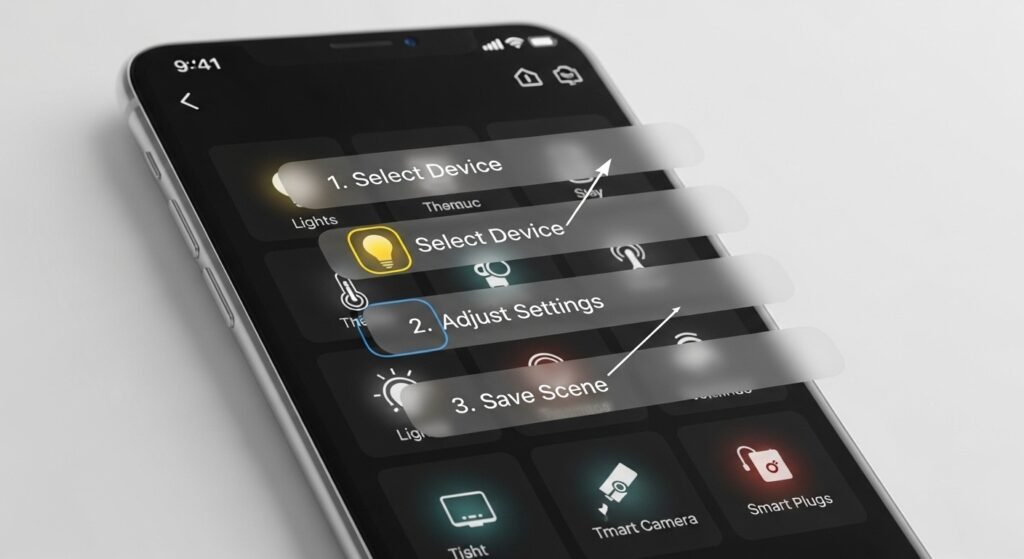
If your property has a Miele espresso machine, a Sonos whole-home audio system, a heated infinity pool with automated chemistry controls, or a home automation system — your guidebook needs step-by-step instructions for each. Not because guests are incapable. Because confusion with premium equipment creates friction, and friction kills reviews faster than anything else.
A property in Tampa reportedly lost a 5-star review because guests didn’t realize a major local event (Gasparilla) would shut down the surrounding streets — information that belonged in the guidebook. That’s not a failure of amenities. It’s a failure of anticipation.
Luxury criterion: your guidebook must anticipate questions before they’re asked. Every expensive or unfamiliar feature needs its own sub-section.
To write a premium amenity walkthrough, follow these steps:
- List every amenity a guest might struggle with
- Write each walkthrough in plain language — no jargon
- Add a “what to do if it doesn’t work” step for each
- Include a photo or diagram for complex systems
- Test it: have someone unfamiliar with the property follow the instructions
3. Curated Local Intelligence — Not Tourist Brochure Filler
High-net-worth guests don’t want the TripAdvisor top-10. They want what the owner knows.
A luxury-tier local section includes: the restaurant that requires two weeks advance booking (with the owner’s name to mention), the private chef referral who does in-home dinners, the beach that the locals use and tourists haven’t found yet, the car service driver who speaks French because that’s useful for your international guest mix.
This is where platforms like Hostfully and Touch Stay have an edge — both allow hosts to build rich, multimedia local guides with embedded maps, booking links, and curated categories. A static PDF can’t match that experience.
Some property managers argue that local recommendations create liability if something goes wrong. That’s valid for legal edge cases. But if you’re managing luxury properties without personal local recommendations, you’re leaving the highest-value differentiation on the table.
4. Arrival Information That Removes All Anxiety
The check-in moment is disproportionately powerful. Guests form their first impression of your property before they’ve unpacked — and a confusing arrival sequence contaminates everything that follows.
A luxury arrival section covers: self-check-in instructions with photos at each step, what the property looks like from the street (including which entrance to use), parking instructions with exact measurements if your space is narrow, what to expect when they walk through the door (lighting pre-set, temperature, welcome amenity), and an emergency contact number for check-in issues.
Nearly 74% of hosts offered self-check-in in 2024, according to Lodgify’s 2024 Vacation Rental Industry Report — but offering it and executing it flawlessly are different things.
5. House Rules Written as Shared Standards, Not Warnings
Rules written in “thou shalt not” language signal distrust. Luxury guests are paying $1,000+ per night and they respond viscerally to being treated like a liability.
Or maybe I should say it this way: your house rules section is a test of whether you understand your guest or fear them.
Frame rules around outcomes: “To keep the pool pristine for your use, we ask that guests shower before entering.” That’s a rule. It’s also a service statement. The outcome is the same; the experience of reading it is entirely different.
6. Emergency and Maintenance Protocols — Specific, Not Vague
“Contact us if anything goes wrong” is not a protocol. It’s an abdication.
A luxury guidebook specifies: who to call for what, at what time of day, with what response window to expect. It tells guests what they can reset themselves (internet router, pool heater display) and what requires a maintenance call. It includes the local emergency number if the property is international or in an area where 911 isn’t the right call.
This section directly reduces middle-of-the-night messages. That alone is worth the hour it takes to write it properly.
7. Checkout Experience — Not Just Checkout Instructions
Most guidebooks treat checkout as a logistics dump: strip the beds, take out the trash, lock the door. Luxury guidebooks treat checkout as the final impression.
A 5-star checkout section thanks the guest, summarizes the two or three things they need to do (minimal — you have cleaning staff), offers a graceful reminder about leaving a review, and optionally includes a personal note about returning. The checkout experience is your last chance to convert a satisfied guest into a repeat booking.
Quick Comparison:
| Standard Guidebook | Luxury Guidebook |
| Lists checkout tasks as a numbered to-do | Frames checkout with brief thanks, then minimal asks |
| Generic “leave a review” request | Specific, personal review request tied to their stay |
| No mention of rebooking | Soft invitation with direct booking link or contact |
| One-size-fits-all tone | Tone matched to property brand voice |
8. Brand Consistency — Visual and Voice
A guidebook that looks generic cheapens a property that looks premium. The two have to match.
This doesn’t mean expensive design. It means choosing a consistent font, using the property’s photography (not stock), and maintaining the same voice from page one to the FAQ section.
Platforms like Touch Stay and Hostfully both allow white-label customization — property-specific branding, color schemes, and cover photography. If you’re at a luxury price point and using a default template, the cognitive dissonance is working against you.
9. Multilingual Access — Required, Not Optional
Luxury travelers are international. This is especially true for properties listed on channels like Homes & Villas by Marriott International, which actively markets to global affluent travelers.
A guidebook locked in English alone is leaving a significant portion of your potential 5-star reviews at risk. Digital platforms that auto-translate based on the guest’s device language solve this without requiring you to maintain multiple manual versions.
The Criterion Most Hosts Overlook Entirely
Every item above improves the guest experience. But there’s one criterion that improves your business: the guidebook’s connection to your Average Daily Rate.
When your guidebook communicates luxury fluently — through tone, depth, personalization, and polish — it validates the price guests paid. It tells them they made the right choice. That emotional confirmation is what drives 5-star reviews, and 5-star reviews are what sustain your ADR.
Look — if you’re managing a property at $800+/night and your guidebook reads like a $150/night rental’s manual, your guests feel the dissonance. They can’t always name it. But it shapes how they rate you.
Voice Search Q&A
What’s the most important section of a luxury vacation rental guidebook?
The arrival information section — it shapes the first impression. Guests who arrive without friction are already inclined toward a 5-star review before they’ve unpacked.
How do I write house rules that don’t sound harsh for a luxury rental?
Frame every rule as a benefit to the guest, not a restriction. Instead of “no parties,” write: “To preserve the peaceful experience for all guests, the property is not available for events.”
Should I use a printed guidebook or a digital one for a luxury vacation rental?
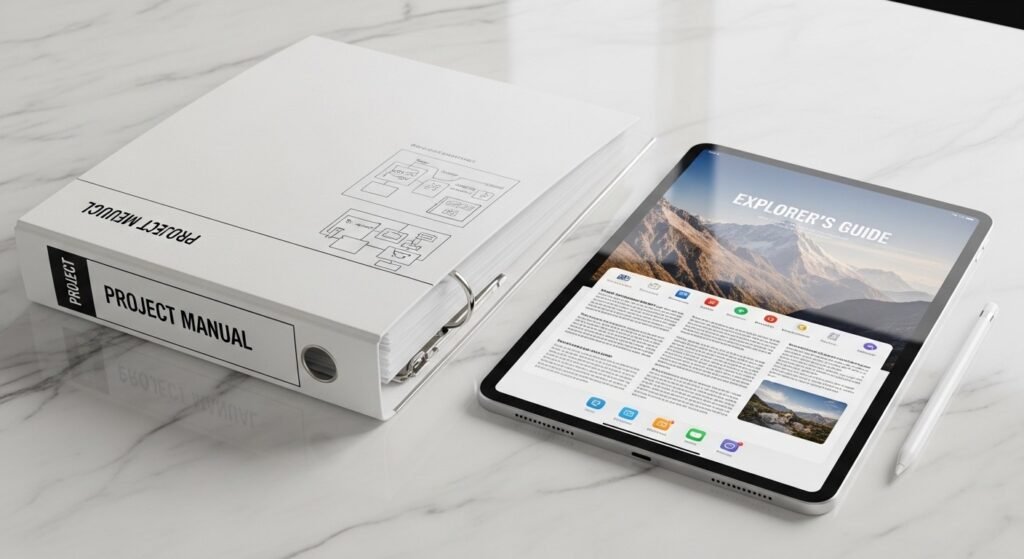
Digital guidebooks (via platforms like Hostfully or Touch Stay) are preferred at the luxury tier — they support real-time updates, multimedia content, multilingual access, and branded presentation that a printed binder can’t match.
How long should a luxury vacation rental guidebook be?
Length should follow need, not ambition. A tight, well-organized 15-page digital guidebook outperforms a sprawling 40-page PDF that guests abandon after page 3.
When should I update my vacation rental guidebook?
After every guest complaint tied to missing information, every seasonal change that affects the property, and at minimum once per year to verify that all contact info, instructions, and local recommendations are still accurate.