
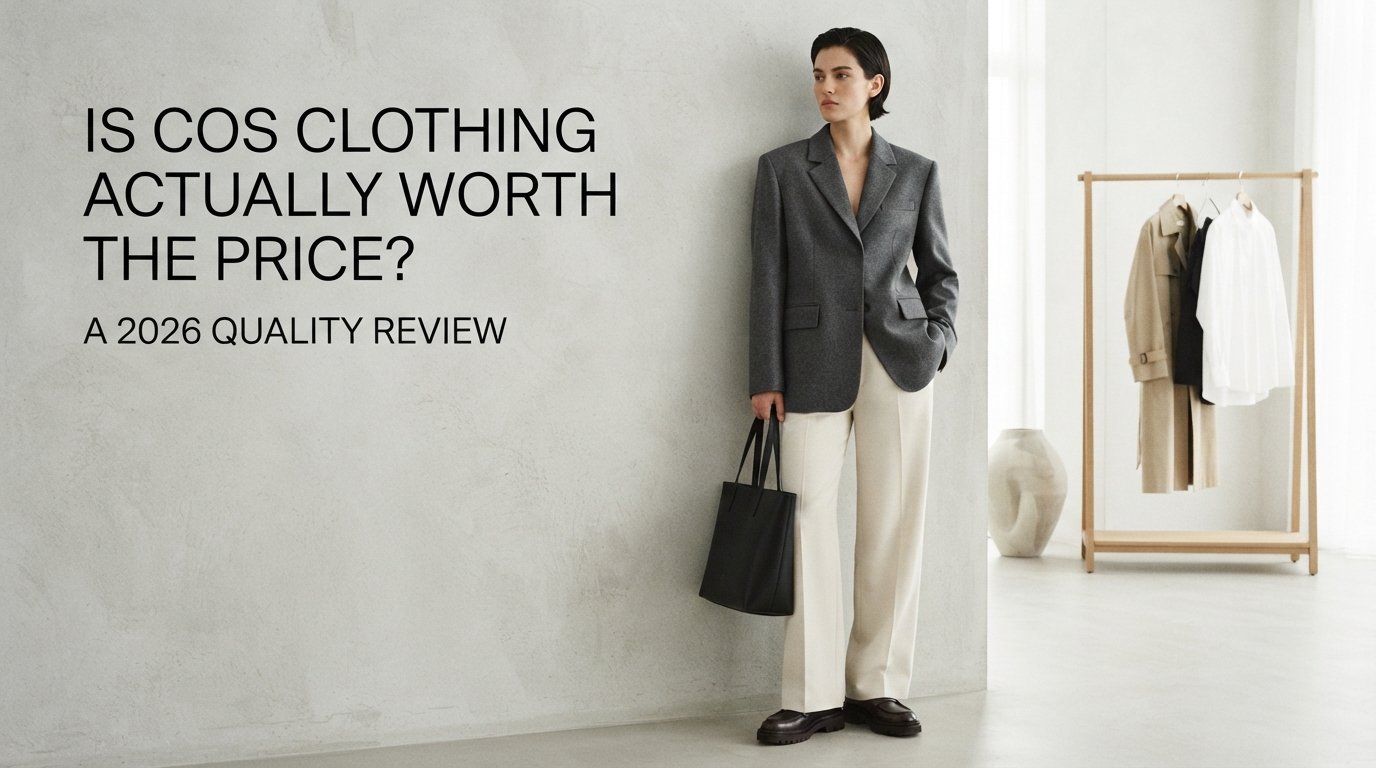
COS clothing is a minimalist ready-to-wear label owned by H&M Group, positioned above H&M but below true luxury, known for architectural silhouettes and neutral tones. It launched in 2007 and now sells in dozens of markets worldwide. The question most shoppers actually have isn’t “does COS exist” — it’s whether the quality matches the price tag.
Short answer: sometimes. It depends heavily on category, and that’s what most reviews skip.
What COS Actually Is (And Why People Compare It to Everlane and Arket)
COS sits in a strange middle zone. It’s owned by the same parent company as H&M, yet it prices itself closer to Arket, COS’s sister brand, or Everlane. That confuses people. Shoppers assume “H&M-owned” automatically means fast-fashion construction, and that assumption isn’t always fair.
According to COS’s own product pages, a growing share of its collections use organic cotton and recycled polyester, part of H&M Group’s broader sustainability push. That doesn’t mean every item qualifies — check the fabric composition tag before you buy, not just the marketing copy on the category page.
Here’s the thing: brand parent company tells you almost nothing about individual garment quality. Construction, stitching density, and fabric weight tell you everything.
Is COS Clothing Good Quality? What the Fabric Actually Says
Most people assume price alone signals quality. The data from actual garment inspection says otherwise — weight and weave matter more than the number on the tag.
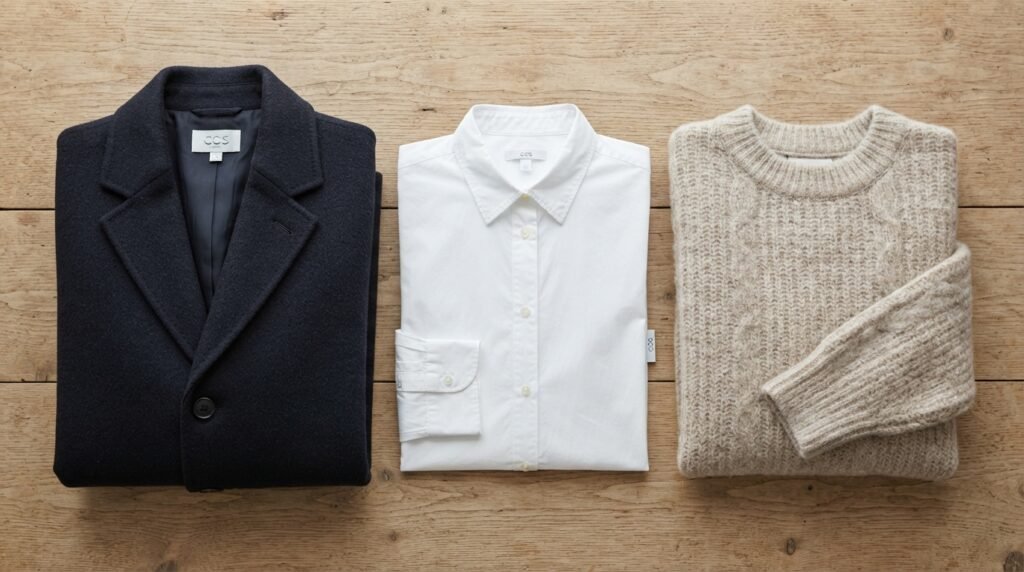
COS outerwear tends to use heavier wool blends (often 70-80% wool) with proper lining, which explains why coats and blazers get the most consistent praise in user reviews. Knitwear is more inconsistent — some jumpers use a tight, durable gauge, others pill within a few wears. T-shirts and basics sit closer to premium-fast-fashion territory: decent for the price, not investment-piece durable.
What most guides skip is this: COS doesn’t have one quality level. It has three. Outerwear and tailoring run high. Knitwear is a coin flip. Basics are fine, not exceptional.
I’ve seen conflicting takes online — some shoppers swear COS knitwear lasts years, others report pilling after a month. My read: it comes down to wash care and specific yarn blend, not the brand as a whole. Check the fiber content before assuming.
COS Sizing Guide: What Runs Big, What Runs Small
To find your correct COS size, follow these steps:
- Check the category — outerwear runs roughly true to size or slightly large.
- Size down in knitwear if you prefer a fitted look.
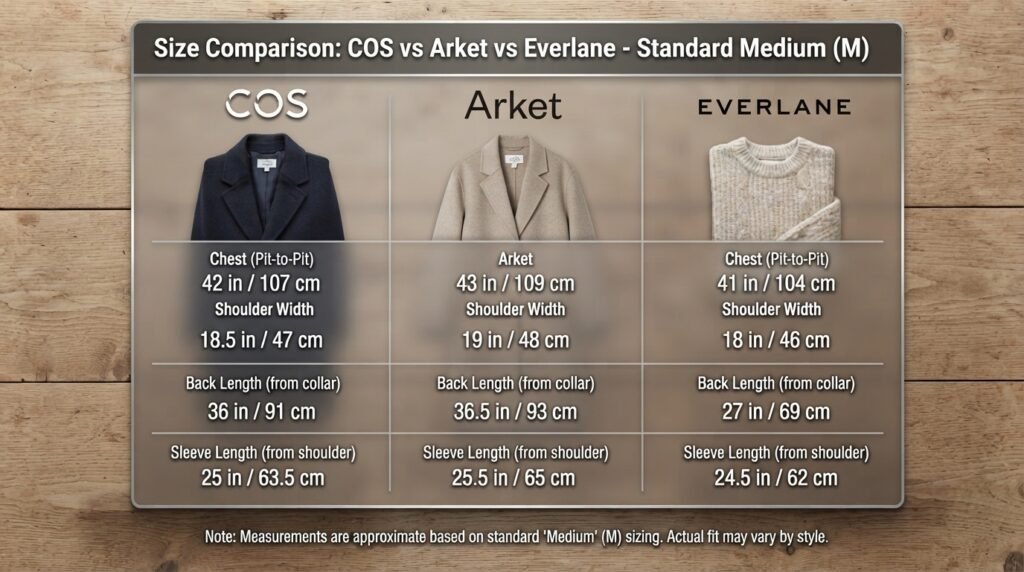
- Compare COS’s size chart to Arket’s, since they’re closely aligned.
- Read the “model wears” note on each product page.
- Order two sizes for structured pieces if returns are free in your region.
Coats and blazers tend to run generous, sometimes a full size large, because of the boxy, oversized silhouette COS is known for. Knitwear runs the opposite way — snug, especially in the shoulders. Shirting is mixed depending on the fabric blend.
Quick note: this isn’t unique to COS. Most minimalist-cut brands do this because drape depends on fabric weight, not just measurements.
COS vs H&M vs Everlane vs Arket: Quick Comparison
COS costs more than H&M because of heavier fabrics and slower production runs, while Everlane focuses on transparent factory pricing rather than design-forward cuts. Arket, COS’s own sister brand, overlaps heavily in aesthetic but skews slightly more casual and family-oriented. The real difference between COS and Everlane comes down to silhouette: COS chases architectural shapes, Everlane chases simplicity.
Quick Comparison
| Option | Best For | Key Benefit | Limitation |
| COS | Structured outerwear, statement basics | Heavier fabric weight, sculptural cuts | Inconsistent knitwear durability |
| Everlane | Everyday basics, transparent pricing | Published factory cost breakdowns | Less design variety |
| Arket | Casual/family wardrobe | Slightly lower price point than COS | Fewer tailored pieces |
| H&M | Trend pieces, budget refresh | Lowest cost entry point | Shorter garment lifespan |
Common Mistakes People Make When Shopping COS Online
Some shoppers argue COS is “just overpriced H&M.” That’s a fair reaction if you’re only judging by t-shirts and basics — those categories genuinely don’t punch far above H&M’s price bracket. But if you’re comparing outerwear, tailoring, or structured dresses, the fabric weight and construction gap becomes obvious pretty fast.
A few patterns show up again and again in return complaints:
- Buying knitwear true-to-size instead of sizing down
- Skipping the fabric composition tag and assuming “expensive = wool-heavy”
- Not checking COS’s current return window before ordering multiple sizes
Is COS Clothing Worth It? Verdict by Shopper Type
If you’re buying outerwear, tailoring, or statement pieces meant to last several seasons, COS earns its price tag more often than not. If you’re buying basics you’ll replace every year anyway, the price premium over H&M is harder to justify.
This guide covers general quality and sizing patterns across COS’s core collections. It does not address COS’s kidswear line or region-specific pricing, which can shift the value calculation depending on where you shop.
Frequently Asked Questions
What’s the best COS category to buy if I only try one thing?
Outerwear. Coats and blazers consistently get the strongest quality feedback relative to price.
How do I know if COS runs true to size?
It depends on category — outerwear runs large, knitwear runs small. Check the specific product’s fit notes.
Should I size down in COS sweaters?
Usually yes, especially in the shoulders and sleeve length, if you want a fitted rather than oversized look.
Why does COS cost more than H&M?
Heavier fabric blends, more structured tailoring, and smaller production runs drive the price gap.
When should I avoid buying COS basics?
If you’re prioritizing longevity over design, cheaper basics brands often perform similarly for less money.
Look — if you’re deciding between COS and Everlane for your next coat, go with whichever silhouette actually suits your body, because both use comparably weighted wool blends at this point.