
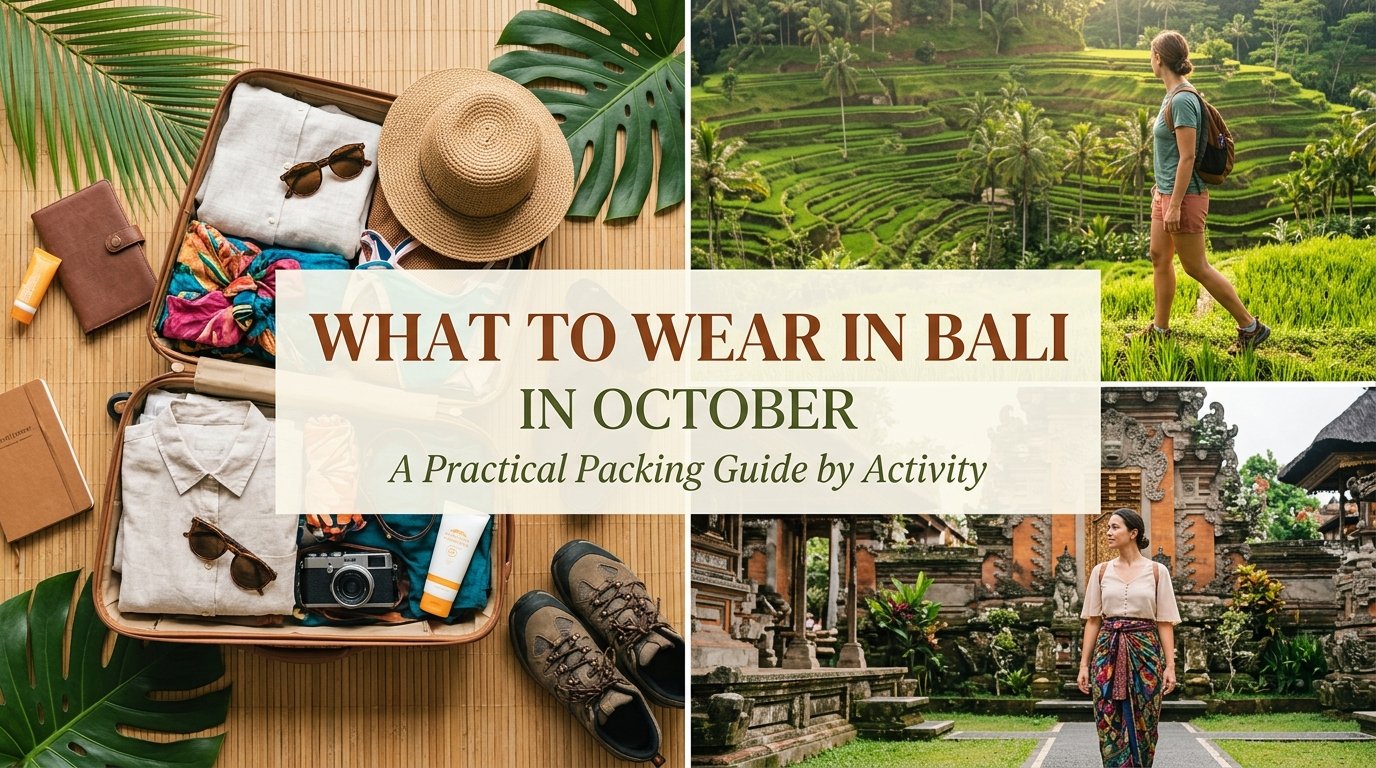
In October, wear lightweight, breathable clothes such as linen or cotton shirts, shorts and sundresses, plus quick-dry layers for sudden showers. Pack a sarong or modest cover-up for temples, a light rain jacket, sturdy sandals, and a sweater for cool highland mornings. Expect heat, humidity and occasional rain.
Key Takeaways
- October is a transition month between Bali’s dry and wet seasons: hot, humid, with a chance of afternoon showers. Conditions vary by year and location, so check the latest BMKG weather forecast before travelling.
- Choose breathable, quick-drying fabrics (linen, light cotton, technical synthetics) over heavy denim or thick cotton.
- Pack for activities, not just days: temple, beach, scooter and trek each need something different.
- Temples generally require a sarong and sash, and covered shoulders and knees are the respectful standard. Requirements can vary by temple and ceremony, so follow posted rules and staff instructions.
- Highland areas and sunrise treks are noticeably cooler, so bring one warm layer.
- Pack light. Affordable local laundry services can help you reuse clothing, so you may need fewer outfits than you think.
What is Bali’s October weather really like?
October in Bali is hot and humid, with rain becoming more likely as the island moves from the dry season toward the wet season, which usually builds from November. October conditions can vary considerably, so historical averages are useful for planning but cannot predict the weather during a particular trip.
Bali sits about 8 degrees south of the equator, so temperatures stay warm year-round. What changes is rainfall and humidity. Showers in October may arrive in the afternoon or evening, although their timing and intensity vary by year and by area.
Before travelling, check the latest Bali weather forecast from BMKG. Reviewing the forecast close to your departure date can help you decide whether to prioritize rain protection, extra quick-dry clothing or lighter layers.
Why does humidity matter more than temperature?
Humidity decides how clothes feel. Thick cotton stays damp, jeans take a long time to dry, and tight synthetics can feel sticky. Fabric choice matters more than the thermometer reading.
How strong is the sun in October?
Strong. Bali’s tropical location means UV exposure can be high, including on partly cloudy days. The exact UV index changes with weather, time of day and location, so check the daily UV forecast rather than relying on a monthly average. Plan on a hat, sunglasses and broad-spectrum sunscreen, and consider UPF-rated clothing for long beach or trek days.
Why does your October wardrobe matter?
The right clothes keep you comfortable in heat, protect you from sun and rain, and show respect at sacred sites. Balinese Hinduism shapes daily life, and temples are active places of worship, not only tourist attractions. Dressing appropriately is part of travelling well.
A practical example: Imagine arriving in Bali wearing thick jeans and a heavy cotton T-shirt, then spending the afternoon walking around Ubud. In warm, humid conditions, the fabric can become uncomfortable and may take a long time to dry after a shower or heavy sweating. Switching to lightweight trousers and a breathable shirt makes it easier to stay comfortable while walking between cafes, shops and cultural attractions.
How should you dress for Bali’s heat and humidity?
Wear loose, light, breathable layers in natural or quick-dry fabrics, and avoid anything heavy or tight.
Which fabrics work best?
- Linen and linen blends: breathable and fast drying, but they wrinkle.
- Lightweight cotton or cotton-modal: comfortable, but slower to dry when damp.
- Technical quick-dry synthetics: best for treks, scooter rides and rainy days.
- Rayon/viscose: light and common in local markets, but it can cling when wet.
- Avoid: heavy denim, thick cotton hoodies and non-breathable synthetics.
What colors make sense?
Light colors reflect heat. Mid-tone patterns hide sweat marks and small stains better than white. Dark colors absorb more sunlight but can hide dust and splashes from scooter rides.
Do you need a jacket?
A rain shell or light cardigan is enough for most places. A fleece or sweater is useful for sunrise treks, air-conditioned restaurants and highland areas such as Kintamani. Mount Batur’s pre-dawn conditions can feel much cooler than the coastal areas, particularly when it is windy. Temperatures vary, so check the forecast for your trek date and bring a warm layer rather than relying on coastal weather.
For more inspiration on building versatile travel outfits, explore our guide to vacation outfit ideas for women. It can help you plan coordinated looks that suit different activities without packing too many separate outfits.
The capsule wardrobe: dress by activity
A capsule wardrobe built around four activity types covers nearly every day of a Bali trip with 12 to 15 pieces. This is the framework most generic packing lists miss.
| Activity | What to wear | Why |
| Temple day | Lightweight top covering shoulders, knee-length skirt or trousers, sarong and sash (carry your own) | Respectful, and easy to layer over beachwear |
| Beach or pool day | Swimwear, light cover-up, hat, sandals | Quick drying, sun protection |
| Scooter or town day | Closed-toe shoes, light long trousers or knee-length shorts, thin long sleeves | Helps protect against sun, wind and minor road scrapes |
| Trek or sunrise day | Quick-dry top, breathable trousers, warm layer, trail shoes | Cool dark start, warm finish |
Mix these pieces: three to four tops, two or three bottoms, one or two dresses or lightweight sets, two swimsuits, one warm layer, one rain shell.
The key is choosing pieces that work for more than one activity. A lightweight shirt, for example, can provide sun protection during sightseeing and serve as a cover-up over swimwear. Comfortable trousers can work for a temple visit, a restaurant and an evening walk.
For more outfit combinations and general travel styling advice, read our complete vacation outfit guide.
What should you wear to Bali temples?
Most temples expect visitors to wear a sarong and sash around the waist, with shoulders and knees covered. Many major temples provide or rent sarongs, but availability, fees and specific requirements can vary. Bringing your own is a convenient backup.
For additional preparation, consult this Bali temple guide from Indonesia Travel and confirm any specific requirements with the temple you plan to visit.
Women
- Shoulders covered (a light shirt or scarf works).
- Knee-length or longer skirt, or lightweight trousers.
- Sarong and sash if not provided.
Men
- T-shirt or short-sleeved shirt.
- Shorts may be acceptable underneath a sarong at some temples, but requirements differ by location and ceremony.
- Sarong and sash.
Other temple etiquette
- Traditional Balinese custom restricts temple entry during menstruation, and some temple signs explicitly mention this. Customs and site guidance should be approached respectfully; ask temple staff or a knowledgeable local guide discreetly if you are unsure.
- Remove shoes where requested and do not step on offerings placed on the ground.
- Do not wear swimwear or revealing clothes at ceremonies.
- If a ceremony is in progress, follow the instructions of temple staff.
Purification temples such as Tirta Empul
Visitors who join the water purification ritual at Tirta Empul generally need to follow specific clothing and participation rules. The temple’s bathing area has its own requirements, and visitors should follow the guidance provided by temple staff or an authorized guide.
For more information about the site, read this Tirta Empul temple visitor guide. Confirm the current entry arrangements, clothing requirements and changing facilities before your visit.
Bring a change of clothes and a small towel because you may become completely wet during the ritual. A waterproof bag for your dry clothes and phone is also useful.
A practical example: A traveller planning to visit Tirta Empul after breakfast might wear a lightweight T-shirt and comfortable trousers for the journey, then change into the required temple clothing at the site. If joining the purification ritual, the traveller can keep a towel and a complete change of clothes in a small bag. Planning for wet clothing makes the journey back much more comfortable.
Clothing options compared
| Item | Best for | Pros | Cons |
| Linen shirt/shorts | Towns, cafes, temples | Breathable, stylish | Wrinkles |
| Quick-dry synthetics | Treks, rainy days, scooter | Dry quickly, light | Can hold odor |
| Cotton tees | Everyday wear | Soft, inexpensive | Slow to dry in humidity |
| Rayon sundress | Beach to dinner | Light, packs small | Clings when wet |
| Sarong | Temples, beach, picnic | Multi-use, cheap | Needs knotting |
| Light rain jacket | Showers | Packs small | Can feel warm |
| Closed-toe sneakers | Scooter, treks | Protection | Slow to dry |
| Sandals with straps | Everyday | Easy on/off | Less foot protection |
Region-by-region: what changes by area?
Bali has microclimates, so dress for where you are.
- Ubud and central Bali: Green, humid, and often rain-prone in the afternoons. Pack quick-dry layers and a rain shell.
- Canggu, Seminyak and Kuta: Beach-town casual, coastal breezes, and relaxed dress. Cover up when leaving the beach area.
- Uluwatu and the Bukit: Often drier and breezier, with cliff-top winds and strong sun. Bring a hat and wind-resistant layer for evenings.
- Nusa Penida and Nusa Lembongan: Rough roads and strong sun. Wear closed shoes for rides and bring a dry bag.
- Kintamani, Batur and the highlands: Cooler, especially before sunrise. Bring a fleece or sweater.
- North Bali (Lovina, Munduk): Rainfall and temperatures vary with elevation and local conditions. Check the forecast for your specific destination rather than assuming northern Bali will have the same weather as the southern coast.
Step-by-step: build your Bali October packing list
- Check your itinerary. List how many temple days, beach days, treks and scooter days you plan.
- Pick a color palette. Two or three coordinating colors let you mix and match.
- Choose fabrics. Prioritize quick-dry and breathable.
- Pack in layers. Light base, cover-up, then one warm layer and one rain layer.
- Add temple basics. A sarong, a light scarf or shirt for shoulders.
- Pick three pairs of shoes. Sandals, closed-toe sneakers, and water-friendly shoes.
- Add protection items. Hat, sunglasses, sunscreen, and a small umbrella or poncho.
- Plan laundry. Pack fewer items and use local laundry services. Prices and turnaround times vary by location, garment type and service, so check the posted rate or ask the provider before handing over your clothes.
- Leave room. Local markets sell clothing, so you may want space to bring items home.
Common mistakes to avoid
- Packing jeans. They stay damp and heavy in humidity.
- Skipping a rain layer. Even in the shoulder period, showers can arrive suddenly.
- Bringing only flip-flops. Wet streets and uneven pavement call for better grip.
- Forgetting temple coverings. Shoulders and knees need to be covered, and a sarong may not always be available.
- Wearing only white. It shows sweat and dirt quickly.
- Ignoring the sun. Clouds do not block all UV.
- Overpacking. Many travelers end up wearing the same five outfits.
- Wearing swimwear away from the beach. It is generally considered inappropriate in towns, shops and temples.
Best practices
- Keep a small dry bag for electronics and a change of clothes.
- Rotate outfits so damp pieces can dry overnight.
- Dress modestly in villages and when visiting ceremonies.
- If you ride a scooter, wear a properly fitted helmet, closed shoes and clothing that covers your legs and arms. Check current Indonesian licensing, helmet and insurance requirements before riding; a tourist’s home driving licence alone may not be sufficient.
- Carry a lightweight tote with a sarong, sunscreen, and a thin scarf at all times.
Before riding a scooter, review the official Indonesia driving and road safety advice, including licence and insurance requirements.
Tools and resources
- BMKG (Badan Meteorologi, Klimatologi, dan Geofisika): Indonesia’s official weather and climate agency. Visit the BMKG website for weather forecasts and climate information.
- Indonesia Travel: The Indonesian government’s tourism information website. Consult its Bali temple guide for information about visiting sacred sites.
- Tirta Empul visitor information: Read the Tirta Empul temple guide and confirm current requirements with temple staff.
- Official travel advice: Check your government’s travel-advice service for health, road safety and entry updates. For UK travellers, the Indonesia travel advice page is a useful starting point.
- Local laundry and tailors: Useful for quick turnaround and last-minute clothing repairs.
- Waterproof dry bag and packing cubes: Keep clothes organized and dry.
Real-world examples
Example 1: A five-day trip to Ubud and Canggu
Pack four tops, two shorts, one lightweight pair of trousers, two sundresses or sets, one swimsuit set, a sarong, a rain jacket, sandals and sneakers. Wear the trousers or a skirt for temple visits, then switch to beachwear in Canggu.
A realistic packing lesson: On a trip that combines Ubud’s cultural attractions with Canggu’s beaches, the most useful pieces are often those that work in more than one setting. A lightweight shirt can provide sun protection while walking around Ubud and serve as a cover-up over swimwear in Canggu. A sarong can be kept in a day bag until it is needed for a temple visit. This reduces the need to carry a separate outfit for every activity.
Example 2: A sunrise trek at Mount Batur
Wear quick-dry trousers, a breathable top, and a warm mid-layer for the cool start. Wear trail shoes with grip. Bring a rain shell, a headlamp if your tour does not supply one, and a dry change of clothes for after the trek.
A realistic packing lesson: A traveller leaving for Mount Batur before sunrise may feel comfortable in a warm layer at the start but much warmer once the climb becomes strenuous. Removable layers make it easier to adjust without carrying a bulky jacket throughout the trek. Shoes with good grip are also more practical than smooth-soled fashion sneakers on uneven or slippery ground.
Example 3: A rainy afternoon in town
A linen shirt, light trousers, closed shoes and a compact rain jacket handle both the shower and the cafe stop. Avoid canvas shoes if puddles are likely.
A realistic packing lesson: Imagine leaving a cafe in Ubud when a sudden shower starts. A compact rain jacket and quick-drying trousers can make the walk back more comfortable, while a dry bag protects a phone and other electronics. If your shoes become wet, having another pair available can help you avoid spending the rest of the day in damp footwear.
Printable packing checklist
Clothing
- ☐ 3-4 breathable tops
- ☐ 2-3 shorts or light bottoms
- ☐ 1-2 sundresses or lightweight sets
- ☐ 1 pair light long trousers
- ☐ 2 swimsuits
- ☐ 1 sweater or fleece
- ☐ 1 packable rain jacket
- ☐ Sleepwear and underwear for laundry cycles
Temple kit
- ☐ Sarong and sash
- ☐ Shoulder-covering top or scarf
- ☐ Knee-length bottom
Footwear
- ☐ Strappy sandals
- ☐ Closed-toe sneakers or trail shoes
- ☐ Water-friendly shoes
Sun and rain
- ☐ Hat and sunglasses
- ☐ Broad-spectrum sunscreen
- ☐ Compact umbrella or poncho
- ☐ Small dry bag
Frequently Asked Questions
Is October a good time to visit Bali?
Yes for many travelers. October is generally warm and remains a popular time to visit, although showers may become more frequent as the wet season approaches. Crowds and prices vary by destination, accommodation and travel dates, so it is better to compare actual booking options than assume October is always cheaper or less crowded. Check the forecast close to your trip date and keep a flexible plan for outdoor activities.
Does it rain a lot in Bali in October?
Rain is possible, but it is not necessarily constant. October falls near the end of the dry season and the transition toward wetter conditions, so rainfall can vary significantly from one year and region to another. Pack a light rain jacket and quick-dry clothing as a precaution, and check the latest BMKG weather information before travelling.
Do I need a jacket in Bali in October?
Usually only a light one. A packable rain jacket handles showers, and a thin sweater helps in air-conditioned places. For sunrise treks and highland areas such as Kintamani, bring a warmer layer such as a fleece because mornings can feel notably cooler than the coast.
What should women wear in Bali temples?
Women should cover their shoulders and knees, wear a sarong and sash where required, and choose modest, lightweight clothing. Many temples provide or rent sarongs, but bringing your own is convenient. Follow signs and staff instructions, and avoid swimwear or revealing outfits at temples and ceremonies. You can also consult this Bali temple visitor guide before your visit.
Can men wear shorts in Bali temples?
Shorts may be acceptable underneath a sarong at some temples, but requirements differ by location and ceremony. Men should carry a sarong and sash and wear a shirt that covers their shoulders. Long trousers are another practical option. Check the entrance signs or ask staff before entering.
What shoes are best for Bali in October?
Bring strappy sandals for daily wear, closed-toe sneakers for activities where foot protection is important, and water-friendly shoes for wet conditions. Choose shoes with good grip because wet pavement and temple steps can be slippery. Slip-on options make removing shoes at temples easier when requested.
Is it okay to wear swimwear outside the beach?
In beach clubs and resort pools, yes. In towns, shops, restaurants and temples, cover up with a shirt, sarong or shorts. Local custom generally favors modest dress away from the sea, and covering up shows respect. Carry a light cover-up for the walk back from the beach.
Conclusion and next steps
What to wear in Bali in October comes down to breathable layers, a rain backup, temple-ready coverings, and shoes for different surfaces. Build your wardrobe around four activities, choose quick-dry fabrics, and pack fewer items than you think you need.
Next steps:
- Check the BMKG weather forecast one week before you travel.
- Confirm temple rules for the places on your itinerary.
- Use the checklist above and pack a sarong in your day bag.
- Explore our vacation outfit ideas for women, complete vacation outfit guide and vacation outfits for women style guide for more travel-fashion inspiration.
Disclaimer: This article offers general travel guidance. Weather, entry rules and health or safety conditions change, so confirm current information with official sources before you travel. For medical or travel-insurance questions, consult a qualified professional.