
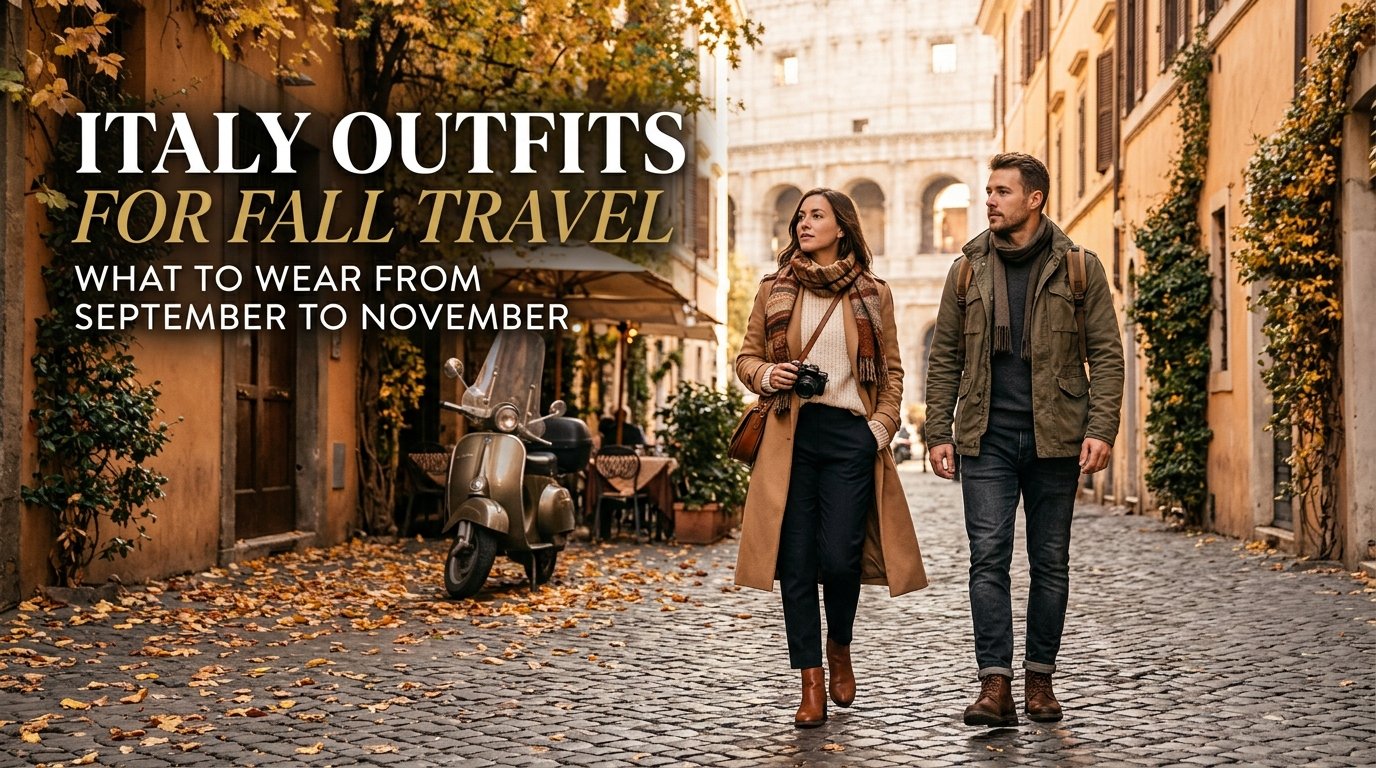
For Italy outfits for fall travel, pack layers in a neutral palette: lightweight tops, one mid-weight sweater, a packable rain jacket, dark jeans or trousers, a scarf, and broken-in walking shoes. Cover shoulders and knees for churches. Weather varies by region and month, so check forecasts a week before you fly.
Key Takeaways
- Layers beat bulk. Italian fall days can start cool, warm up by afternoon, and turn rainy without notice.
- Italy is not one climate. The Dolomites in October and Sicily in October need very different clothes.
- Comfortable, broken-in shoes matter more than any other item because of cobblestones and long walking days.
- Major churches and the Vatican expect covered shoulders and knees. A scarf or light cardigan solves this.
- Neutral colors (black, navy, olive, camel, cream) mix and match, so you can pack less.
- Venice in fall needs waterproof footwear in case of high water.
What Do People Wear in Italy in Fall?
Most people in Italian cities wear simple, fitted-but-comfortable layers in muted colors, with closed shoes. Think dark denim or tailored trousers, a knit or collared top, a light jacket or blazer, and a scarf. Bright logos, athletic wear and shorts stand out more in city centers, especially at dinner.
That said, Italy is also a major walking destination, and visitors in clean, low-profile sneakers are everywhere. You do not need to dress like a local. You do need to dress for stone streets, stairs, churches and changing weather.
For a practical starting point, explore our guide to vacation outfit ideas for women. Choose comfortable pieces that can be styled in several ways, rather than packing a separate outfit for every sightseeing activity.
Why Does Your Fall Wardrobe Matter in Italy?
The right clothes decide whether you are comfortable, admitted to sacred sites and ready for sudden weather. Fall is shoulder season: fewer crowds than summer, but less predictable temperatures and more rain.
Three practical reasons to plan:
- Access. Churches and the Vatican enforce dress rules and may turn visitors away.
- Comfort. Sightseeing can involve hours of walking, stairs, standing in queues and crossing uneven streets. Supportive shoes and breathable layers help you stay comfortable throughout the day.
- Luggage. Many regional trains, ferries and walk-up hotels make heavy bags a burden. Packing lighter makes travel easier.
For more advice on coordinating outfits and packing versatile clothing, see our complete vacation outfit guide.
What Is the Weather Like in Italy in Fall?
Italy’s fall weather runs from warm and sunny in the south in September to cold and wet in the north and mountains by November. The country spans a long north-south distance and includes coasts, plains and the Alps and Apennines, so conditions differ widely.
Use the table as a general planning guide rather than a precise temperature forecast. Conditions vary from year to year, and even cities within the same region can experience different weather. For current forecasts and local conditions, consult Meteo Aeronautica Militare, Italy’s official Air Force meteorological service, and check the forecast for each destination before departure.
| Region | September | October | November |
| North (Milan, Venice) | Generally mild to warm, with cooler evenings | Cooler days, chilly mornings and an increasing chance of rain | Often cold and damp, with possible fog and colder spells |
| Central (Rome, Florence) | Usually warm, sometimes hot, especially early in the month | Generally mild, with cooler evenings and possible rain | Cooler and often wetter, so a warm layer and rain protection are useful |
| South and islands (Naples, Amalfi, Sicily) | Often warm to hot, with cooler evenings | Generally mild to warm, but rain and wind are possible | Often milder than the north, although rain and windy days can occur |
| Alps and Dolomites | Cooler mountain conditions, especially at higher elevations | Cold weather is possible, including early snow at higher elevations | Winter-like conditions may occur, and some seasonal lifts and mountain huts may be closed |
Key point: Check an official forecast about seven days before departure and adjust your layers, not your whole wardrobe.
How Do You Build a Fall Wardrobe? The 3-3-3 Formula
The 3-3-3 formula is a simple packing framework: three tops, three bottoms and three layers, all in a coordinated palette. It is an original planning method for this guide, not an industry standard. It scales to most trips of 7 to 14 days when you plan to rewear items or do laundry once.
Step-by-step
- Pick a palette. Choose two base neutrals (for example navy and cream) and one accent (for example olive or burgundy).
- Choose 3 tops. One short- or long-sleeve tee, one knit or fine sweater, one collared or dressier top.
- Choose 3 bottoms. Dark jeans, comfortable trousers, and one flexible option such as a midi skirt or second trouser. Choose pieces that dry quickly.
- Choose 3 layers. A light cardigan or sweater, a packable rain jacket, and a scarf. Add a blazer or warmer coat for November or the north.
- Pick 2 pairs of shoes. One walking shoe, one slightly dressier or weather-ready pair.
- Test combinations. Every top should work with every bottom. If not, swap the piece.
How to adjust the formula
- Trips over 10 days: Add 1 or 2 tops and plan one laundry stop.
- November or northern Italy: Replace a light layer with a wool-blend coat or insulated jacket.
- Southern coast in September: Swap one layer for a lightweight dress or shorts for beach time.
For more mix-and-match inspiration, explore our vacation outfits for women style guide.
What to Wear Month by Month and City by City
What should you wear in Italy in September?
September is still warm in most of Italy, so pack breathable fabrics with one light layer. Linen, cotton and lightweight knits work. Evenings on the coast and in the north can cool down, and early thunderstorms occur.
What should you wear in Italy in October?
October is the most mixed month: mild afternoons, cool mornings and frequent rain. Bring a sweater, a rain jacket, closed shoes and a scarf. This is the month where layers pay off the most.
What should you wear in Italy in November?
November is cool and damp in much of the country and cold in the north and mountains. Pack a warmer coat, a hat, light gloves, waterproof shoes and long sleeves. Southern Italy stays milder.
What should you wear in Rome and Florence?
Wear comfortable trousers or jeans, a layer for churches and shoes made for uneven stone. Rome and Florence involve many museums and churches, so a lightweight scarf or cardigan is useful every day.
What should you wear in Venice?
Wear waterproof or quick-drying shoes and pack a compact umbrella. Venice can experience acqua alta (high water) in fall and winter. Before visiting, check the official Comune di Venezia tide forecast service for tide forecasts and local alerts.
Venice’s MOSE barrier system helps protect the lagoon from exceptionally high tides, but it does not mean visitors can ignore flood alerts or assume every area will remain dry. Check current local information before setting out. Waterproof footwear is a useful precaution, particularly if rain or high water is forecast.
What should you wear on the Amalfi Coast and in the south?
Pack for warm days, windier evenings and steep stairs. Choose grippy-soled shoes, a light jacket and one swimsuit for September or early October.
If swimming or taking ferries is part of your itinerary, check local sea conditions, water temperatures and transport schedules close to your travel dates. Ferry services, beach facilities and some seasonal businesses may operate on reduced schedules or close as the season changes, so confirm arrangements directly with the relevant operator.
What should you wear in the Dolomites?
Dress as you would for any alpine trip: base layer, insulating layer, waterproof shell and hiking shoes. Temperatures can drop sharply, and weather changes fast above the treeline.
Check mountain weather and the opening dates of lifts, trails and huts before travelling. Conditions vary by elevation and can change quickly, particularly in late fall. Do not rely on the clothing you would wear for sightseeing in Rome or Florence when planning a mountain excursion.
If your trip includes more than one European destination, our guide to Europe vacation outfits can help you plan versatile looks for different cities and weather conditions.
Three Outfit Examples
Example 1: A church morning in Rome (October)
- Long-sleeve knit top, dark jeans or trousers
- Light scarf to cover shoulders if needed
- Clean leather sneakers
- Packable rain jacket in your bag
Why it works: Shoulders and knees are covered, you can walk for hours, and the jacket handles sudden showers.
Example 2: A long walking day in Florence (September)
- Breathable tee and light cardigan tied or in your bag
- Comfortable trousers or a knee-length skirt
- Broken-in walking shoes with cushioning
- Crossbody bag with zip closure
Why it works: You can peel layers as the day warms, and your bag stays secure in crowds.
Example 3: A nice dinner in Milan or Bologna (November)
- Fine sweater or collared shirt, or a simple dress with tights
- Dark trousers or midi skirt
- Wool-blend coat and scarf
- Leather ankle boots or polished flats
Why it works: It looks polished without being formal, and the same pieces mix with your daytime clothes.
For a practical way to plan your own travel outfits, try wearing each combination for a full day at home before packing. Notice whether the shoes rub, whether the layers feel too warm indoors, and whether the bag is comfortable when carried for several hours. Adjusting these details before departure can make a walking-heavy itinerary much easier.
Italy Fall Outfit Comparison Table
| Situation | Top | Bottom | Layer | Shoes |
| Church or Vatican | Sleeved top | Knee-length or longer | Scarf or cardigan | Closed, comfortable |
| Long walking day | Breathable tee | Stretch trousers or jeans | Light jacket | Cushioned walking shoes |
| Rainy day | Quick-dry or knit | Dark trousers | Packable rain jacket | Waterproof shoes |
| Dinner out | Fine knit or collared | Tailored trousers or midi skirt | Blazer or coat | Clean leather shoes or boots |
| Venice high water | Any | Easily rolled or quick-drying | Rain jacket | Rubber or waterproof boots |
| Alpine hike | Base layer | Hiking pants | Insulating and shell | Hiking shoes |
What Are the Best Shoes for Italy?
The best shoes for Italy are broken-in, cushioned, closed-toe walking shoes with good grip. Historic centers are paved with cobblestones and uneven stone, and many surfaces become slippery when wet.
Shoe-stress test checklist
Before you travel, run this test:
- Walk at least 5 miles in the shoes on pavement, and at least once on uneven ground.
- Wear them with the socks you will pack.
- Check for rubbing at heel, toes and arch.
- Test grip on a wet surface.
- Check that you can carry them in your luggage without crushing them.
Shoes to avoid
New, unbroken shoes, thin flat soles with no cushioning, stiletto or slim heels on stone, and open-toe shoes in rainy months.
What Are the Church Dress Rules?
Major churches, including St. Peter’s Basilica and the Vatican Museums, require visitors to dress appropriately for a sacred site. The official St. Peter’s Basilica visitor information explains its dress requirements. The Vatican Museums visitor guidance also outlines clothing restrictions.
Practical approach:
- Carry a lightweight scarf or shawl in your bag every day.
- Choose knee-length bottoms for sightseeing days.
- Sleeveless tops are best avoided for visits to sites with strict dress codes; a cardigan may help cover your shoulders, but check the site’s full requirements.
- These rules apply to men as well as women.
Check the official visitor information for each religious site before your visit because requirements can differ between locations and may be updated.
Common Mistakes to Avoid
- Packing for one climate. Italy varies a lot by region. Check your cities, not just the country.
- Bringing new shoes. Blisters on day two can ruin a trip.
- Overpacking. Heavy bags and stairs do not mix. Many accommodations have no elevator.
- Ignoring rain. Fall can bring unsettled and rainy weather in many parts of Italy, although the amount and timing vary by region. Check the forecast for your destination rather than assuming every city will be wet.
- Forgetting churches. Showing up in a tank top and shorts can mean waiting or being turned away.
- Packing only one temperature. Mornings and afternoons can feel like different seasons.
Best Practices for Fall Travel Outfits
- Choose fabrics that layer and dry fast: merino, cotton blends and lightweight synthetics.
- Keep your palette tight so everything matches.
- Wear your bulkiest items on the plane.
- Bring a small day bag that closes securely.
- Pack one outfit you could wear to a nice dinner.
- Do one laundry stop for trips over a week.
- Leave room for souvenirs.
Fall in Italy Packing Checklist
Clothing
- ☐ 3 tops (tee, knit, dressier)
- ☐ 3 bottoms (jeans, trousers, flexible option)
- ☐ Light cardigan or sweater
- ☐ Packable rain jacket
- ☐ Scarf (also for church)
- ☐ Blazer or warmer coat (Oct-Nov or north)
- ☐ Socks and underwear for 5-7 days
- ☐ Sleepwear
Shoes
- ☐ Broken-in walking shoes
- ☐ Second pair (dressier or waterproof)
Extras
- ☐ Compact umbrella
- ☐ Crossbody or zip day bag
- ☐ Power adapter compatible with your devices and Italian sockets (commonly Type C and L; some outlets also accept other compatible plugs)
- ☐ Laundry detergent sheets
- ☐ Blister plasters
- ☐ Copies of passport and bookings
Tools and Resources
- Vatican Museums official website: Visitor information and useful tips for current visiting rules and clothing requirements.
- St. Peter’s Basilica: Official dress code information for visitor clothing requirements.
- Meteo Aeronautica Militare: Official weather service for forecasts across Italy.
- Comune di Venezia Centro Previsioni e Segnalazioni Maree: Official tide forecast information for Venice high-water updates.
- Trenitalia: Official train website for schedules and journey information.
- Italo: Official train website for high-speed train schedules and travel details.
- Your airline’s baggage policy page: Confirm carry-on size and weight limits for your specific flight.
FAQs
What should I wear in Italy in October?
Wear layers: a tee or light knit, a sweater, comfortable trousers or jeans, a packable rain jacket and walking shoes. Add a scarf for churches and cooler evenings. October brings mild afternoons, cool mornings and rain in many regions, so flexible clothing works best.
Do Italians dress up, and will I stand out in sneakers?
City residents often dress neatly, but clean, low-profile sneakers are common among visitors and locals alike. You will not be turned away for wearing them. Avoid very worn athletic gear at dinner, and choose darker, simple styles if you want to blend in.
Can I wear jeans in Italy?
Yes. Dark jeans are common in Italian cities and work for sightseeing and casual dinners. Choose a solid, dark wash without heavy distressing. Pair them with a collared top, knit or blazer for a more polished look.
What are the church and Vatican dress rules?
St. Peter’s Basilica requires visitors to follow its dress code, including covered shoulders and appropriate leg coverage. The Vatican Museums also restrict certain clothing, including sleeveless or low-cut garments and shorts above the knee. Carry a suitable extra layer, and check the official St. Peter’s Basilica guidance and Vatican Museums visitor information before you go.
What shoes are best for cobblestones?
Choose cushioned, closed-toe walking shoes with good grip, and break them in before your trip. Avoid thin flat soles, stiletto heels and new shoes. Leather or supportive sneakers, low boots and walking shoes with rubber soles handle uneven stone well.
How cold is Italy in November?
It depends on the region and elevation. Southern Italy is often milder than central and northern Italy, while the north and mountains can experience colder weather, fog, rain or early snow at higher elevations. Pack a warm coat, hat and gloves if you are visiting colder areas. Check Meteo Aeronautica Militare for forecasts specific to your destinations before departure.
How many outfits do I need for a 10-day trip?
Plan on 3 tops, 3 bottoms and 3 layers using the 3-3-3 formula, plus two pairs of shoes. Mix and match them and do one laundry stop. Add one or two extra tops if you sweat easily or want to avoid laundry.
Conclusion and Next Steps
The best Italy outfits for fall travel are simple, layered and comfortable: a tight neutral palette, a rain jacket, a scarf and shoes you have already walked miles in. Check the weather a week out, confirm dress rules for the sites you will visit, and pack light.
For more inspiration before your trip, explore our guides to Europe vacation outfits, vacation outfit ideas for women and our complete vacation outfit guide.
Next steps:
- Choose your palette and apply the 3-3-3 formula.
- Run the shoe-stress test this week.
- Check the forecast seven days before departure.
- Print or save the checklist above.
Disclaimer: This guide offers general travel information. Weather, entry rules, transit and flood conditions change. Confirm details with official sources before you travel.