
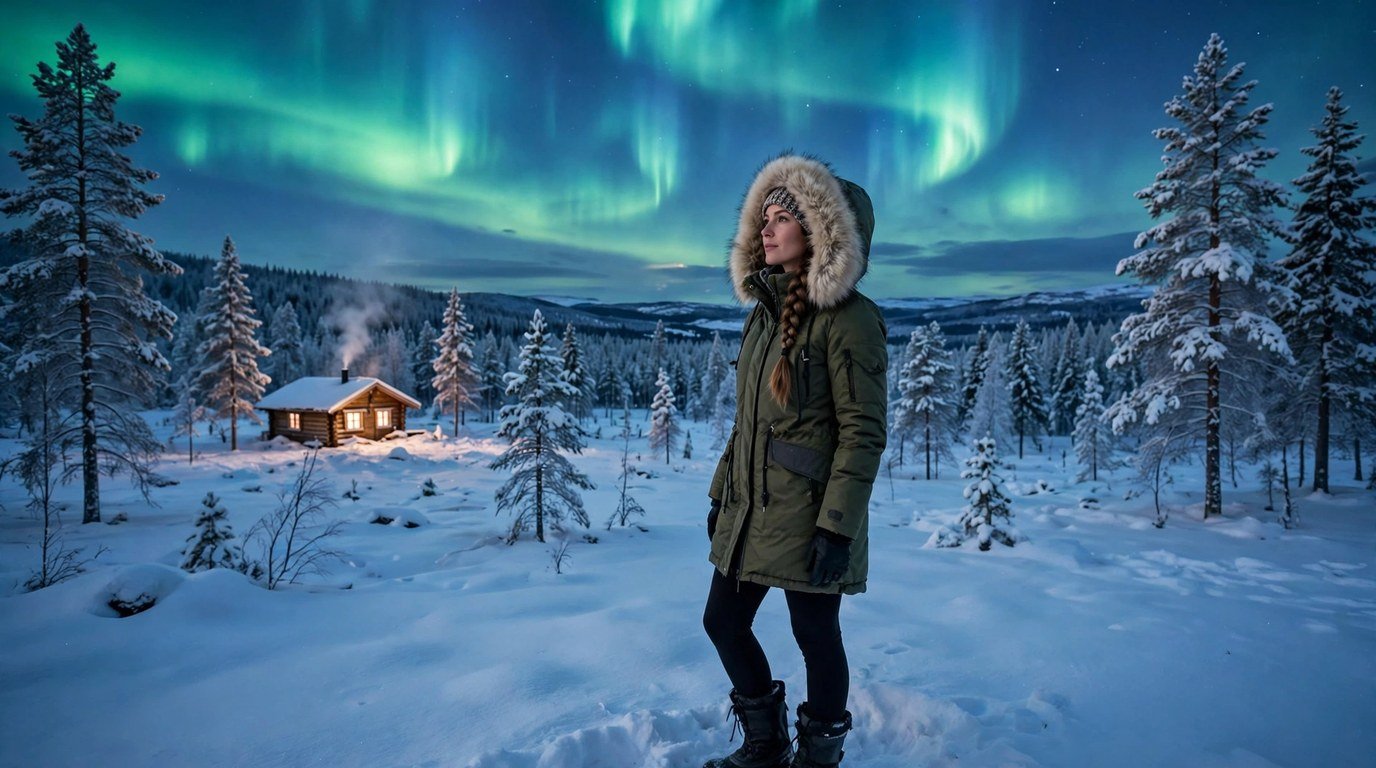
Pack three warm layers: a merino wool base layer, a fleece or down mid-layer, and an insulated waterproof parka, plus insulated snow boots, wool socks, thermal leggings, mittens, a beanie, and a balaclava or neck gaiter. Lapland’s winter temperatures often sit between -10°C and -30°C (14°F to -22°F), so warmth comes from layering — not from one heavy coat alone.
Key Takeaways
- Layer in threes: merino base, insulating mid-layer, and a windproof, waterproof parka rated for deep cold.
- Insulated snow boots with thick wool socks matter more than any single jacket — cold feet end a northern lights night fast.
- Mittens beat gloves in Lapland; pack thin liner gloves underneath so you can use your phone or camera.
- For aurora hunting, dress for standing still in -20°C, not for walking — add an extra layer and hand warmers.
- Most tour operators lend thermal overalls and boots for husky and snowmobile safaris, so check before you overpack.
What Is Lapland Like in Winter?
Lapland is Europe’s far north — the Arctic region of Finland, with Rovaniemi as its best-known gateway town. In winter it is a world of snow-covered pine forest, frozen lakes, and long blue twilight. Pack right, and the cold is entirely manageable.
How cold does Lapland actually get?
Daytime temperatures in Lapland in December and January commonly sit between -10°C and -20°C (14°F to -4°F), and cold snaps can push the thermometer below -30°C (-22°F). The air is dry, which helps, but wind chill on an open snowmobile trail or a frozen lake can make it feel colder still. Pack for temperatures 5–10 degrees colder than the forecast, just in case.
What is the polar night, and how does it affect what you wear?
Around the winter solstice in December, northern Lapland enters the polar night (kaamos), when the sun barely rises — or, above the Arctic Circle, does not rise at all for several weeks. Even in Rovaniemi, daylight lasts only a few hours. The result is a long, dusky blue twilight. For your outfits, it means more of your day is spent in darkness and cold: reflective details and a headlamp make you easier to spot on dark trails and roads.
What Should You Wear in Lapland? The Layering System That Actually Works
No one coat, however expensive, keeps you warm on its own when you are standing still under the aurora at -25°C. Three thinner layers trap warm air between them, let you adjust as you move between heated cabins and the outdoors, and dry faster than one heavy garment.
What is the best base layer for Lapland?
Start with merino wool. A long-sleeved merino top and full-length merino leggings sit closest to your skin, wick away sweat, and stay warm even when damp. Avoid cotton as a base layer — cotton holds moisture, and damp cotton against your skin in -20°C is how you get cold fast. Pack two sets for a week-long trip so you always have a dry set.
What mid-layer keeps you warmest?
Your mid-layer is the insulation layer. A fleece jumper (a sweater, for US readers) or a lightweight down jacket works well, and many travellers wear both: fleece next, then a packable down jacket under the parka. Down insulates brilliantly but loses warmth when wet, so keep it under your waterproof shell. Whatever you choose, make sure it fits comfortably under your parka without restricting your arms — you need to be able to move, drive a snowmobile, and hold a camera.
What kind of outer layer do you need?
Your parka is your shield against wind and snow. Look for a long, insulated parka that covers your hips, with a waterproof and windproof shell, a hood with faux-fur trim, and deep pockets. It should be rated for at least -25°C. Try it on over your full layers before you travel — a coat that fits over a T-shirt at home may be too tight over fleece and down. Many Lapland hotels and tour operators rent or lend thermal outerwear, so ask when you book.
What Shoes and Boots Work Best in Lapland Snow?
Boots decide whether your day is enjoyable or miserable. Choose insulated, waterproof snow boots rated to at least -30°C, with a thick, grippy sole for ice. They should be roomy enough for two pairs of socks — thick merino wool socks, plus a thinner liner pair — because tight boots cut off circulation and make feet colder. Pack slip-on shoes or warm slippers for indoors, since Finns take their shoes off inside. Ice grips that slip over your boots are cheap, light, and genuinely useful on icy pavements.
What to Wear for the Northern Lights
Seeing the aurora is the reason most people come to Lapland, and aurora hunting means standing outside, mostly still, for two or three hours in the coldest part of the night. Dress for stillness, not for activity: this is the moment to wear every layer you own.
Wear your full layering system, add a second pair of socks, and put disposable hand warmers inside your mittens and toe warmers inside your boots. A balaclava or a neck gaiter pulled up over your nose protects the one part of your face the cold reaches first, and a beanie under your hood adds another layer around your ears. Keep your phone in an inside pocket close to your body — cold drains batteries quickly, and a phone kept warm lasts far longer.
How do you stay warm standing outside for hours?
Move a little, often. Shift your weight, wiggle your toes inside your boots, and take short walks between photo attempts instead of standing frozen in one spot. Sip something warm from a flask — most aurora tours serve hot berry juice around a fire — and step into a heated cabin when one is available. If your fingers go numb, warm them against your own neck or stomach. The golden rule of aurora nights is simple: if you feel cold, add a layer immediately.
What to Wear for Lapland Day Activities
For husky sledding, wear your full layers and windproof outerwear, and expect to be sitting still on a sled while the dogs run: wind chill is the enemy here, so a balaclava and ski goggles or wraparound sunglasses are worth packing. For reindeer sleigh rides, the pace is gentle and the ride is short, so your everyday Lapland layers are plenty. For snowmobiling, you need your warmest setup: windproof everything, a full-face balaclava, goggles, and mittens over liner gloves, because the wind at speed cuts through gaps in clothing. For snowshoeing and winter walks, dress a layer lighter than you think and carry the extra layer in a small daypack — walking warms you up fast, and sweating into your base layer is the fastest way to get cold when you stop.
Many operators provide thermal overalls, boots, and helmets for safaris, so confirm what is included before you travel and pack your own base and mid-layers underneath. For ideas on layering for other cold-weather trips, see our guide to ski trip outfits for non-skiers — the same layering logic applies, even if you never touch a pair of skis.
What to Wear in the Evening: Sauna, Dinner and the Ice Hotel
Lapland evenings are warm, social, and relaxed — and the dress code is comfort. Finnish sauna culture is central to a Lapland stay: pack a swimsuit for the sauna and for the famous ice-swimming plunge (avanto) if you are brave enough, plus a warm robe for the walk back to your cabin. For dinner at your hotel or a resort restaurant, smart-casual knitwear works perfectly — a wool jumper, dark jeans or smart trousers, and ankle boots. There is no formal dress code anywhere in Lapland. If you are staying in an ice hotel or snow hotel, sleep in thermal base layers and thick socks inside the provided thermal sleeping bag, and keep your warm clothes folded beside you for the morning.
Lapland Outfit Comparison: What to Wear for Each Activity
| Activity | Key layers | Footwear | Must-pack extra |
|---|---|---|---|
| Northern lights hunting | Full three layers + extra down layer | Insulated boots, double socks | Hand warmers, balaclava, headlamp |
| Husky sledding | Windproof parka, full layers | Insulated boots | Ski goggles, balaclava |
| Reindeer sleigh ride | Everyday Lapland layers | Insulated boots | Camera, warm hat |
| Snowmobiling | Warmest setup, windproof everything | Insulated boots | Goggles, full-face balaclava |
| Snowshoeing / winter walk | Lighter layers + spare in daypack | Insulated boots, ice grips | Water bottle, snack |
| Sauna and ice swimming | Swimsuit, robe | Slippers or slip-on shoes | Towel, dry base layer |
| Dinner at the resort | Wool jumper, smart trousers | Ankle boots | Lip balm, moisturiser |
The Lapland Packing Checklist
Use this checklist when you pack — it is designed for a 4–7 day winter trip:
- 2 sets of merino wool base layers (top and leggings)
- 2 fleece jumpers or 1 fleece + 1 packable down jacket
- 1 long insulated waterproof parka with hood
- 2 pairs of thermal leggings or lined trousers
- 1 pair of waterproof snow trousers for safaris
- Insulated snow boots rated to -30°C
- 4 pairs of thick merino wool socks + 2 liner pairs
- 1 beanie, 1 balaclava or neck gaiter, 1 pair of mittens + liner gloves
- Ski goggles or wraparound sunglasses (snow glare is strong, even in twilight)
- Swimsuit, robe, and slippers for the sauna
- Hand warmers and toe warmers (pack of 10)
- Lip balm, heavy moisturiser, and sunscreen — cold air and snow reflection dry and burn skin
- Headlamp or small torch for dark trails
- Small daypack for spare layers, water, and snacks
- Phone charger and a power bank kept in an inside pocket
If you are travelling light, our carry-on only winter packing guide shows how to fit a full cold-weather capsule into one cabin bag.
Common Mistakes to Avoid in Lapland
The most common mistake is wearing cotton next to your skin — it holds sweat and turns cold. The second is buying a fashionable coat that is not actually rated for Arctic temperatures; style matters far less than insulation when it is -25°C. A third mistake is wearing tight boots: cramped feet get cold feet, so size up and wear two pairs of socks. Many travellers also forget sun protection — snow reflects UV strongly, and you can get sunburned on a bright Lapland day even in January. And finally, do not skip the balaclava: exposed cheeks and noses are the first places frostnip appears.
Best Practices for Dressing in Extreme Cold
Dress in the morning for the coldest part of the day, not the warmest — you can always remove a layer, but you cannot add one you did not pack. Keep your core, head, hands, and feet warm first; if your core is warm, your body keeps blood flowing to your fingers and toes. Change out of damp base layers as soon as you come inside. Eat well and stay hydrated — your body burns more energy keeping warm.
Frequently Asked Questions About What to Wear in Lapland
Do I need special clothes for Lapland, or will my normal winter coat work?
A normal winter coat from a mild climate is rarely enough for Lapland. You need a parka rated for at least -25°C, a merino base layer, and insulated boots rated to -30°C. If you do not own these, many hotels and safari operators lend thermal overalls and boots, so check what is included before buying new gear.
How many layers should I wear in Lapland?
Three layers is the standard: a merino wool base layer, an insulating mid-layer such as fleece or down, and a windproof, waterproof parka. Add a fourth layer — a second fleece or down jacket — for northern lights nights when you will be standing still. Adjust by removing or adding the mid-layer as you move between indoors and outdoors.
What shoes should I wear in Lapland?
Insulated, waterproof snow boots rated to at least -30°C, with a grippy sole for ice and room for two pairs of socks. Avoid fashion boots and trainers — they are not warm or waterproof enough for deep snow. Pack slip-on shoes or slippers for indoors, since shoes come off inside Finnish homes and lodges.
Can I wear jeans in Lapland?
Jeans alone are too cold and too slow to dry for Lapland outdoors. Wear thermal leggings under jeans for short walks in town, but choose insulated or waterproof trousers for safaris and snow activities. If jeans are your style, save them for indoor evenings at the resort, layered over thermals.
What should I wear to see the northern lights?
Wear your warmest setup: full base, mid, and outer layers, an extra down layer, double socks, mittens over liner gloves, a balaclava, and a beanie under your hood. Pack hand and toe warmers, and keep your phone in an inside pocket. You will be standing still for hours, so dress for -25°C even if the forecast says -15°C.
Is it okay to wear leggings in Lapland?
Yes — thermal leggings are one of the best things you can pack. Wear merino or fleece-lined leggings as a base layer under trousers, or as your main leg layer under a long parka for short walks. Regular fashion leggings without insulation are not warm enough on their own, so always pair them with a thermal layer or insulated trousers.
What do people wear for dinner in Lapland?
Dinner dress in Lapland is smart-casual and relaxed. A wool jumper with dark jeans or smart trousers and ankle boots is perfect for resort restaurants. There is no formal dress code, and nobody dresses up the way they might on a city break — warmth and comfort come first everywhere in Lapland, including at dinner.
Final Thoughts: Pack Warm, Then Relax and Enjoy It
Lapland rewards travellers who pack for the cold and then stop worrying about it. Get the layering system right — merino base, fleece or down mid-layer, insulated parka, warm boots, mittens, and a balaclava — and the Arctic cold becomes background instead of the main event.
Before you go, check your operator’s kit list, pack for five degrees colder than the forecast, and keep your spares in your hand luggage in case your checked bag is delayed. If you are combining Lapland with other winter stops, our New York in December guide and our winter honeymoon outfits guide use the same cold-weather layering principles. And if your journey starts with a long overnight flight, our red-eye flight outfit formula will help you arrive rested and ready for the snow.
1 thought on “What to Wear in Lapland: Northern Lights & Snow-Day Outfits”