
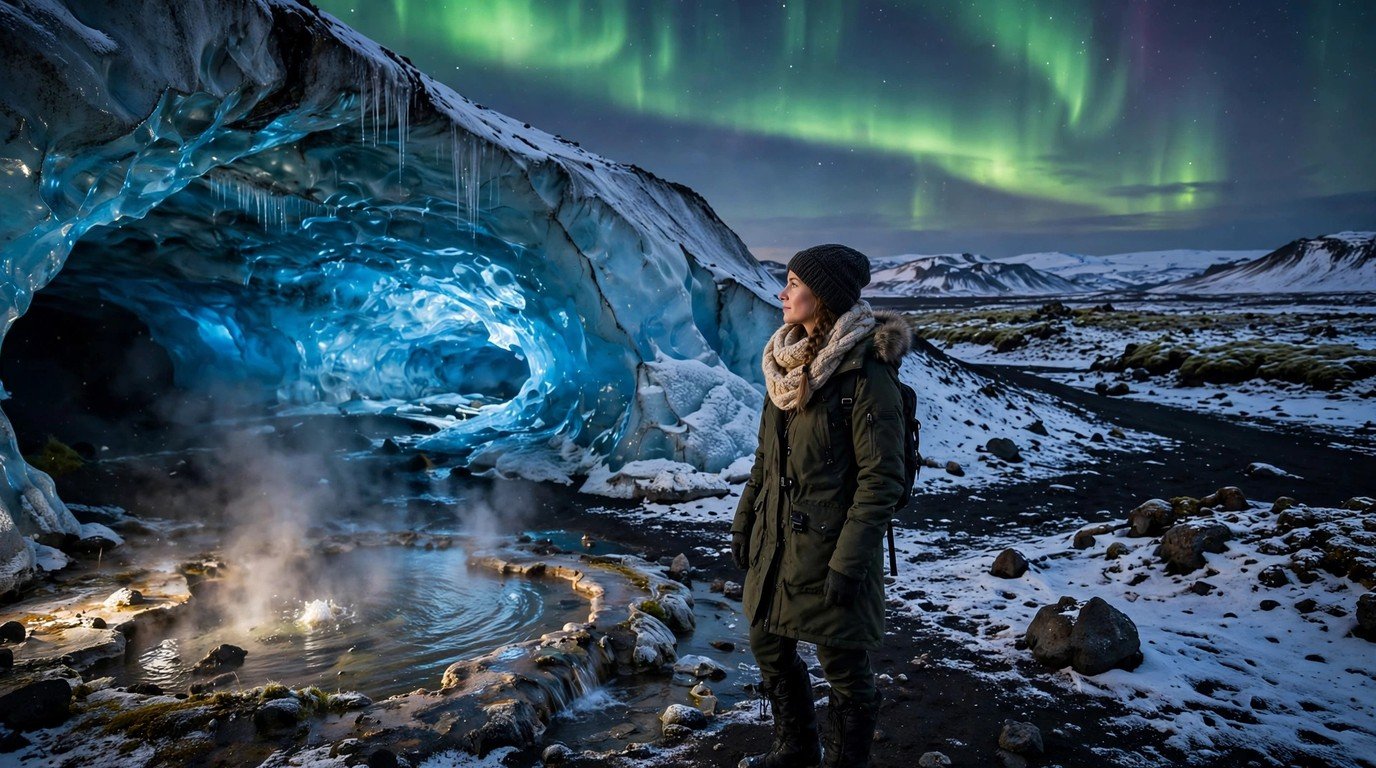
What to Wear in Iceland in Winter: Northern Lights, Ice Caves & Hot Springs
Iceland in winter is cold, windy, wet and dark — and completely worth it. The outfit formula is simple: a moisture-wicking thermal base layer, a warm fleece or wool mid-layer, and a waterproof, windproof insulated outer shell, plus waterproof boots with grip, a warm hat, gloves and a scarf. Dress in layers you can add or remove, keep everything waterproof, and you will stay warm from a glacier ice cave to a steaming hot spring.
Key Takeaways
- Layer in threes: merino or synthetic thermal base, fleece or wool mid-layer, waterproof and windproof shell.
- Waterproof matters more than warmth alone — Iceland’s winter rain, sleet and waterfall spray soak ordinary coats fast.
- Pack waterproof boots with a grippy sole; icy pavements and black-sand beaches are slippery.
- Northern lights nights mean standing still in the cold for an hour or more — dress warmer than you think you need.
- Bring a swimsuit: hot springs and the Blue Lagoon are a highlight of any winter trip, even in snow.
What Is Winter in Iceland Actually Like?
Winter in Iceland runs roughly from November to March. It is milder than many people expect — but the wind, rain and darkness change everything about how it feels.
How cold does it get in Iceland in winter?
Daytime temperatures in Reykjavik and along the south coast usually hover around freezing. Inland and in the north it is colder. Wind chill can make it feel far colder, especially on open beaches and glacier viewpoints.
How much daylight is there in winter?
Very little. In December, Iceland gets roughly four to five hours of daylight, with the sun rising late in the morning and setting in the early afternoon. By February the days are noticeably longer. Plan sightseeing around the short window of light, and expect northern lights hunting, dinners and hot-spring visits in the dark.
What about wind, rain and snow?
Wind is the defining feature of an Icelandic winter. Gusts are common, and rain or sleet can arrive suddenly and sideways. Snow is frequent but rarely deep on the south coast. The practical takeaway: a warm coat that is not windproof or waterproof will let you down.
The Layering System That Works in Iceland
Layering is the single most useful skill for an Iceland winter trip. It lets you adjust as you move between a heated car, a windy viewpoint, a glacier hike and a warm cafe — without one enormous, heavy coat.
What should I wear as a base layer?
Start with a moisture-wicking thermal top and leggings in merino wool or a synthetic fabric. Merino wool is the classic choice: it stays warm when damp, resists odour and feels soft against the skin. Avoid cotton as a base layer — cotton holds sweat and moisture, and once wet it makes you cold. Pack two or three base-layer sets.
What is the best mid-layer for Iceland in winter?
Your mid-layer is your insulation. A fleece zip-up, a chunky knit jumper or a lightweight down vest all work well. On the coldest days, wear both a fleece and a light puffer under your shell. Choose pieces slim enough to fit under your outer coat without bunching, and pick a zip-up style so you can vent heat quickly indoors.
What kind of outer coat do I need?
You need a waterproof, windproof, insulated parka with a hood — the most important item in your suitcase. Look for a coat that covers your hips, has a storm flap over the zip, adjustable cuffs and a hood that fits over a beanie. A long parka is smart for northern lights nights, when you stand still in the cold. If your coat is only water-resistant, treat it with a waterproofing spray before you travel.
What should I wear on my legs?
Thermal leggings under waterproof trousers are the standard combination. Fleece-lined leggings under jeans work for city days in Reykjavik, but jeans alone are a poor choice for outdoor excursions — denim gets cold and stays wet. For glacier hikes, ice cave tours and waterfall visits, wear waterproof walking trousers over your thermals.
What boots are best for Iceland in winter?
Waterproof insulated boots with a deep, grippy tread are essential. Icy pavements, frozen paths and wet black sand are slippery, and many of Iceland’s best sights are reached on uneven ground. Make sure your boots are broken in before the trip — new boots and a full day of walking are a painful combination. Pack thick wool socks, and consider slip-on ice grips for icy paths; many hotels and tour operators sell or lend them.
What Should I Wear to See the Northern Lights?
Northern lights viewing means standing outside, mostly still, in the dark for an hour or more — often away from shelter, in wind. Dress warmer than you think you need, because you will not be moving enough to generate heat.
Wear your full layering system plus your warmest accessories: a thermal base, fleece, insulated parka, thermal leggings under waterproof trousers, wool socks, insulated boots, a beanie that covers your ears, a scarf or neck gaiter, and insulated gloves or mittens. For photos, bring thin touchscreen glove liners so you can work your phone or camera without bare hands. Hand warmers tucked into pockets or gloves make a real difference on a long, cold night.
What Should I Wear for an Ice Cave Tour?
Wear waterproof trousers and a waterproof jacket, because you will be walking on glacier ice, possibly in meltwater drips, and sometimes crouching to enter low cave openings. Sturdy waterproof hiking boots with ankle support are required; trainers will not be allowed on the glacier. Thermal layers underneath keep you warm, since the inside of an ice cave is cold and still. Leave the bulky parka in the car if your waterproof shell is warm enough with layers — you need freedom of movement on the glacier. Gloves are essential for holding safety ropes and steadying yourself on ice. Avoid loose scarves that could catch on equipment; a snug neck gaiter is better here.
What Should I Wear to a Hot Spring in Winter?
Soaking in a steaming geothermal pool while snow falls around you is the defining Iceland winter moment — and it needs a little planning. Bring a swimsuit, and wear it under your clothes on the way there so changing is quick.
At the Blue Lagoon and other developed lagoons, you change in warm indoor facilities, so the walk outside in your swimsuit is short — but it is still cold, so bring a robe or a large towel and flip-flops or waterproof sandals for the wet floors. Keep your hair tied up: geothermal water can leave hair feeling dry and stiff, so keep it out of the water and condition it afterwards. For natural hot springs, facilities are basic — sometimes just a small changing shelter or none at all — so wear easy layers you can change quickly, and bring a dry bag for clothes and phone.
What Should I Wear in Reykjavik in Winter?
Reykjavik in winter is a walkable, stylish small city, and outfits can be a little more polished here than on a glacier. The same layering system applies, but you can swap hiking boots for smart waterproof ankle boots and the technical shell for a long wool coat — as long as it is windproof and you have a waterproof layer for rainy spells.
Think dark colours, a good coat, a chunky knit, slim trousers or a midi skirt with fleece-lined tights, and boots with grip. A crossbody bag worn under your coat keeps your hands free and your belongings dry. For dinner, add a knit dress with opaque tights and boots, or tailored trousers with a blouse under a blazer — warm, but polished enough for Reykjavik’s cosy restaurants.
What to Wear in Iceland in Winter by Activity
| Activity | Top layers | Bottom layers | Footwear | Key extras |
|---|---|---|---|---|
| Northern lights tour | Thermal + fleece + long insulated parka | Thermal leggings + waterproof trousers | Insulated waterproof boots | Mittens, hand warmers, beanie |
| Ice cave / glacier hike | Thermal + fleece + waterproof shell | Thermal leggings + waterproof trousers | Sturdy waterproof hiking boots | Gloves, helmet and crampons (provided) |
| Hot spring / Blue Lagoon | Swimsuit under easy layers | Swimsuit under easy layers | Flip-flops or waterproof sandals | Robe or big towel, dry bag, hair tie |
| Waterfalls & south coast | Thermal + fleece + waterproof parka | Thermal leggings + waterproof trousers | Waterproof boots with grip | Waterproof phone pouch, scarf |
| Reykjavik city day | Knit + long wool or waterproof coat | Fleece-lined tights or trousers | Smart waterproof ankle boots | Crossbody bag, leather gloves |
The Iceland Winter Packing Checklist
Pack for layers, waterproofing and warmth.
- Outerwear: waterproof, windproof insulated parka with hood; waterproof trousers.
- Base layers: 2–3 merino or synthetic thermal tops and leggings.
- Mid-layers: fleece zip-up, chunky knit jumper, lightweight puffer or vest.
- Bottoms: fleece-lined leggings, walking trousers, one pair of smart trousers or a midi skirt for Reykjavik.
- Footwear: waterproof insulated boots with grip; smart waterproof ankle boots; flip-flops for hot springs.
- Accessories: warm beanie, scarf or neck gaiter, insulated mittens, touchscreen glove liners, thick wool socks (4–5 pairs).
- Swim: swimsuit, quick-dry towel or robe, dry bag, waterproof phone pouch.
- Extras: hand warmers, lip balm, moisturiser, sunglasses, reusable water bottle, small daypack.
- For photos: power bank — cold drains batteries fast.
Common Mistakes to Avoid in Iceland in Winter
- Wearing cotton as a base layer. Cotton absorbs sweat and rain, stays wet and makes you cold. Choose merino wool or synthetics instead.
- Bringing a fashionable coat that is not waterproof. A stylish wool coat is fine for a Reykjavik dinner, but it will not survive a waterfall visit or a sleet shower.
- Wearing jeans on outdoor excursions. Denim gets cold, heavy and wet, and takes ages to dry. Save jeans for city days, with thermals underneath.
- Forgetting the wind. A warm but wind-permeable jacket feels freezing on an open beach. Windproofing matters as much as insulation.
- New boots on day one. Unbroken-in boots plus a full day of walking on ice and uneven ground is a recipe for blisters. Break them in at home.
- Underdressing for the northern lights. Standing still in the dark is far colder than walking. Add an extra layer and bring hand warmers.
- Skipping the swimsuit. Hot springs are a highlight, and buying a swimsuit in Iceland is expensive. Pack one even if you are unsure you will use it.
Best Practices for Warm, Photogenic Winter Outfits
Choose a colour palette that stands out against snow and black sand: deep red, mustard, teal or cream photograph beautifully against white ice and dark rock, while all-black can disappear into a lava field. A bright beanie or scarf adds colour without a whole new coat. Keep silhouettes simple — a long parka over slim trousers and boots looks polished. Keep your camera and phone inside your coat when not shooting, because cold drains batteries quickly, and wipe lenses often — waterfall mist and snowflakes fog them fast.
Frequently Asked Questions About What to Wear in Iceland in Winter
Do I need a heavy winter coat for Iceland in winter?
Yes, bring a waterproof, windproof, insulated coat with a hood. Winter temperatures hover around freezing, but wind chill and sudden rain or sleet make it feel much colder. A long parka is ideal for northern lights nights, when you stand still in the cold, and for glacier and waterfall visits, where waterproofing is essential.
Can I wear jeans in Iceland in winter?
You can wear jeans in Reykjavik, with thermal leggings underneath, but avoid them for outdoor excursions. Denim absorbs water, gets cold and dries slowly — a problem at waterfalls, on glaciers and on wet black-sand beaches. Waterproof trousers over thermal leggings are a far better choice for sightseeing days.
What shoes should I wear in Iceland in winter?
Waterproof insulated boots with a deep, grippy tread are the best choice — they handle icy pavements, snow, wet sand and uneven ground. Pack smart waterproof ankle boots for Reykjavik evenings, and flip-flops for hot springs. Slip-on ice grips help on icy paths.
What should I wear to the Blue Lagoon in winter?
Wear your swimsuit under warm, easy layers, and bring a robe or large towel, flip-flops and a hair tie. You change in warm indoor facilities, so the outdoor walk is short — but the air is cold, so keep your parka and hat ready. Keep hair out of the geothermal water where possible, and condition it afterwards.
How many layers do I need for the northern lights?
Plan for three layers on top and two on the bottom: a thermal base, a fleece mid-layer and an insulated parka, plus thermal leggings under waterproof trousers. Add a beanie, scarf, mittens and hand warmers. You will be standing still in the dark for an hour or more, so dress warmer than for a walk.
Is Iceland colder than Lapland in winter?
Surprisingly, often not on the thermometer: Iceland’s coastal climate is milder than inland Lapland, where temperatures can drop far lower. But Iceland’s wind and rain can make it feel colder, and damp cold seeps through clothing that is not windproof. In both places, the same rule applies — layer up, stay waterproof and protect yourself from the wind.
What should I pack for Iceland in winter if I only have a carry-on?
Pack a capsule wardrobe: two thermal sets, one fleece, one knit, one insulated waterproof parka, waterproof trousers, one pair of boots worn on the plane, a swimsuit, a beanie, gloves and a scarf. Wear your bulkiest items on the flight, choose neutral colours that mix and match, and re-wear layers — merino wool resists odour.
Do I need crampons or special gear for ice caves?
Tour operators provide crampons, helmets and safety equipment for glacier and ice cave tours, so you do not need to buy them. You do need sturdy waterproof hiking boots with ankle support, waterproof trousers and a waterproof jacket, plus gloves for the safety ropes. Trainers are not allowed on the glacier.
Final Thoughts: Dress for the Weather, Then Enjoy It
Iceland in winter asks a little more of your wardrobe than a beach holiday — but the reward is enormous. With a good layering system, a waterproof shell and warm boots, you can watch the northern lights dance, walk inside a blue ice cave and float in a steaming lagoon while snow falls, all in the same trip.
Next steps: check the weather the day before you travel, book northern lights and ice cave tours early, and lay out outfits the night before each day. If you are planning more cold-weather trips, our Lapland winter outfits guide and ski trip outfits for non-skiers use the same layering system — and our carry-on winter capsule wardrobe shows how to fit it all in one bag.