
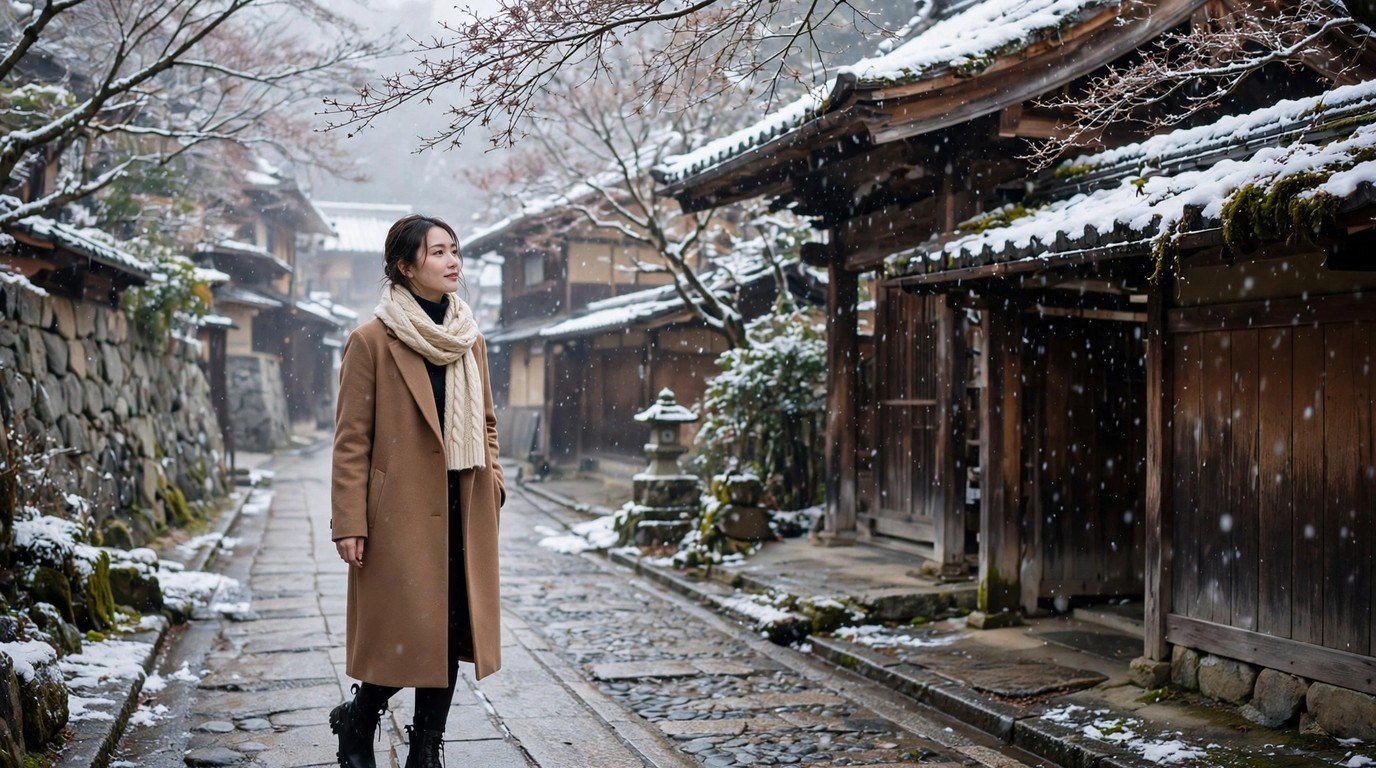
Kyoto in January is quiet, crisp, and beautiful — crowd-free temples, the chance of snow on the Golden Pavilion, and clear winter light. The trade-off is real cold: daytime highs hover around 8–9°C (mid-40s°F) and nights drop close to freezing, so the right outfit is warm layers, waterproof shoes with grip, and temple-friendly pieces you can slip on and off.
Key Takeaways
- Dress in three layers: a thermal base, a warm knit or fleece mid-layer, and a windproof, water-resistant coat.
- Wear waterproof boots with good grip — temple steps, gravel paths, and wet cobbles are slippery in January.
- Pack warm socks and slip-on shoes: you remove your shoes at temples, shrines, and many restaurants.
- A kimono rental works in January if you layer thermals underneath and add a warm haori-style coat.
- Bring a compact umbrella and a crossbody bag — January brings occasional rain and light snow, and you will walk a lot.
What Is Kyoto Like in January?
January is Kyoto’s coldest month, and it feels colder than the numbers suggest. Days are short, the wind cuts through thin jackets, and temple grounds stay damp and chilly long after sunrise. The reward is a calmer city: the New Year crowds fade after the first week, and popular sights like Kiyomizu-dera and Fushimi Inari feel far more peaceful than in spring or autumn.
How cold does Kyoto get in January?
Daytime highs in Kyoto in January are usually around 8–9°C (46–48°F), with overnight lows near 0–1°C (32–34°F). Mornings and evenings feel noticeably colder, especially in open temple grounds and along the Kamo River, where wind chill is a factor. Indoor spaces, trains, and shops are well heated, so you will move between cold outdoors and warm indoors all day — which is exactly why layers matter more than one heavy coat.
Does it snow in Kyoto in January?
Snow in Kyoto is possible but light and occasional — a dusting rather than a snowstorm. When it does fall, it rarely settles for long in the city centre, though the hills around the temples can stay white a little longer. The most famous snow scene is the Golden Pavilion (Kinkaku-ji) with a white roof, and photographers wait all winter for it. Pack as if snow is possible — waterproof shoes and a water-resistant coat — but do not expect deep snow or need heavy snow boots.
Is January a good time to visit Kyoto?
Yes, if you like quiet travel and do not mind the cold. Hotel prices are usually lower than in cherry-blossom or autumn-leaf season, temples are calm, and the winter light is lovely for photos. The main downsides are the short days (sunset is around 5 p.m.) and the cold, which is easy to manage with the layering system below.
What Should You Wear in Kyoto in January?
Think of your outfit as a system, not a single look. You need warmth for long outdoor walks, easy layers for heated interiors, and shoes that handle wet stone. The formula below works for temple days, old-town strolls, and evenings in Gion alike.
What is the best layering formula for Kyoto in winter?
Start with a thermal base layer — a thin merino or heat-tech style top and leggings under your clothes. Add a warm mid-layer such as a chunky knit jumper, a fleece, or a quilted vest. Finish with a long, windproof coat that covers your hips, ideally water-resistant. This three-layer setup keeps you warm outside and lets you peel down to a comfortable jumper indoors without carrying a bulky jacket all day.
What should you wear on top in Kyoto in January?
A warm knit jumper is the workhorse of a Kyoto winter wardrobe. Choose one in wool or a wool blend rather than thin cotton, and bring two so you can rotate them. A scarf is not optional — it seals the gap at your neck, adds warmth without bulk, and doubles as a style piece against a plain coat. Gloves and a warm hat or beanie are worth packing too, especially for early-morning visits to Fushimi Inari or the Arashiyama bamboo grove.
What should you wear on the bottom in Kyoto in January?
Warm trousers beat skirts and dresses for most January days. Thermal leggings under straight-leg trousers, wide-leg wool trousers, or dark jeans are all good choices. If you love dresses, wear them with fleece-lined tights and knee-high boots — bare legs are not a January option. Avoid light fabrics such as linen and thin cotton trousers; they offer no insulation and feel cold within minutes outdoors.
What shoes should you wear in Kyoto in January?
Waterproof ankle boots with a grippy sole are the best single choice for Kyoto in January. You will walk on wet cobbles in Gion, gravel paths at shrines, and steep stone steps at temples, so grip matters as much as warmth. Make sure the boots are broken in before the trip — January is the wrong month to test new shoes on 15,000 steps a day. Trainers can work on dry days, but they soak through quickly in rain or slush, so keep them as a second pair, not your main one.
What Should You Wear to Kyoto’s Temples and Shrines in Winter?
Temples and shrines are the heart of a Kyoto trip, and they come with their own dress logic. The rules are simple: dress modestly, wear shoes you can remove easily, and keep your socks presentable — because people will see them.
Why do shoes matter so much at temples?
You remove your shoes before entering temple halls, some shrine buildings, traditional restaurants, and ryokan inns. In January that means you will be standing in your socks on cold wooden floors, so pack warm, good-quality socks with no holes — thick wool or thermal socks are ideal. Slip-on boots or shoes with a side zip save time and hassle when you are taking shoes on and off several times a day.
What should you wear inside a temple?
Dress modestly out of respect: cover your shoulders and avoid very short skirts or low necklines. A long coat over a jumper and trousers is perfectly appropriate. You do not need formal clothes, and most temples have no strict dress code, but neat, covered-up outfits are the respectful choice and will help you feel comfortable. Leave the hiking poles, giant backpacks, and noisy outerwear at the hotel where you can.
Can you wear a kimono in Kyoto in January?
Yes, and January is a lovely time for it — the streets of Gion and Higashiyama are quieter, so your photos will be better. The trick is layering: wear thermal leggings and a thermal top under the kimono, add warm socks with your zori sandals, and rent a warm haori coat or shawl over the top. Most rental shops offer winter options and will help you layer properly. Book a morning slot so you have the warmest part of the day in the kimono, and plan indoor breaks at cafes to warm up.
What to Wear in Kyoto in January: Outfits by Day Type
Different days call for different outfits. Use this table to plan at a glance.
| Day type | Top | Bottom | Shoes | Extra |
|---|---|---|---|---|
| Temple-hopping day | Thermal + knit + long coat | Warm trousers | Waterproof ankle boots | Scarf, gloves, slip-on ease |
| Arashiyama & bamboo grove | Thermal + fleece + water-resistant coat | Thermal leggings + trousers | Grippy boots | Beanie, crossbody bag |
| Gion evening stroll | Knit dress + fleece tights + coat | Fleece-lined tights | Knee-high boots | Small evening bag, scarf |
| Kimono rental day | Thermals under kimono + haori coat | Thermal leggings | Zori sandals + warm socks | Hand warmers, shawl |
| Rainy or snowy day | Thermal + knit + waterproof coat | Waterproof-friendly trousers | Waterproof boots | Compact umbrella |
| Day trip to Kurama or Mt. Hiei | Thermal + fleece + insulated jacket | Thermal leggings + trousers | Sturdy walking boots | Hat, gloves, water bottle |
What to Pack for Kyoto in January: The Checklist
Packing light but warm — Kyoto rewards walkers, and dragging a heavy suitcase over cobbles is nobody’s idea of fun. Tick these off before you zip the bag.
- Thermal base layers: 2 tops and 1–2 pairs of leggings
- Warm knit jumpers: 2, in wool or a wool blend
- Long, windproof, water-resistant coat: 1
- Warm trousers: 2 pairs (wool, dark denim, or lined)
- Fleece-lined tights: 1–2 pairs, if you wear dresses or skirts
- Waterproof ankle boots with grip: 1 pair, broken in
- Warm socks: 4–5 pairs, thick wool or thermal
- Scarf, gloves, and a beanie: 1 set
- Compact umbrella: 1
- Crossbody bag with a zip: 1, for hands-free temple days
- Hand warmers: a few disposable ones for cold mornings
- Lip balm and moisturiser: winter air in Kyoto is dry
- Layers for the flight: the same system works on the plane
What Not to Wear in Kyoto in January
Some packing mistakes show up again and again in Kyoto in January. Avoid these and your trip will be far more comfortable.
Why are thin jackets a mistake?
A fashionable thin jacket looks good in a photo and feels freezing within ten minutes on a temple hill. January wind cuts straight through unlined coats, light denim jackets, and thin blazers. If you love the look, wear it as a mid-layer under a proper coat — never as your only outer layer.
Why should you skip heels and smooth soles?
Kyoto’s old streets are cobbled, temple steps are steep and worn smooth, and gravel paths shift underfoot. Heels and smooth-soled fashion boots are a slip risk, especially when surfaces are wet. Save heeled boots for a single dinner out, and wear flat, grippy boots for everything else.
What else should you leave at home?
Leave the linen, the sheer fabrics, and the white trainers you want to keep clean — January Kyoto is damp, and light colours show every splash. Skip the oversized backpack too: it bumps into people in crowded temple halls and is awkward in small restaurants. A compact crossbody bag holds your essentials and keeps your hands free for photos, tickets, and hand warmers.
How to Stay Warm (and Still Look Good) in Kyoto
Staying warm in Kyoto is less about buying special gear and more about small habits. Warm up indoors between sights: step into a cafe for matcha, browse a covered shopping arcade, or ride the bus instead of walking the coldest stretch. Eat warm food — a bowl of ramen or udon at lunchtime warms you from the inside and is one of the trip’s simple pleasures. Keep hand warmers in your coat pockets for early mornings at Fushimi Inari, and carry your scarf even on days that start mild — Kyoto’s temperature drops quickly after sunset, and an evening stroll in Gion is much colder than the afternoon that preceded it. If your Japan trip also includes a ski trip, bring apres-ski layers you can reuse in Kyoto on cold evenings.
Frequently Asked Questions About Kyoto in January
What should I wear in Kyoto in January as a woman?
Wear three layers: a thermal base, a warm knit mid-layer, and a long windproof, water-resistant coat. Pair them with warm trousers or fleece-lined tights, waterproof ankle boots with grip, and a scarf, gloves, and beanie. Choose slip-on shoes and warm socks, since you will remove your shoes at temples and restaurants.
Is Kyoto very cold in January?
Kyoto in January is cold but manageable, with daytime highs around 8–9°C (46–48°F) and nights near freezing. It feels colder on windy temple hills and in the early morning. With thermal layers, a proper coat, and warm accessories, most visitors are comfortable all day. The key is layering rather than one heavy item.
Does it snow in Kyoto in January?
Light snow is possible in Kyoto in January, but it is occasional and rarely settles for long in the city. Hillside temples may hold a dusting longer, and the Golden Pavilion in snow is a famous sight. Pack waterproof shoes and a water-resistant coat so a snowy morning is a photo opportunity, not a problem.
What shoes are best for Kyoto in winter?
Waterproof ankle boots with a grippy sole are the best choice for Kyoto in winter. They handle wet cobbles, gravel shrine paths, and steep temple steps, and they keep your feet warm and dry. Make sure they are broken in before the trip, and choose a slip-on or side-zip style so removing them at temples is easy.
Can I wear a kimono in Kyoto in January?
Yes, you can wear a kimono in Kyoto in January, and rental shops offer winter options. Layer thermal leggings and a thermal top underneath, wear warm socks with your zori sandals, and add a haori coat or shawl. Book a morning slot and plan warm indoor breaks so you stay comfortable while you explore Gion and Higashiyama.
What should I pack for Kyoto in January?
Pack thermal base layers, two warm knit jumpers, a long water-resistant coat, warm trousers, fleece-lined tights, waterproof boots, thick wool socks, a scarf, gloves, a beanie, a compact umbrella, and a crossbody bag. Add hand warmers and lip balm. This kit covers temple days, evenings, and the odd rainy or snowy day.
Is January a good time to visit Kyoto?
January is a good time to visit Kyoto if you enjoy quiet travel and do not mind the cold. Temples are calm after the New Year crowds leave, hotel prices are usually lower than in spring or autumn, and the winter light is beautiful. Days are short, with sunset around 5 p.m., so plan your sightseeing for daylight hours.
Conclusion: Pack Warm, Walk Slow, Enjoy the Quiet
Kyoto in January rewards the well-dressed traveller: warm layers, waterproof boots, and a good scarf turn a cold city into a calm, beautiful one. Dress for temple etiquette, keep your feet warm and dry, and leave room in your bag for a kimono rental and a few souvenirs from the old streets. Next, plan your days around daylight — start early at Fushimi Inari, save Gion for the golden hour, and warm up with ramen in between. Kyoto in winter is at its most peaceful, and with the right outfits, you will enjoy every cold, clear minute of it. For a milder European winter city break, see what to wear in Paris in November next.
1 thought on “What to Wear in Kyoto in January: Winter Temples, Snow & Warm Layers”