
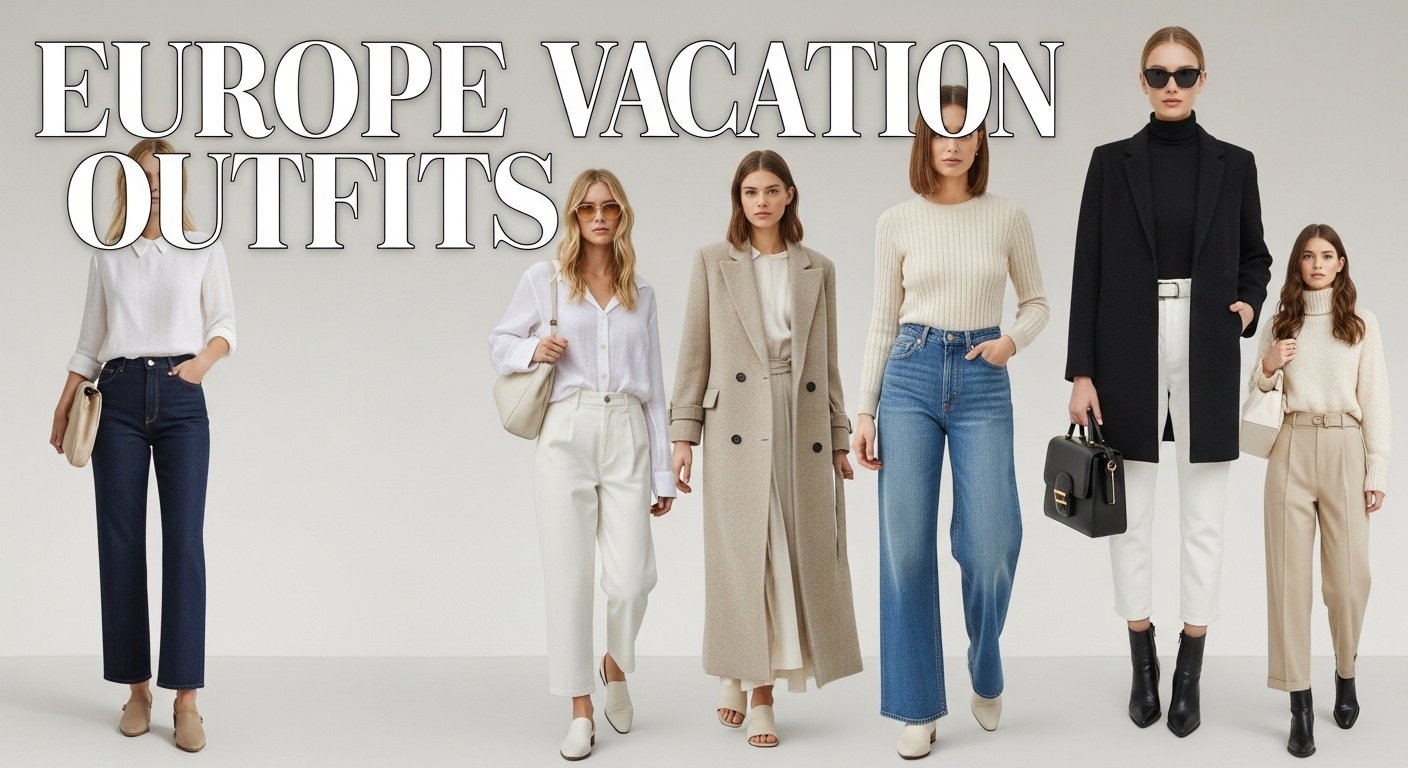
The best Europe vacation outfits are stylish enough for city photos, practical enough for long walking days, and flexible enough for changing weather, cobblestone streets, trains, and dress-code-sensitive stops like churches or nicer dinners.
If you only remember one rule, make it this: pack a system, not separate outfits for every day.
Whether you’re planning a Paris + Rome itinerary, a Mediterranean city-and-coast trip, or a spring rail journey through Amsterdam, Vienna, and Prague, this guide helps you build a wardrobe that works across real travel days—not just Pinterest boards.
What Are Europe Vacation Outfits?
Europe vacation outfits are smart-casual, comfortable travel looks built around breathable layers, walkable shoes, and versatile pieces that can move from sightseeing to dinner without a full change.
They usually prioritize:
- Elevated basics over flashy trend pieces
- Neutral, mix-and-match colors for easy rewear
- 2–3 practical shoes max
- A modesty layer for churches, cathedrals, and shoulder-season weather
- Day-to-night outfit formulas that look polished but feel comfortable
The goal isn’t to “dress like a local.” It’s to avoid overpacking, stay comfortable, and look put-together in different European settings.
Why Europe Outfits Need a Different Packing Strategy
A Europe trip can mean:
- 15,000–20,000 steps a day
- Train travel between cities
- Cobblestone streets in Rome, Lisbon, Prague, or old town districts
- Rain in London or Amsterdam
- Heat in Barcelona, Athens, the Amalfi Coast, or the South of France
- Church dress rules in Italy or Southern Europe
- One itinerary mixing museums, piazzas, cafés, dinner, and transit
That’s why generic vacation clothes often fail.
What works better:
- Linen trousers instead of heavy jeans in summer
- Clean white sneakers instead of flimsy fashion shoes
- A midi dress or matching set that can shift from day to night
- A scarf or shawl for both style and modesty
- A trench coat or cardigan for shoulder seasons
The 5-Step Formula for Building Europe Vacation Outfits
If you want a reliable wardrobe for almost any itinerary, use this method.
1. Start with the season
Europe is not one climate.
- Summer: Southern Europe can be hot and dry
- Spring/Fall: Western and Central Europe can swing dramatically in one day
- Winter: Northern and Central cities need real layering
2. Plan by region, not by “Europe”
Think in zones:
- Southern / Mediterranean Europe: Rome, Barcelona, Athens, Lisbon, Amalfi Coast, Santorini
- Western Europe: Paris, London, Amsterdam
- Central Europe: Vienna, Prague
- Northern Europe: cooler, windier, wetter transitions
3. Build a 10–14 piece capsule wardrobe
Choose pieces that each work in at least two outfit formulas.
4. Limit shoes to 2–3 pairs
If a shoe can’t handle long walking days, it doesn’t earn luggage space.
5. Add one day-to-night and one church-safe option
This prevents the “I have nothing appropriate” problem.
What to Wear in Europe by Season
Europe Summer Outfits
Summer is the highest-demand season, especially for Italy, France, Spain, Greece, and Portugal.
Best summer pieces:
- Linen trousers
- Cotton poplin button-down
- Midi dress
- Wide-leg lightweight pants
- Relaxed shorts (city-appropriate, not beachwear)
- Matching linen set
- Breathable tank + overshirt
- Leather sandals or supportive sandals
- Clean white sneakers
- Crossbody bag
Best summer outfit formulas:
- Linen trousers + tank + button-down + sneakers
- Midi dress + sandals + crossbody bag
- Wide-leg pants + fitted tee + loafers or sneakers
- Matching set + simple jewelry + sandals
Avoid in city-heavy summer itineraries:
- Super-athletic outfits as your main sightseeing look
- Thin flip-flops
- Heavy denim
- Beach cover-ups used as city outfits
Europe Spring Outfits
Spring is beautiful—and often the trickiest.
You might get sunshine in Paris, wind in Amsterdam, and a chilly evening in Prague on the same trip.
Best spring pieces:
- Trench coat
- Cardigan
- Lightweight blazer
- Straight or wide-leg pants
- Long-sleeve knit top
- Button-down shirt
- Midi skirt
- White sneakers or loafers
- Lightweight scarf
Spring formula:
- Base layer + mid layer + outer layer
Example:
- Tee + cardigan + trench + trousers + sneakers
Europe Fall Outfits
Fall is ideal for polished travel style because layering looks intentional and practical.
Best fall pieces:
- Merino wool sweater
- Blazer
- Dark trousers
- Midi dress + tights (if needed)
- Ankle boots (if comfortable and broken in)
- Loafers
- Water-resistant jacket
Fall favorites:
- Knit + trousers + loafers + trench
- Midi dress + cardigan + ankle boots
- Button-down + blazer + jeans or tailored pants
Europe Winter Outfits
Winter city breaks—especially Christmas markets—need warmth first, style second.
Best winter essentials:
- Wool coat or insulated coat
- Thermal base layers
- Merino sweater
- Waterproof boots with grip
- Scarf, gloves, socks that actually perform
- Dark trousers or thicker knit dresses
Tip: Winter travel is where quality outerwear and footwear matter most.
Southern Europe vs Northern & Western Europe: What Changes?
Here’s where many outfit guides fall short.
| Region | What to Prioritize | Best Fabrics | Best Shoes | Watch For |
| Southern Europe (Rome, Barcelona, Athens, Amalfi Coast) | Heat, sun, modesty options | Linen, cotton, rayon blends | Sandals + sneakers | Church dress rules, hot afternoons |
| Western Europe (Paris, London, Amsterdam) | Smart-casual polish, rain layers | Cotton, light knits, trench-friendly layers | Sneakers + loafers | Sudden rain, cool mornings |
| Central Europe (Vienna, Prague) | Transitional layering | Midweight cotton, merino | Sneakers + closed-toe flats/boots | Shoulder-season swings |
| Mediterranean Coast & Islands | City-to-beach flexibility | Breathable, quick-dry fabrics | Sandals + one city shoe | Don’t overuse beachwear in town |
If you’re mixing city + coast, pack one capsule with:
- 1 city dress
- 1 casual beach-friendly piece
- 1 modest layer
- 1 walking shoe
- 1 sandal
Best Shoes for Europe Travel
The best shoes for Europe are clean, broken-in, and built for long walking days on uneven surfaces.
Best 3-shoe packing rule
- Primary walking sneaker
- Clean, low-profile, supportive
- White sneakers work well if they’re comfortable
- Secondary dressier shoe
- Loafers, sleek flats, or polished sandals
- Optional seasonal shoe
- Supportive sandal (summer) or ankle boot (fall/winter)
Can you wear sneakers in Europe?
Yes—absolutely.
Clean, minimal sneakers are one of the safest choices for:
- Paris
- Rome
- Lisbon
- Amsterdam
- Barcelona
- London
Shoes to avoid
- Brand-new shoes
- Thin flat sandals with no support
- Flip-flops for city sightseeing
- Heels on cobblestones
- Bulky athletic trainers if you want a more polished look
The Best Europe Capsule Wardrobe for 7, 10, or 14 Days
A Europe travel capsule wardrobe should cover sightseeing, transit, dinner, and dress-code moments without overpacking.
7-Day Europe Capsule
- 3 tops
- 2 bottoms
- 1 dress or one-piece outfit
- 1 outer layer
- 2 shoes
- 1 scarf/shawl
- 1 bag
10-Day Europe Capsule
- 4 tops
- 3 bottoms
- 2 dresses or 1 dress + 1 matching set
- 2 layers (cardigan + trench/blazer)
- 2–3 shoes
- 1 scarf
- 1 crossbody bag
14-Day Europe Capsule
- 5 tops
- 3–4 bottoms
- 2 dresses
- 2 outer layers
- 3 shoes max
- 1–2 accessories
- Laundry plan or rewear strategy
Smart packing rule
Do not pack 10 separate outfits for 10 days.
Instead, pack 10–14 pieces that create 15–20 combinations.
Outfit Formulas That Actually Work in Europe
These formulas solve the real “what do I wear today?” problem.
For sightseeing + museums
- Linen trousers + fitted tee + button-down + sneakers
For Paris or London city days
- Wide-leg pants + knit top + blazer + loafers
For Rome or Barcelona in summer
- Midi dress + supportive sandals + crossbody bag + scarf
For train travel
- Stretch trousers + breathable tee + cardigan + sneakers
- Add compression socks for longer travel days
For churches and cathedrals
- Midi dress or trousers + top with shoulder coverage
- Carry a scarf or shawl if your outfit is sleeveless
For day-to-night
- Matching set or midi dress + simple jewelry + switch to dressier sandals or loafers
What Not to Wear in Europe
This is less about rules and more about avoiding impractical choices.
Skip or limit:
- Overpacking heavy denim in hot climates
- Ultra-casual gym outfits as your entire trip wardrobe
- Cheap sandals with no arch support
- Loud, single-use trend pieces
- Too many duplicates of the same item
- Clothes that wrinkle badly if you won’t steam or press them
- Bare shoulders or very short hemlines for religious sites (site-specific, but common enough to plan for)
Low-risk strategy: always carry one modesty layer.
Budget, Mid-Range, and Premium Outfit Planning
You do not need an all-new wardrobe.
Budget approach
Use what you own and add:
- 1 reliable walking shoe
- 1 layering piece
- 1 versatile bottom
Mid-range refresh
Add 2–4 smart upgrades:
- Linen trousers
- Clean leather or leather-look sneaker
- Crossbody bag
- Midi dress or matching set
Premium capsule
Invest in:
- Merino wool layers
- Better tailoring
- Quality loafers or sandals
- Strong outerwear
- Durable travel-friendly fabrics
If you’re shopping, buy shoes first. They matter most.
Europe Vacation Outfits for Men (and Gender-Neutral Packing)
This is one of the most overlooked parts of the topic.
Best men’s / gender-neutral Europe travel pieces
- Tailored drawstring trousers
- Chino-style lightweight pants
- Merino or cotton tees
- Button-down shirt
- Lightweight overshirt
- Polo or knit polo
- Clean leather sneakers
- Loafers or simple low-profile casual shoes
- Unstructured blazer or chore jacket
Easy outfit formulas
- Tailored pants + tee + overshirt + sneakers
- Button-down + drawstring trousers + loafers
- Knit polo + chinos + clean sneakers
The same rules apply:
- neutral palette
- 2–3 shoes max
- breathable fabrics
- one dressier option
- one church-safe layer
FAQs
1) What should I wear on a Europe vacation?
Wear breathable, polished basics that can handle walking and layering. The safest formula is a capsule wardrobe with versatile tops, 2–3 bottoms, 2–3 shoes, one outer layer, and one outfit that works for dinner or dress-code-sensitive sites.
2) Can I wear sneakers in Europe?
Yes. Clean, low-profile sneakers are one of the best choices for Europe, especially for long walking days and cobblestone streets. White sneakers are popular as long as they’re comfortable and already broken in.
3) What shoes are best for Europe travel?
The best shoes are supportive walking sneakers, polished sandals or loafers, and—depending on season—ankle boots. Avoid brand-new shoes, thin flip-flops, and anything that can’t handle full sightseeing days.
4) Can I wear shorts in Europe?
Yes, especially in summer. The best choice is relaxed but polished shorts rather than athletic or ultra-short styles. If you plan to visit churches or cathedrals, bring a modest backup like linen trousers or a midi dress.
5) What should I wear in Europe in summer?
In summer, choose linen trousers, midi dresses, cotton tops, matching sets, breathable layers, and supportive sandals or sneakers. Southern Europe often needs heat-friendly fabrics, while Western Europe may still need a light layer for mornings or rain.
6) What should I wear to churches in Europe?
A low-risk option is shoulder coverage and a hemline below mid-thigh, or trousers. Rules vary by site, but a scarf or shawl is one of the easiest ways to make sleeveless outfits work respectfully.
7) How many outfits do I need for 10 days in Europe?
You usually don’t need 10 separate outfits. A 10-day trip works well with a 10–14 piece capsule wardrobe that mixes into multiple combinations, especially if you repeat shoes and use layers strategically.
8) Can I carry-on only for 2 weeks in Europe?
Yes, many travelers can. The key is a neutral capsule wardrobe, 2–3 shoes maximum, laundry or rewear planning, and avoiding bulky “just in case” items. Pack versatile pieces, not one-use outfits.
9) Is there a dress code for tourists in Europe?
There’s no single dress code for all of Europe. Most cities are smart-casual, but religious sites, nicer restaurants, and certain cultural spaces may expect more coverage or a more polished look than beachwear or gym wear.
Conclusion
The best European vacation outfits are not about copying a “European aesthetic.” They’re about building a smart, comfortable, stylish packing system that works across cities, seasons, and real travel conditions.
If you want the easiest winning formula, start here:
- Choose outfits by season and region
- Build a 10–14 piece capsule wardrobe
- Pack 2–3 shoes max
- Prioritize breathable fabrics and layers
- Include one church-safe layer and one day-to-night look
- Pack for walking first, photos second
If your trip mixes places like Paris, Rome, Barcelona, Lisbon, Amsterdam, London, Athens, or the Amalfi Coast, the most reliable approach is simple: neutral basics, polished layers, broken-in shoes, and versatile pieces you’ll happily rewear. That’s what keeps your suitcase lighter—and your outfits better—throughout the trip.