
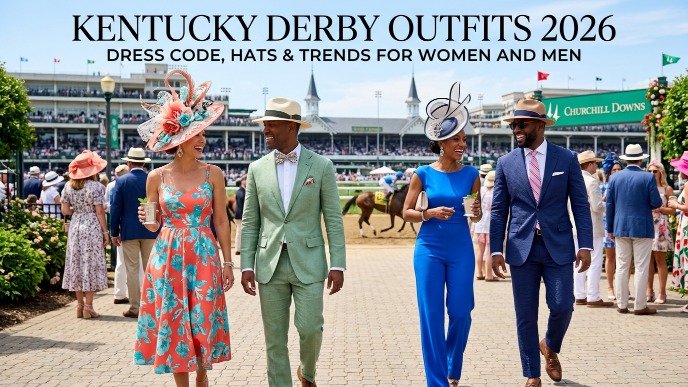
The Kentucky Derby isn’t just a horse race. It’s the one Saturday a year where a fascinator is mandatory, a seersucker suit is completely serious, and showing up in the wrong shoes genuinely matters.
Kentucky Derby outfits follow an unwritten but firmly enforced social code — part official venue guideline, part century-old tradition, part fashion moment. If you’re attending Churchill Downs on the first Saturday in May 2026, here’s exactly what that means for your wardrobe.
What the Kentucky Derby Dress Code Actually Requires
Kentucky Derby dress code refers to the attire standards set by Churchill Downs for admission to different seating areas on race day. Smart-casual is the floor for general admission; formal garden parties are expected in the Clubhouse and suites. The dress code is enforced at entry.
Churchill Downs divides the venue into sections, and the dress code scales with them. The Infield (the open area inside the track) is the most relaxed — think festival-casual with a Derby twist. The Grandstand sits in the middle. The Clubhouse and premium suites expect genuine formalwear.
According to Churchill Downs’ official venue guidelines, prohibited items across all sections include athletic wear, gym shoes, flip-flops, and overly casual shorts. Ripped jeans are out. Visible undergarments are out.
What’s required — or strongly expected — depends on where your seats are.
For Clubhouse and Stakes seating: cocktail-length or maxi dresses for women; sport coat or blazer minimum for men, suit preferred. Hats are not technically required but are culturally expected.
For Grandstand: smart-casual. Sundresses, dress pants, collared shirts. Think “dressed up for a nice outdoor lunch,” not “dressed for brunch.”
For Infield: the rules loosen. Some people wear full Derby looks. Others wear bold, creative outfits that wouldn’t survive five minutes in the Clubhouse. It’s the most flexible zone.
Quick note: if you have Turf Club or Suite access, check your specific hospitality package — some have stricter dress requirements than the general Clubhouse standard.
Kentucky Derby Hat Rules for Women: 2026 Trends
Hats are the centerpiece. Full stop.
No other American sporting event has this relationship with millinery. The Derby hat tradition dates to the 1870s — when wearing elaborate headwear to the races signaled social standing — and it has never really stopped. What’s changed is how playful and personal the choices have become.
What’s trending for 2026:
- Sculptural wide brims — oversized, architectural hats in ivory, sage, or coral. Think 14–18 inch brims with asymmetric tilts.
- Feather-forward fascinators — smaller structured pieces with dramatic feather plumes or cascading ostrich trim. These work especially well for Grandstand seating where a large brim might block others.
- Maximalist florals — fresh and silk flowers arranged at the crown, not flat against the brim. Three-dimensional, almost sculpture-like.
- Bold monochromes — one saturated color head-to-toe, including the hat. Cobalt, fuchsia, burnt orange.
- Sheer and organza brims — translucent fabric that catches light. Pairs well with a simple slip dress underneath.
Here’s the thing: there’s no single “correct” Derby hat. There’s only a correct execution. A small fascinator worn confidently and coordinated well outperforms a giant hat that fights the rest of the outfit.
The most common mistake? Choosing the hat after the dress. Start with the hat — or at least decide on it simultaneously. Color coordination between hat and outfit is what separates a great Derby look from a mismatched one.
Hat sizing by seating section:
| Seating Area | Recommended Hat Style | Why It Works |
| Clubhouse / Suites | Wide brim (12–18 inch), structured | Matches formal atmosphere, photos well |
| Grandstand | Fascinator or medium brim (8–12 inch) | Practical for crowd density |
| Infield | Any style — creative, bold, theatrical | No sight-line concerns |
Derby Week Events Guide → “what to wear to Kentucky Oaks Day
Kentucky Derby Outfits for Women: Dresses, Colors & What Works in 2026
The classic Derby dress silhouette hasn’t changed dramatically — but the color story and fabric choices shift every year.
Silhouette: Midi and maxi lengths are dominant in 2026 for the Clubhouse. Cocktail-length (knee to mid-thigh) still works well, particularly in the Grandstand. Mini lengths are rare above the Infield level.
2026 color palette: According to Pantone’s 2026 spring trend forecasting and designer collections shown at New York and Paris Fashion Week, the Derby is leaning into warm terracotta, butter yellow, sage green, and soft lilac this year. Classic ivory and blush remain safe options. Avoid anything too close to Churchill Downs’ official color palette (red/gold) — you’ll blend into the scenery.
Fabric: Lightweight is essential. The Derby is held outdoors in Louisville in early May — temperatures regularly hit 75–85°F (24–29°C). Linen, chiffon, silk, and organza work. Heavy structured fabrics are uncomfortable and photograph stiffly.
Print vs. solid: Either works. If you’re wearing a bold hat, a solid dress lets it breathe. If your hat is understated, a floral or abstract print adds visual interest.
Or maybe I should say it this way — the hat-dress relationship is a balancing act, not a competition. One of them should lead. The other should support.
What doesn’t work:
- Overly casual sundresses (spaghetti straps, cotton jersey, beachwear cuts)
- All-black head-to-toe (technically allowed but culturally tone-deaf for the Derby)
- Anything you’d wear to a nightclub — bodycon, cutouts, plunging necklines
Kentucky Derby Men’s Outfit Guide 2026: Suits, Ties & What’s Expected
Men’s Derby fashion gets less press coverage. That’s a mistake, because it’s just as specific.
The baseline: a suit. Not a blazer with chinos. A coordinated suit — jacket and trousers in the same fabric and color. This is what’s expected in the Clubhouse and Stakes areas.
Suit colors for 2026:
The seersucker suit remains the most iconic Derby choice — blue-and-white or grey-and-white striped, worn with a light dress shirt and a bow tie or club tie. It’s the uniform of the event and it works because it’s designed for the heat.
Beyond seersucker, linen suits in oatmeal, sage, or pale blue are strong options for 2026. Look — if you’re not sure whether your navy blazer qualifies as “Derby-appropriate,” it probably does, but wear it with trousers in a complementary light color, not dark jeans.
Shirts: Light colors. White, pale blue, soft pink, mint. Avoid heavy patterns that compete with the tie.
Ties: This is where men get to have fun. Bold tie choices — racing silks patterns, floral prints, horse motifs — are completely legitimate at the Derby. It’s one of the few formal events where a novelty tie is actually appropriate.
Shoes: Leather or suede loafers, derby shoes (appropriate naming), or oxfords. No sneakers in Clubhouse areas. Suede loafers in tan or burgundy are a popular choice — they’re comfortable for a long day on your feet and photograph well.
Hats for men: Optional, but classic. A Panama hat or a straw fedora works for the Derby. A top hat is overkill for most areas (reserved for owners’ circle events). A flat cap works in the Grandstand.
I’ve seen conflicting style advice — some sources say bow ties are mandatory at the Derby, others treat them as optional. My read: a bow tie is the more traditional choice and photographs better, but a standard tie is entirely acceptable.
Quick Comparison — Men’s Outfit by Seating Area:
| Area | Suit Style | Tie | Shoes |
| Clubhouse/Suites | Full coordinated suit (seersucker or linen) | Bow tie or printed tie | Leather loafers or oxfords |
| Grandstand | Blazer + dress trousers acceptable | Tie optional | Smart leather shoes |
| Infield | Dress code relaxed | Creative encouraged | Comfort prioritized |
Men’s Summer Wedding Outfits → how to dress for outdoor formal events in heat
What NOT to Wear to the Kentucky Derby (And Why These Keep Showing Up)
Most dress code violations aren’t acts of rebellion. They’re miscalculations.
Athletic shoes — comfortable, yes, but prohibited in Clubhouse areas. The walk from parking to your seats is long, so people rationalize sneakers. Bring insoles instead.
Shorts — not prohibited everywhere, but they’ll get you turned away from premium areas. Even on hot days, dress trousers in lightweight linen are the correct answer.
Overly casual dresses — the gap between “sundress I wear to the farmers market” and “Derby-appropriate dress” is wider than it looks. Structure matters.
Hats that obstruct others’ views — this is more etiquette than dress code, but an 18-inch brim in tight Grandstand seating creates problems. Know your venue.
Matching couples’ outfits that are too coordinated — coordinating colors is celebrated. Wearing identical prints from the same fabric makes you look like a theme park costume. Complement, don’t clone.
What most guides skip is this: the Derby isn’t just about what’s technically allowed. It’s about understanding the register of the event — outdoor, celebratory, slightly theatrical, but grounded in racing tradition. The goal is looking like you belong, not like you’re attending a costume party.
Voice Search Q&A
What’s the best color to wear to the Kentucky Derby?
Soft florals, pastels, and bold monochromes — sage, coral, butter yellow, and lilac trend in 2026. Avoid all-black and anything too close to Churchill Downs’ red and gold palette.
How do I dress for the Kentucky Derby as a man?
Wear a full coordinated suit — seersucker or linen preferred for the heat. Add a bold tie, leather loafers, and optionally a Panama hat. A blazer with dress trousers is acceptable in the Grandstand.
Should I wear a hat to the Kentucky Derby?
Women are strongly expected to wear a hat or fascinator — it’s a defining tradition. Men can wear a Panama hat or straw fedora; it’s optional but adds to the look. No requirement, but you’ll stand out without one at Clubhouse level.
Why does the Kentucky Derby have a dress code?
Churchill Downs enforces minimum dress standards to maintain the event’s historic character. Premium areas require formal attire as a condition of entry — not just tradition, but policy.
When should I buy my Derby hat to guarantee delivery before race day?
Order at least 6–8 weeks before the first Saturday in May. Custom millinery takes 4–12 weeks. Ready-to-wear Derby hats from retailers typically sell out by mid-April.