
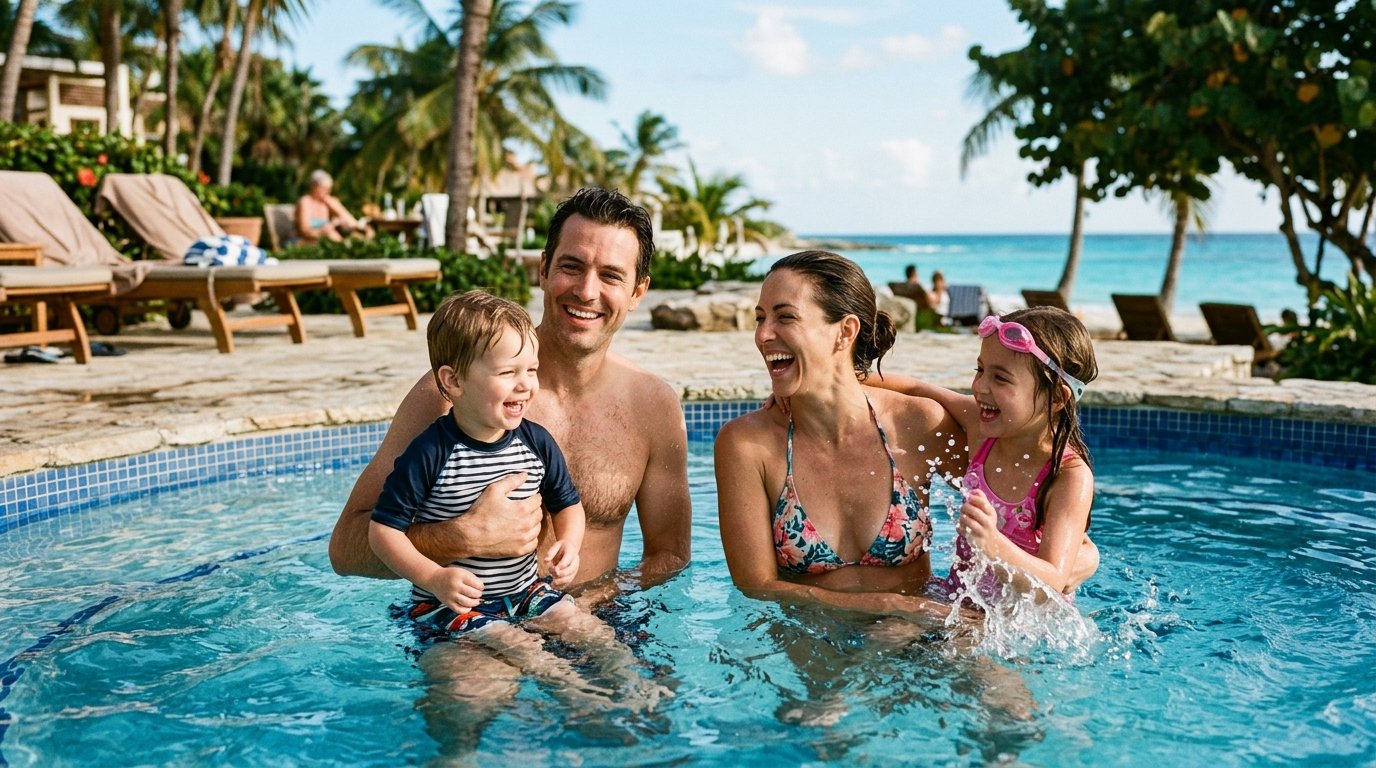
All-inclusive family vacations are resort stays where meals, non-premium drinks, kids’ club access, and most on-site activities are bundled into one upfront price. The catch: “all-inclusive” doesn’t mean the same thing at every resort — exclusions for specialty restaurants, waterslides, and tips vary widely by property.
Here’s the thing: most families choosing an all-inclusive aren’t trying to be extravagant. According to the 2025 Family Travel Survey by the Family Travel Association and NYU SPS Tisch Center of Hospitality, the average American family spent roughly $8,052 on travel in 2024 — a 20% jump — yet 73% still list affordability as their top worry. That’s exactly why all-inclusives are surging. One price. No bill panic at checkout. That’s the appeal.
But not all resorts deliver on that promise equally. And a resort that’s perfect for toddlers can be genuinely miserable for a 12-year-old — and vice versa.
This guide cuts through the listicle noise.

What “All-Inclusive” Actually Covers (and What It Doesn’t)
Before booking, get clear on what’s bundled. Most resorts include three daily meals at buffet restaurants, house-brand alcohol, non-motorized water sports, and standard kids’ club hours. That’s where the agreement usually ends.
What commonly costs extra:
- À la carte or specialty restaurants (usually $25–$60/person surcharge)
- Water park entry — even if a park is on-property (common at Grand Moon Palace)
- Motorized watersports like jet skis or parasailing
- Gratuities — some resorts include them, most don’t; budget 15–20% on top
- Room service after hours, spa treatments, and premium liquors
Or maybe I should say it this way: the “all-inclusive” label is a starting point for conversation, not a final answer. Always read the fine print before you hand over a card.
To compare all-inclusive family resorts accurately, follow these steps:
- Confirm exactly which restaurants are included vs. à la carte.
- Check whether the kids’ club has age minimums and hour limits.
- Ask if gratuities and resort fees are included in the quoted rate.
- Verify which activities cost extra (water park, watersports, excursions).
- Read reviews from families with kids the same age as yours — not general reviews.
How to Match a Resort to Your Kids’ Ages
This is the gap most guides completely ignore. A resort’s kids’ club rating means nothing if it only admits kids 4 and up and your youngest is 2. Matching the resort to the developmental stage matters more than star ratings.

Ages 2–5: Toddlers and Early Childhood
Calm beaches trump everything. Look for shallow, wave-free water — Grace Bay at Beaches Turks & Caicos, or Juanillo Beach at Hyatt Ziva Cap Cana. Splash pads over water parks. Kids’ club minimum age is critical; many won’t take under-3s. Westin Reserva Conchal in Costa Rica gets strong marks here for its shallow beach and warm staff-to-child ratio in the club.
Ages 6–11: The Golden Window
These kids want variety and genuine adventure — not just a pool. Hotel Xcaret Mexico stands out. Your stay includes access to all Xcaret adventure parks: underground rivers, ziplining, animal encounters, waterslides. Families with kids in this window consistently rate it as a top experience. There’s enough novelty to fill a full week without leaving the Xcaret ecosystem.
Ages 12–17: Teens Need a Reason to Not Be Miserable
Teens tolerate resorts. They love them if there’s a dedicated teen club, structured evening entertainment, and genuine independence. Grand Moon Palace Cancun covers this well — multiple sections, nightly shows, and enough sprawl that a 14-year-old can feel like they’re not chained to their parents. Look — if you’re in this situation, ignore resorts with no teen-specific programming. A bored teenager thanks me for the whole trip.
Beaches Turks & Caicos vs. Hotel Xcaret Mexico: Beaches is better suited for families with toddlers and young children because it has calm Grace Bay water, bunk-bed suites, and structured kids’ camps for ages 0–12. Xcaret works better when kids are 6–15 and adventure-hungry — park access is bundled in and there’s enough activity variety to sustain a full week. The key difference is depth of adventure vs. depth of comfort.
Quick Comparison: Top All-Inclusive Family Resorts
| Resort | Best For | Key Benefit | Limitation |
| Beaches Turks & Caicos | Toddlers to age 10 | Calm beach, bunk suites, Sesame Street kids’ camp | Premium price; food quality inconsistent |
| Hotel Xcaret Mexico | Ages 6–15, adventure families | All park access bundled; unique eco-resort | Not a beach resort; ocean access limited |
| Hyatt Ziva Cap Cana | Mixed ages including teens | Juanillo Beach (calm), water park, teen & kids’ clubs | Food quality varies by restaurant |
| Grand Velas Los Cabos | Luxury-seeking families | Full-suite ocean views, top-tier food, fine dining included | High price; Pacific surf rough for small kids |
| Westin Reserva Conchal | Nature-focused families | Turquoise beach, wildlife on property, stunning pool | Best paired with a broader Costa Rica itinerary |
What Most Guides Skip: The Real Cost Math
Some experts argue all-inclusives aren’t actually cheaper than booking a hotel and eating out separately. That’s valid — if you’re a couple in Mexico City or a family comfortable doing daily restaurant research. But if you’re dealing with two kids under 10, three meals a day at restaurants adds decision fatigue, tip calculations, and unpredictable bills. The all-inclusive premium buys predictability. That’s what families are actually paying for.
I’ve seen conflicting data on this: some travel finance sites say you overpay by 20–30% vs. à la carte, while family travel forums argue they break even or come out ahead — especially factoring in kids’ entertainment costs. My read: for families with kids under 12, all-inclusive wins on value-adjusted-for-sanity. For families with teens who eat lightly and want independence, it’s worth doing the math.
Quick note: gratuity alone can add $30–$60/day for a family of four at Caribbean properties. Factor that in before comparing sticker prices.
Voice Search Q&A
What’s the best all-inclusive resort for families with young kids?
Beaches Turks & Caicos consistently tops the list for families with kids under 10 — calm water, bunk-bed suites, and a kids’ camp from infants to tweens. Hyatt Ziva Cap Cana is a strong second.
How do I know what’s actually included in an all-inclusive package?
Ask the resort to confirm specialty restaurants, gratuities, waterpark access, and motorized sports. Most bundles cover buffet meals, house drinks, kids’ club hours, and non-motorized water sports — everything else is usually extra.
Should I book an all-inclusive if I have teenagers?
Yes — but only resorts with a dedicated teen club and evening programming. Grand Moon Palace Cancun and Hyatt Ziva Cap Cana are solid picks. Avoid boutique properties with no structured teen activities.
Why are all-inclusive family vacations getting more popular?
According to the 2025 Family Travel Survey (FTA/NYU), the average US family spent $8,052 on travel in 2024 — up 20% — while 73% cite affordability as a top worry. All-inclusives eliminate surprise bills.
When should I book an all-inclusive family vacation for the best price?
Book 4–6 months out for summer travel, or target January–March and September–November shoulder seasons. Early-bird rates at Xcaret and Grand Velas can run 20–35% below peak pricing.