
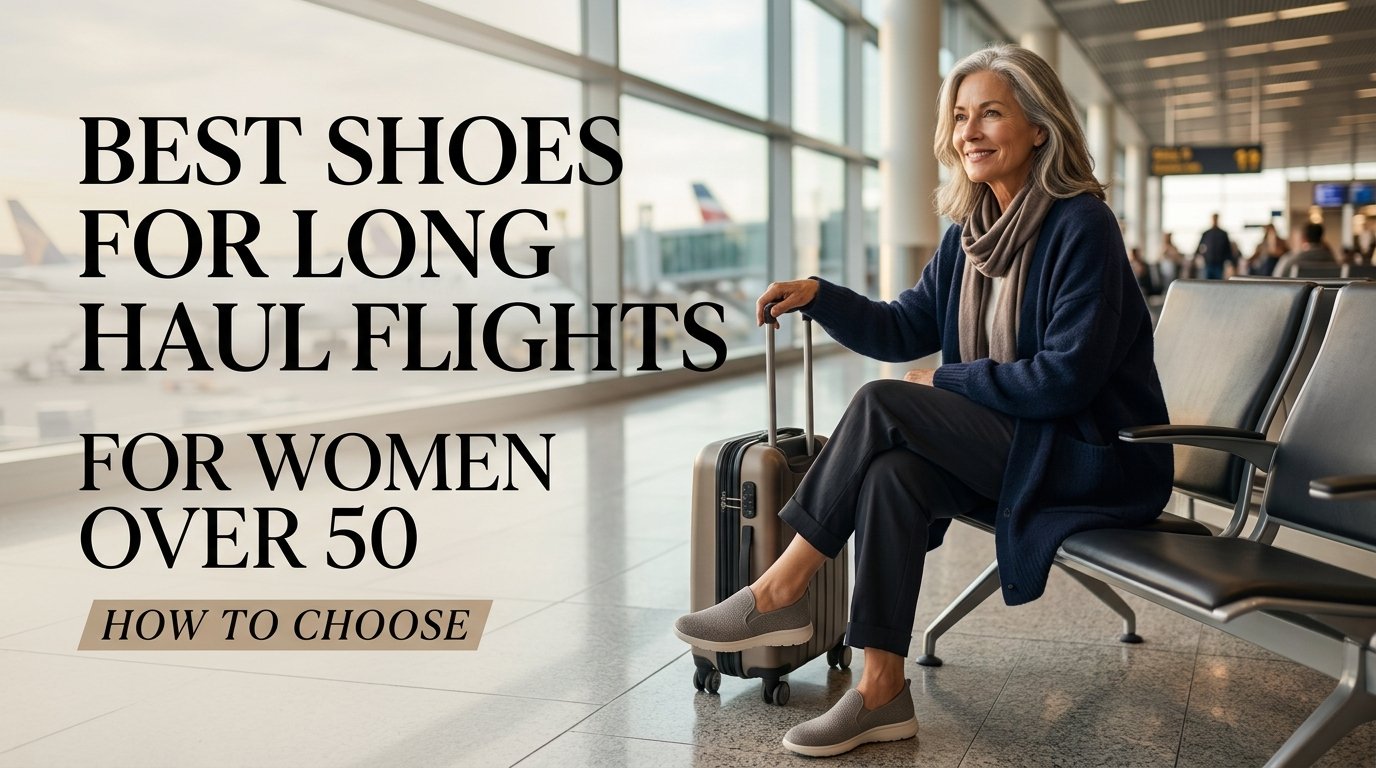
The best shoes for long haul flights for women over 50 are cushioned slip-on sneakers or supportive flats with a roomy toe box, a secure heel and removable insoles. Choose a comfortable fit that allows your toes to move, wear the shoes before your trip and pair them with suitable socks. If you have diabetes, circulation problems, persistent foot pain or a history of blood clots, seek individual advice from a healthcare professional before travelling.
Key Takeaways
- Slip-on sneakers and elastic-lace walking shoes make it easier to adjust your footwear during travel.
- A roomy toe box matters because feet may feel uncomfortable or swollen during a long journey.
- Cushioning, a secure heel and suitable arch support can make walking through airports more comfortable.
- Break in your shoes before departure rather than wearing an unfamiliar pair for the first time on a long flight.
- Choose breathable socks that fit without squeezing your toes.
- Compression socks may be appropriate for some travellers, but people with additional clotting risks should ask a healthcare professional for advice.
- If you experience sudden one-sided leg swelling, pain, warmth or redness, seek prompt medical assessment.
What Makes the Best Shoes for Long Haul Flights for Women Over 50?
A good long-haul flight shoe needs to do three things: remain comfortable while sitting, support walking through the airport and allow easy adjustment when your feet feel different later in the journey.
For many women over 50, cushioned slip-on sneakers are a practical starting point. However, the best choice depends on foot shape, walking needs, existing foot conditions and personal preference. Age alone does not determine which shoe is right for you.
Look for these features when shopping.
A Roomy Toe Box
Your toes should be able to move naturally without rubbing against the front or sides of the shoe. Avoid narrow or pointed designs if they cause pressure, particularly around bunions or sensitive toes.
Comfortable Cushioning
A cushioned sole can make walking across a large terminal more comfortable. Choose cushioning that feels stable rather than so soft that your foot feels unsupported.
A Secure Heel
The shoe should stay on your foot when walking without forcing you to grip with your toes. If you prefer slip-on footwear, check that it does not slide off at the heel.
Suitable Arch Support
Some travellers prefer structured arch support, while others are more comfortable in a different design. If you use prescribed orthotics, choose a shoe with enough depth and a removable insole when needed.
Adjustable Fit
Elastic laces, adjustable straps and stretch uppers can help accommodate small changes in comfort. Avoid relying on an oversized shoe that allows your foot to slide forward.
Lightweight, Breathable Materials
Breathable uppers and moisture-managing socks can help keep feet comfortable during a lengthy journey. Materials should feel soft against your skin and should not create pressure points.
Practical tip: Try both shoes on later in the day, wearing the socks you plan to travel in. Walk around and check for rubbing, slipping and pressure. The shoe should feel comfortable immediately rather than requiring you to tolerate pain while breaking it in.
Why Do Feet Swell When You Fly?
Sitting in one position for hours can affect circulation in the legs and contribute to discomfort and fluid accumulation. Prolonged immobility during long-distance travel is also associated with an increased risk of deep vein thrombosis (DVT), a blood clot that usually develops in a deep vein.
The CDC’s travel guidance on blood clots explains that prolonged sitting can increase clot risk and recommends moving around periodically and exercising the calf muscles. The NHS guidance on pulmonary embolism also recommends regular leg movement during long journeys.
These are related but different concerns: ordinary foot swelling does not automatically mean you have a blood clot, and a comfortable shoe cannot prevent DVT.
How Can You Make Your Shoes More Comfortable?
- Choose footwear with enough room for your toes.
- Avoid tight laces, straps or socks that create pressure.
- Move your ankles and feet regularly while seated.
- Get up and walk when it is safe and practical to do so.
- Consider an aisle seat if you want easier access to the cabin aisle.
- Ask your healthcare professional whether compression stockings are suitable if you have additional clotting risks.
Know the warning signs: New swelling or pain affecting one leg, especially with warmth or redness, requires prompt medical assessment. Sudden shortness of breath or chest pain may indicate a medical emergency and requires immediate emergency care.
The Four-Test Shoe Check
The Four-Test Shoe Check is a practical checklist developed for this article. It is not a medically validated test, but it can help you assess the basic comfort and usability of a pair before travelling.
| Test | What to Check | What a Good Result Looks Like |
| Fit | Try the shoes on later in the day with your travel socks. | Toes can move freely without pinching. |
| Flex | Bend the shoe gently and walk in it. | The shoe bends naturally near the ball of the foot without collapsing excessively. |
| Speed | Practise putting the shoes on and taking them off while seated. | You can manage them easily without struggling with complicated fastenings. |
| Room | Walk and sit in the shoes for 30–60 minutes. | No rubbing, heel slipping or uncomfortable pressure develops. |
These checks are practical screening steps, not guarantees of comfort during an entire flight. A shoe that feels good for an hour may still become uncomfortable during a much longer journey.
How Do the Main Shoe Types Compare?
The following table provides general footwear guidance rather than rankings established by clinical studies or direct product testing. Individual fit and comfort can vary considerably.
| Shoe Type | Comfort Potential | Walking Support | Ease of Removal | General Verdict |
| Cushioned slip-on sneakers | High if well fitted | Moderate to high | High | A practical all-round choice |
| Walking sneakers with elastic laces | High if well fitted | Often high | Moderate to high | Useful for airport walking |
| Cushioned flats or loafers | Varies by design | Varies by design | Usually high | Suitable when they offer a secure fit |
| Supportive sandals with a back strap | Varies by design | Varies by design | Moderate to high | An option for warm destinations |
| Boots | Varies by design | Varies by design | Often lower | Less convenient if bulky or difficult to remove |
| High heels | Often less suitable for extended walking | Varies by design | Varies | Usually not the most practical flight choice |
| Flip-flops | Limited foot security | Usually limited | High | Generally unsuitable for extensive airport walking |
Best overall starting point: A cushioned sneaker with a secure heel, adequate toe room and an adjustable or easy-to-manage fastening system.
A supportive flat can also work well if you find sneakers too warm or prefer a dressier look. Choose according to fit and comfort rather than assuming that one style is best for every woman over 50.
Step-by-Step: How Do I Choose and Prepare My Shoes?
Start several weeks before departure if possible. This gives you time to identify pressure points and exchange an unsuitable pair.
Step 1: Choose Your Main Pair
Start with cushioned slip-on sneakers, elastic-lace walking shoes or supportive flats. Consider how much walking you will do between check-in, security, connections and your destination.
Step 2: Check the Fit at the Right Time
Try shoes on in the afternoon or evening, when your feet may be larger than they are earlier in the day. Check both feet because they may differ in size.
Your toes should not touch the front of the shoe, and your heel should not slip excessively. A fixed rule such as always buying half a size larger is not appropriate for everyone.
Step 3: Test Your Insoles
If you use orthotics, try them inside the shoes before purchasing. Removing the original insole may create the required depth, but only do this if the shoe’s construction allows it and the resulting fit remains secure.
Step 4: Break in the Shoes
Wear the shoes for progressively longer periods around your home and on ordinary walks. Stop using them if they cause persistent rubbing, blisters, numbness or pain.
Step 5: Choose Suitable Socks
Test your travel socks with your shoes. Seamless or smooth socks may help reduce friction, while breathable materials can improve moisture management.
If you plan to wear graduated compression stockings, ask a healthcare professional whether they are suitable for you and ensure they fit correctly.
Step 6: Pack a Backup
A lightweight pair of comfortable flats or clean cabin slippers can be useful for resting in your seat. Keep your main walking shoes accessible, and avoid walking barefoot in airport or aircraft restrooms.
Step 7: Plan for Security
Choose footwear you can manage easily at airport security. Procedures vary by airport and security authority, so check the applicable rules before departure.
What Shoes Work Best for Specific Foot Concerns?
The right footwear depends on your individual needs. These suggestions are general starting points, not a substitute for professional assessment.
Wide Feet or Bunions
Look for a genuinely wide fit, a roomy toe box and a soft upper that does not press against sensitive areas. Avoid pointed toes and stiff seams that rub over a bunion.
Plantar Fasciitis or Arch Pain
Look for a comfortable, stable shoe with suitable cushioning and support. The ideal level of arch support varies, so consider guidance from your podiatrist, especially if you have ongoing pain.
Orthotics
Choose shoes with enough internal depth and a removable insole if your orthotic requires one. Always test the complete combination of shoe, orthotic and sock before travel.
Diabetes, Nerve Problems or Poor Circulation
Speak with your healthcare professional or podiatrist before travelling if you have reduced sensation, circulation problems or a history of foot ulcers. Check your feet for rubbing or skin damage, and avoid walking barefoot.
Sensitive Feet or Swollen Ankles
Prioritise adjustable footwear that does not create pressure. If swelling is persistent, new or unexplained, seek medical advice rather than simply purchasing larger shoes.
What Are the Most Common Mistakes?
Avoid these common footwear problems when preparing for a long flight.
- Wearing brand-new shoes: An unfamiliar shoe may create rubbing or blisters.
- Choosing a pair that fits only in the morning: Try shoes later in the day as well.
- Buying shoes that are too large: Excess movement can cause rubbing and instability.
- Choosing style over comfort: Narrow toes and unstable heels can make airport walking unpleasant.
- Wearing tight socks: Socks should not crowd the toes or create uncomfortable pressure.
- Ignoring pain or numbness: Persistent symptoms need attention rather than repeated attempts to adjust the shoe.
- Assuming shoes prevent blood clots: Footwear does not replace movement, appropriate medical advice or other recommended precautions.
- Using compression socks without considering fit and suitability: Seek individual guidance if you have medical conditions or are unsure which type to use.
What Are the Best Practices for Comfortable Long-Haul Flights?
Think of footwear, socks, movement and seat comfort as parts of the same travel plan.
- Move your ankles and feet regularly while seated.
- Stand up and walk around periodically when it is safe and permitted.
- Consider an aisle seat if easier movement would help.
- Avoid footwear that presses against the toes or makes the heel unstable.
- Keep a spare pair of comfortable footwear accessible.
- Drink water regularly and avoid excessive alcohol.
- Follow your airline’s cabin instructions and the security rules at your departure airport.
- Seek medical advice about compression stockings if you have an increased risk of blood clots.
The CDC advises travellers on journeys lasting more than four hours to move around periodically and exercise their calf muscles. Its blood-clot prevention guidance also explains when people with additional risk factors should discuss compression stockings or medication with a healthcare professional.
Do not start aspirin or blood-thinning medication solely for a flight unless a qualified healthcare professional specifically advises it.
What Tools and Resources Can Help?
These resources can help you make better footwear and travel-health decisions.
- CDC Travelers’ Health: Blood Clots During Travel — Information on travel-related clot risk, leg exercises and warning signs.
- NHS: Pulmonary Embolism — Guidance on DVT and pulmonary embolism symptoms and travel precautions.
- A podiatrist — Individual advice on foot shape, orthotics, persistent pain and diabetic foot care.
- A healthcare professional or pharmacist — Guidance on whether compression stockings are appropriate and how to obtain a suitable fit.
- A professional shoe-fitting service — Help with measuring both feet, assessing width and checking footwear fit.
- Your airline and departure airport — Information on cabin rules and security procedures.
What Do Real-World Shoe Choices Look Like?
The following scenarios are illustrative examples, not personal testimonials or independently tested product recommendations. They show how different travellers might apply the shoe-selection criteria.
Example 1: An Overnight Economy Flight
A traveller expects to walk through a large airport before spending several hours in an economy seat.
Possible footwear setup:
- Main pair: Cushioned slip-on sneakers with a secure heel and sufficient toe room.
- Socks: Comfortable, breathable socks that do not squeeze the toes.
- Backup: Clean cabin slippers for resting in the seat.
- Preparation: Test the shoes with the travel socks and wear them on ordinary walks before departure.
Why this approach may work: The main pair supports airport walking, while the easy-to-manage design makes it simpler to adjust footwear during the journey.
Example 2: A Daytime Business-Class Flight With Dinner on Arrival
A traveller wants footwear that looks polished on arrival but remains comfortable throughout the journey.
Possible footwear setup:
- Main pair: Soft leather loafers or cushioned flats with a secure fit.
- Socks: Thin, comfortable socks that do not create pressure.
- Backup: Packable flats if the main pair becomes uncomfortable.
- Preparation: Walk in the shoes before departure and check that the heel does not slip.
Why this approach may work: A dressier shoe can be practical when it offers sufficient support and does not create pressure points.
Example 3: A Traveller With Wide Feet
A woman with wide forefeet finds that ordinary slip-on sneakers squeeze her toes after extended wear.
Possible footwear setup:
- Main pair: Wide-fit walking sneakers with a soft upper and a roomy toe box.
- Socks: Smooth socks that fit without bunching.
- Preparation: Test both shoes while standing, walking and sitting.
Why this approach may work: Choosing the appropriate width can be more useful than simply increasing the shoe length.
Important distinction: These are practical scenarios based on general footwear considerations. They should not be presented as the author’s own travel experiences unless the author has genuinely experienced and can describe them.
Shoe Checklist
Use this checklist before your next long-haul flight.
- [ ] Shoes pass all four parts of the Four-Test Shoe Check.
- [ ] Shoes have been worn before departure without causing rubbing.
- [ ] There is sufficient room for the toes.
- [ ] The heel stays secure during walking.
- [ ] The shoes remain comfortable when worn with travel socks.
- [ ] Orthotics fit correctly, if used.
- [ ] A backup pair or clean cabin slippers are packed if useful.
- [ ] Security procedures have been checked for the departure airport.
- [ ] Medical advice has been obtained if foot problems or clotting risk make it necessary.
Frequently Asked Questions
What Kind of Shoes Should I Wear on a Long Flight?
Cushioned slip-on sneakers or supportive flats are practical options for many travellers. Look for a roomy toe box, a secure heel and a comfortable fit that remains suitable when sitting for long periods. Try the shoes with your travel socks before departure.
Why Do My Feet Swell on Long Flights?
Prolonged sitting can contribute to fluid accumulation and discomfort in the lower legs and feet. Regular movement and ankle exercises are sensible travel precautions. However, sudden or unexplained swelling, particularly in one leg, should not be dismissed as ordinary travel swelling.
Should I Buy Shoes a Size Bigger for Flying?
Not automatically. Choose a size and width that provide adequate toe room without allowing excessive heel movement. Try shoes later in the day with your intended socks, and assess the actual fit rather than relying on a fixed size increase.
Are Slip-On Shoes Good for Airports?
Yes, if they fit securely and offer suitable cushioning and walking support. Slip-on shoes can be convenient at security and easier to manage while seated. Avoid styles that slide off your heels or lack the support you need.
Can I Wear Sandals or Heels on a Long Flight?
Supportive sandals with secure straps may work for some travellers, particularly in warm weather. However, high heels and loose flip-flops are generally less practical for extensive airport walking. Choose footwear based on stability, fit and comfort.
Should I Take My Shoes Off on a Plane?
You may remove your shoes while seated if permitted, but keep your socks on and keep your footwear within reach. Put your shoes back on before walking around. Removing shoes is not a substitute for regular movement or medical precautions.
What Socks Are Best for Flying?
Choose comfortable socks that fit well, manage moisture and do not squeeze your toes. Seamless or smooth designs may help reduce friction. Graduated compression stockings may benefit some travellers, but people with medical conditions or additional clotting risks should seek professional advice about suitability and fit.
What Shoes Work With Orthotics?
Look for shoes with sufficient depth and a removable insole if required. Test the orthotic inside the actual shoe before travelling. If the combination causes pressure, instability or pain, consult your podiatrist about alternatives.
Are Special Shoes Necessary for Women Over 50?
No. There is no single shoe type required solely because someone is over 50. Foot shape, comfort, mobility, medical conditions and personal preference are more useful considerations when choosing footwear.
Do Comfortable Shoes Prevent Blood Clots During Long Flights?
No. Comfortable shoes may help with walking and reduce pressure from poorly fitting footwear, but they do not prevent DVT. Follow travel-health guidance on movement and leg exercises, and consult a healthcare professional if you have additional clotting risks.
Conclusion
The best shoes for long-haul flights for women over 50 are comfortable, supportive and roomy enough to avoid unnecessary pressure. Cushioned slip-on sneakers are a sensible starting point, while supportive flats or elastic-lace walking shoes may suit other travellers better.
Before your next flight, try the Four-Test Shoe Check, test your socks, wear your shoes before departure and pack a backup if needed. Remember that comfortable footwear is only one part of a good travel plan: regular movement and appropriate health precautions matter too.
For more outfit inspiration, continue with our long-haul flight outfits guide.