
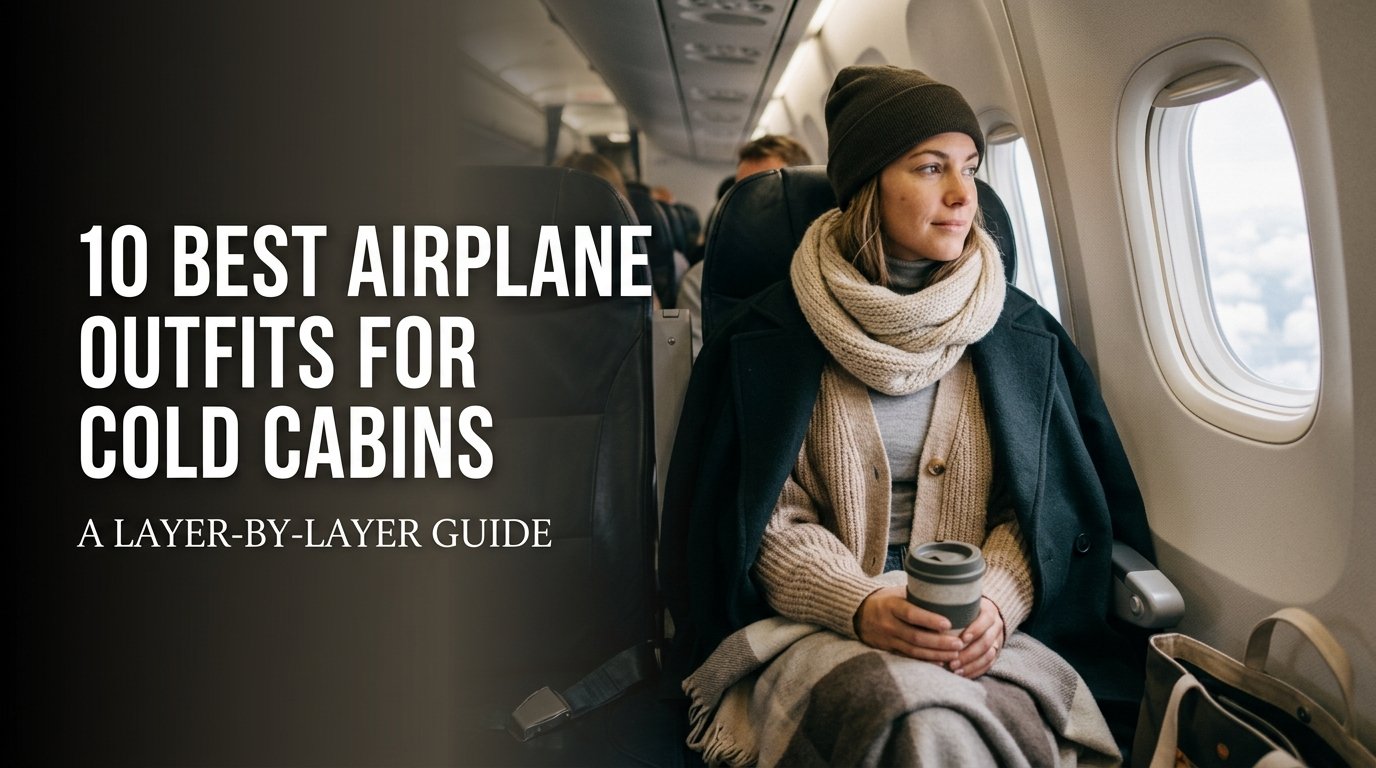
The best airplane outfits for cold cabins use three layers: a soft moisture-wicking base, a warm mid-layer like fleece or merino, and an easy-to-remove outer layer, plus socks, a scarf, and comfortable pants. This lets you add or shed warmth as the cabin and your body temperature change.
Key Takeaways
- Layers beat one heavy coat. You can add or remove them as the cabin, your activity, and your destination change.
- Merino wool, fleece, and synthetic thermals insulate better than damp cotton.
- Warm feet and a neck wrap make the biggest comfort difference for many travelers.
- Pick layers that come off fast at security and stow small under the seat.
- Dress for where you land, not only for the cabin. Every outfit below can be stripped down.
Why Are Airplane Cabins So Cold?
Cabins feel cold mainly because air-conditioning continuously supplies cooled air to a crowded space, and temperatures vary by aircraft, airline, and seat. The National Academies’ 2026 report on aircraft cabin temperatures identifies a target operative temperature range of 65°F to 75°F (18.3°C to 23.9°C) under the cited industry standard. This is a target range, not a guarantee that every flight will remain within those temperatures.
Other factors make the chill feel stronger:
- You sit still for hours, so you generate less body heat.
- Overhead vents can blow air directly on your head and shoulders.
- Body temperature tends to drop during sleep, which matters on overnight flights.
- Cabin temperature can swing between boarding, cruise, and landing.
For example, a passenger sitting beneath an overhead air vent may find the airflow uncomfortable even when the rest of the cabin feels pleasant. Keeping a fleece or scarf within reach makes it easier to adjust without searching through the overhead bin.
How Does Layering Work on a Plane?
Layering means wearing several thin garments that each do one job, so you can add or remove warmth in small steps. For flying, think in four parts: base, mid-layer, outer layer, and accessories.
Base layer
This is the layer against your skin. Choose a soft long-sleeve tee in merino, a merino blend, or a synthetic wicking fabric. It should feel comfortable on its own.
Mid-layer
This layer traps warm air. A zip-up fleece, a merino sweater, or a knit cardigan works well. A zip lets you vent heat without taking it off.
Outer layer
This is your quick-add, quick-remove layer. A packable puffer, a soft shell, or a lined jacket can double as a blanket over your lap.
Accessories
A large scarf or wrap, warm socks, and a beanie weigh little and add a lot. They cover areas that vents hit first: neck, feet, and head.
How to build your outfit step by step
- Check your flight length and whether you land somewhere warm.
- Pick a comfortable base layer and stretch bottoms.
- Add a mid-layer you would be happy to wear alone.
- Choose an outer layer that packs small and comes off in seconds.
- Add warm socks and a scarf or wrap.
- Keep one spare layer within reach, not in the overhead bin.
The 10 Best Airplane Outfits for Cold Cabins
These are outfit formulas described by garment type, not sponsored product picks. Swap in what you already own. All ten follow the same layering logic above.
1. The Classic Layered Basics
Best for: short and medium daytime flights. Outfit: long-sleeve tee, zip-up fleece, packable jacket, stretch joggers, wool-blend socks, slip-on sneakers. Why it works: each piece is easy to remove, and nothing is tight when you sit.
2. The Merino Minimalist
Best for: travelers who want to pack light and avoid odor on long trips. Outfit: merino long-sleeve base, thin merino sweater, tapered stretch pants, merino socks, lightweight scarf. Why it works: merino insulates and manages moisture, so one set suits cold air and warm arrival. The REI guide to merino wool explains that merino can help regulate temperature, manage moisture, and resist odors. Actual performance varies with the garment, fabric construction, and conditions.
3. The Red-Eye Cocoon
Best for: overnight flights where you plan to sleep. Outfit: soft base layer, oversized hoodie or zip fleece, knit or fleece-lined pants, thick socks, large wrap, beanie. Why it works: you stay warm while still, and the wrap covers your shoulders and neck. Skip drawstrings or hardware that dig into your neck when you lean back.
4. The Business Traveler
Best for: flights where you land and go straight to a meeting. Outfit: fitted merino sweater over a collared shirt, unstructured knit blazer, stretch trousers, loafers with socks. Why it works: the sweater provides warmth, and the blazer comes off and hangs without wrinkling much.
A practical tip for arriving polished after a long flight is to keep your blazer separate from heavier layers when possible. Before landing, put it back on, smooth out your shirt, and check your appearance before heading to your meeting.
5. The Cold-to-Hot Swap
Best for: leaving winter and landing somewhere warm. Outfit: breathable tee as the base, cardigan, packable down or synthetic jacket, convertible or lightweight pants, removable scarf. Why it works: you can strip to one layer in the terminal. Stuff the jacket into your personal item, not a checked bag.
6. The Dress and Tights
Best for: travelers who prefer dresses or skirts. Outfit: knit midi dress, thermal or opaque tights, long cardigan, ankle boots or flats with socks, scarf. Why it works: the tights add warmth under the dress, and the long cardigan covers your lap like a light blanket.
7. The Athleisure Set
Best for: comfort-first travelers on any flight length. Outfit: high-waisted leggings, long-sleeve top, zip-up track jacket, running shoes, headband or beanie. Why it works: stretch fabrics move with you, and layers are simple to take off at security.
8. The Denim and Cozy Knit
Best for: travelers who want a casual, everyday look. Outfit: stretch jeans, thin thermal under-layer, chunky knit sweater, compact jacket, thick socks. Why it works: the thermal under-layer adds warmth without bulk. Choose stretch denim, since rigid jeans can feel stiff after hours of sitting.
9. The Maximum Warmth Setup
Best for: people who run cold, or long flights near drafty windows. Outfit: thermal base top and leggings, fleece-lined pants or joggers, fleece, packable puffer, wool socks, scarf, beanie, light gloves. Why it works: it covers every area exposed to vents. Plan to remove a layer if you get warm during boarding.
10. The No-Purchase Closet Outfit
Best for: budget travelers who do not want to buy gear. Outfit: your softest tee, a hoodie or cardigan, a jacket you already own, comfortable pants, thick socks, and a large scarf as a wrap. Why it works: the layering logic matters more than the brand. A large scarf doubles as a neck warmer and a lap blanket.
Which Outfit Should You Choose?
Choose by flight length, destination climate, and how much you plan to sleep. This table maps common situations to the outfits above.
| Situation | Suggested outfits | Main priority |
| Short daytime flight | 1, 7, 8 | Easy-off layers |
| Overnight or red-eye | 3, 9 | Maximum warmth and comfort |
| Cold origin, hot destination | 5, 2 | Strip-down flexibility |
| Land and go to work | 4 | Polished and warm |
| Prefer dresses or skirts | 6 | Warm legs, lap coverage |
| No budget for new gear | 10 | Use what you own |
| Window seat near a cold wall | 9, 3 | Extra shoulder and neck cover |
Fabrics: What to Wear and What to Skip
Merino, fleece, and synthetic thermals are the safest picks for cold cabins because they insulate and handle moisture. Cotton is fine for a top layer you do not need for warmth.
| Fabric | Warmth | Moisture handling | Notes |
| Merino wool | High | Good | Soft, odor-resistant, often costs more |
| Fleece | High | Moderate | Light and cheap, can feel static |
| Synthetic thermal | Medium to high | Good | Dries fast, can hold odor |
| Down or synthetic puffer | High | Varies | Packs small, check warmth when you board |
| Cotton | Low when damp | Poor | Comfortable, but cold when sweaty |
For further information, consult REI’s guide to base layers and REI’s guide to layering basics. These resources explain how wool and synthetic fabrics can help manage moisture, while insulating layers help retain warmth. Actual performance depends on fabric construction, garment fit, and conditions.
Real-World Examples
Example 1: A 3-hour winter flight, cold origin and cold destination
Outfit 1 or 8 fits. Wear the base and mid-layer in the terminal, keep the jacket on until you find your seat, then fold it into a lap blanket. If the cabin warms up, you lose only the jacket.
Example 2: An 11-hour overnight flight to a warm city
Outfit 5 with elements of 3 fits. Wear a breathable base, a zip cardigan, and a packable jacket. Use the scarf as a wrap while you sleep. Before landing, stow the jacket and cardigan so you arrive in one comfortable layer.
A practical approach for an overnight flight is to wear a breathable base layer, comfortable trousers, and a removable cardigan or fleece. Keep your jacket and scarf nearby so you can adjust your outfit during the journey. Before landing in a warm destination, remove the heavier layers and store them in your personal item.
Common Mistakes
- Wearing one bulky coat. It is hard to stow and leaves you with no middle option.
- Relying on cotton for warmth. It feels cold when damp.
- Packing all layers in the overhead bin. Keep one layer under the seat.
- Choosing tight waistbands or stiff jeans. They pinch after hours of sitting.
- Forgetting your feet and neck. Vents often hit these first.
- Dressing only for the cabin. You may land somewhere hot.
- Depending on the airline for a blanket. Availability varies, so bring your own wrap.
Pre-Flight Checklist
- ☐ Checked the weather at departure and arrival
- ☐ Soft base layer that is comfortable alone
- ☐ Mid-layer with a zip or easy neckline
- ☐ Packable outer layer within reach
- ☐ Large scarf or wrap
- ☐ Warm socks, plus a spare pair for long flights
- ☐ Slip-on shoes that fit if your feet swell slightly
- ☐ Stretch pants with no tight waistband
- ☐ Layers that come off quickly at security
- ☐ Beanie or light gloves if you run cold
Tools and Resources
- Your airline’s website: check current blanket, carry-on, and personal item rules before you pack.
- TSA (or your local security authority): check current screening rules for shoes and outerwear. The official TSA travel checklist says passengers in standard screening lanes should remove their shoes. Eligible TSA PreCheck passengers generally do not need to remove shoes or light jackets, although additional screening may apply. Check the TSA screening guidance before you travel.
- Travel scarf or wrap: serves as a neck warmer, shoulder cover, and lap blanket.
- Compression socks: some travelers like them for long flights. Ask a clinician whether they suit you, particularly if you have circulation or clotting concerns.
FAQs
Why are airplanes so cold?
Cabins feel cold mainly because air-conditioning keeps supplying cooled air to a crowded space, and settings vary by aircraft and airline. Sitting still for hours, air from overhead vents, and the drop in body temperature during sleep make the chill feel stronger. Dressing in removable layers lets you adjust to whatever your cabin does.
What should I wear on a plane if I get cold easily?
Start with a soft, moisture-wicking long-sleeve base, add a fleece or merino mid-layer, and carry a packable jacket or large scarf. Choose warm socks, stretch pants, and slip-on shoes. Keep one layer in your seat pocket or under the seat so you can add warmth without opening the overhead bin.
Is it better to wear layers on a plane?
Yes. Layers let you add or remove warmth as the cabin temperature, your activity, and your destination change. Several thin layers also trap warm air more flexibly than one bulky coat, and they pack small when removed. Make sure each layer is comfortable on its own in case you end up wearing only one.
What fabrics keep you warmest on a flight?
Merino wool, fleece, and synthetic thermal fabrics are strong choices because they insulate and manage moisture. Cotton absorbs sweat and can feel cold when damp, so use it only where warmth is not critical. Choose soft, stretchy blends that stay comfortable during long periods of sitting.
Do airlines provide blankets?
Policies vary by airline, route, and ticket class, and some airlines sell or limit blankets. Check your airline’s current policy before you fly, and pack your own large scarf or wrap rather than relying on one being available.
What shoes and socks are best for flying?
Choose warm, breathable socks, such as merino or a wool blend, and slip-on shoes that are easy to remove at security. Feet often swell slightly on long flights, so leave room. If you use compression socks, ask a clinician whether they suit you, especially with circulation conditions.
What should I wear through airport security?
Wear layers that come off quickly, like a jacket or cardigan, and shoes that are easy to slip on and off. Keep metal-heavy items minimal. Rules on shoes and outerwear vary by airport and screening program, so check the TSA website or your local authority before you travel.
Conclusion
The best airplane outfits for cold cabins share one idea: build warmth in thin, removable layers instead of relying on one heavy piece. Pick the outfit from the list that matches your flight length and destination, then run through the pre-flight checklist. Pack a scarf and warm socks within reach, and you will handle most cabin temperature swings.
Next steps: choose your outfit number, confirm your airline and security rules, and set out your layers the night before.
About the Author
OutfitVaca Editorial Team shares practical fashion and travel-style advice to help readers plan comfortable, versatile outfits for vacations and journeys.