
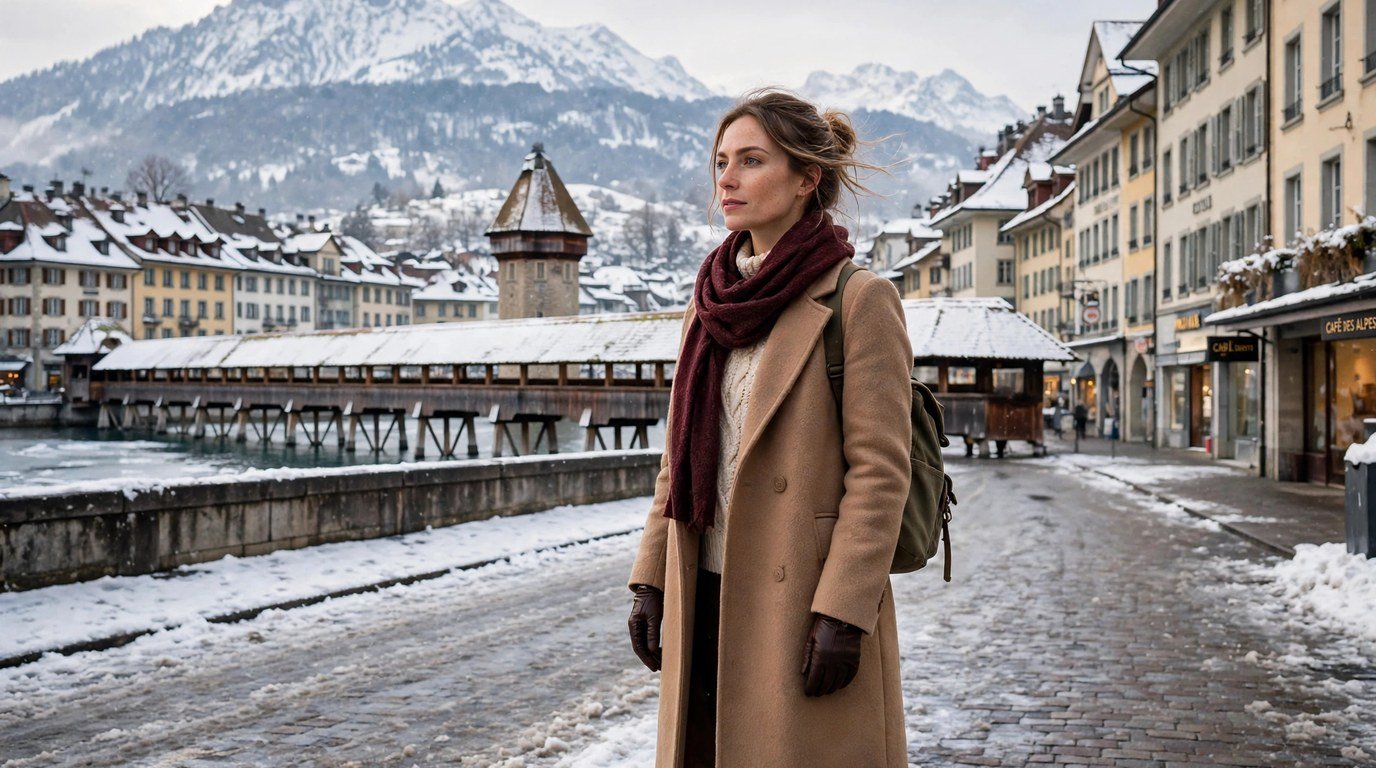
Switzerland in winter is two trips in one: glittering Alpine slopes and snow-dusted cities where the cold feels very different. The right outfit is a warm, waterproof layering system — a thermal base, an insulating mid-layer, and a windproof, waterproof outer shell — plus warm boots with grip.
Key Takeaways
- Layer in three parts: a thermal base layer, a warm mid-layer, and a waterproof outer shell.
- Expect daytime temperatures around −2 to 5°C (28–41°F) in Zurich and Lucerne, and −5 to −10°C (14–23°F) or colder in the Alps.
- Cities need smart-casual polish; the mountains need technical warmth. One layering system covers both.
- Bring a warm hat, gloves, a scarf, and thermal socks — extremities get cold first outdoors.
What Is Winter Weather Like in Switzerland?
Switzerland’s winter weather changes fast with altitude, so your outfit has to handle more than one climate. In Zurich and Lucerne, December through February brings daytime highs of roughly 2–5°C (36–41°F) and nights near or below freezing, with frequent cloud, rain, and occasional snow. In the Alps — Zermatt, St. Moritz, Jungfrau, and Davos — daytime temperatures often sit between −5 and −10°C (14–23°F), and wind chill on a mountain viewpoint can make it feel far colder.
The key difference is exposure. City sightseeing means short walks between heated museums, cafes, and trams, so you warm up often. Mountain days mean long stretches outdoors on open platforms and snowy paths, where wind and altitude keep the cold constant. Lowland winter air can feel damp, which makes 2°C feel colder than the same temperature in dry mountain air — another reason layering beats any single heavy coat.
Snowfall is common in the mountains from December onward, while Zurich and Lucerne see snow less often but get plenty of rain and slush. Pavements can ice over overnight, especially on Lucerne’s lakeside promenades and Zurich’s old-town cobbles, so footwear with grip is a safety item, not a style choice. Daylight is short in December, with sunset around 4:30 PM, so your warmest layers matter most in the late afternoon and evening.
What Should You Pack for Switzerland in Winter?
A Swiss winter capsule works best when every piece layers with every other piece. Start with a neutral palette — black, navy, charcoal, cream, and one accent such as burgundy or forest green — so a few items create many outfits. Choose fabrics that handle cold and moisture: merino or synthetic thermals, fleece or down for insulation, and a waterproof outer layer.
Here is a solid base for a 5–7 day trip: two thermal tops and two thermal leggings or tights, three long-sleeve tops, one or two knit jumpers (sweaters), one fleece or insulated mid-layer, one waterproof winter coat or a packable down jacket plus a waterproof shell, two pairs of warm trousers, one warm dress or skirt with thermal tights if you like dresses, and one smart outfit for an evening out. Add thermal socks, a warm hat, gloves, a scarf, and a secure crossbody bag.
Avoid cotton as a base layer — it holds sweat and stays cold and damp. Merino wool keeps you warm even when slightly damp and resists odour, so you can re-wear it across several days.
What to Wear in the Swiss Alps in Winter?
In the Alps, warmth and weatherproofing come first. Your base should be a merino or synthetic thermal top and thermal leggings under insulated, waterproof ski trousers or lined winter trousers. On top, wear a fleece or light down mid-layer under a waterproof ski jacket or a long insulated parka. Resorts such as Zermatt, Verbier, and St. Moritz are high and exposed, so windproofing matters as much as insulation.
Footwear is critical. Insulated, waterproof snow boots with deep tread handle village streets, snowy paths, and icy patches; fashion boots with smooth soles do not. If you plan to ski, rent boots and skis at the resort, but bring your own thermal base layers, ski socks, and gloves. A neck gaiter protects your face on chairlifts, and goggles or good sunglasses are essential because snow glare is intense at altitude, even on cloudy days.
For non-skiers, the formula is simpler but no less warm: thermal layers, a long down coat, waterproof boots, and accessories. Apres-ski outfits can be cosy rather than technical — a chunky knit, lined trousers or a knit dress with thermal tights, and warm boots — but keep a waterproof layer handy, because mountain weather turns quickly.
What to Wear in Zurich in Winter?
Zurich in winter is a stylish, walkable city, and your outfit should balance warmth with the smart-casual polish locals wear. Try thermal tights or leggings under lined wool trousers or dark jeans, a merino jumper, and a long wool or down coat in a neutral colour. Add leather gloves, a cashmere-blend scarf, and waterproof ankle boots with good tread — Zurich’s Bahnhofstrasse and old-town lanes can be slippery.
Evenings in Zurich call for a small step up. Restaurants, the opera, and Christmas market evenings are smart occasions, so pack one outfit that feels dressed up: a dark knit dress with thermal tights and boots, or tailored trousers with a silk-look blouse under your coat. Swiss style is understated rather than flashy, so clean lines, quality fabrics, and one good coat will fit in better than loud logos or party sparkle.
What to Wear in Lucerne in Winter?
Lucerne is smaller and more relaxed than Zurich, with a lakeside setting that adds wind chill. The same layering system works, with two adjustments: add a windproof layer and choose footwear for cobbles. The old town’s uneven streets around the Chapel Bridge and the Lion Monument favour flat, grippy boots over heels, and a hooded waterproof coat beats an umbrella on crowded bridges.
Lucerne rewards slow sightseeing — the lakeside promenade, the old town, and a boat trip on Lake Lucerne — so comfort matters more than formality. A typical day outfit is thermal layers, a warm jumper, lined trousers, a long waterproof coat, and a beanie or warm hat. If you take the boat, the open deck is cold and windy even when the town feels mild, so keep your scarf and gloves on.
How Do You Layer for a Swiss Winter?
Layering works because each layer has a job. The base layer manages moisture: a close-fitting merino or synthetic thermal top and leggings wick sweat away from your skin. The mid-layer provides insulation: a fleece, a down vest, or a knit jumper traps warm air. The outer layer blocks wind and precipitation: a waterproof, windproof coat or shell keeps the cold and wet out.
Follow three rules. First, keep the base layer snug — loose thermals do not wick properly. Second, make the mid-layer easy to remove, because Swiss trains, museums, and restaurants are well heated and you will overheat indoors if you cannot shed a layer. Third, never skip the outer layer on a mountain day, even when the morning looks clear.
What Shoes Are Best for Switzerland in Winter?
Shoes are the most common packing mistake on a Swiss winter trip, so choose them with care. The best all-round option is a pair of waterproof, insulated ankle or mid-calf boots with a deep-lugged rubber sole — they handle city slush, mountain snow, and icy pavements, and look smart enough for restaurants.
Bring a second, lighter pair for indoors and milder days: comfortable walking shoes or trainers (sneakers) with good support. What to avoid: smooth-soled fashion boots, suede shoes without waterproofing, and high heels — suede stains badly in slush and salt, and heels are a hazard on icy cobbles.
What to Wear for Swiss Winter Activities?
Each winter activity needs a small outfit adjustment, and planning ahead saves you from buying emergency gear at resort prices. For skiing and snowboarding, wear proper ski layers: thermal base, insulating mid-layer, waterproof ski jacket and trousers, ski socks, gloves, goggles, and a helmet (rented at the resort if you do not own one). For tobogganing and snowshoeing, the same layers work, but add waterproof trousers even if you are not skiing.
For scenic train journeys such as the Glacier Express or the Bernina Express, dress warmly but comfortably: thermal layers, a jumper, and your coat within reach, because panoramic windows lose heat and you will want to step onto viewing platforms at stops. For Christmas markets, wear your warmest boots and socks, a long coat, and a hat that covers your ears — you will be standing still, which is when cold bites hardest.
Switzerland in Winter: City vs Alps Comparison
| Zurich | Lucerne | Swiss Alps (Zermatt, St. Moritz) | |
|---|---|---|---|
| Daytime temperature | 2–5°C (36–41°F) | 1–5°C (34–41°F) | −5 to −10°C (14–23°F) |
| Main challenge | Damp cold, rain, icy pavements | Lake wind, drizzle, cobbles | Wind chill, deep snow, altitude |
| Outer layer | Long wool or down coat | Waterproof coat with hood | Waterproof ski jacket or parka |
| Footwear | Waterproof ankle boots | Grippy flat boots | Insulated snow boots |
| Key accessory | Leather gloves, scarf | Warm hat, scarf | Neck gaiter, goggles, gloves |
| Evening style | Smart-casual, polished | Relaxed, comfortable | Cosy apres-ski knits |
Switzerland Winter Packing Checklist
- Thermal base layers: 2 tops, 2 leggings or tights (merino or synthetic)
- Mid-layers: 2 knit jumpers, 1 fleece or down vest
- Outer layer: waterproof winter coat or down jacket plus waterproof shell
- Trousers: 2 pairs (lined wool trousers + dark jeans)
- Dress or smart outfit: 1 for evenings out
- Footwear: waterproof insulated boots + comfortable walking shoes
- Accessories: warm hat, gloves, scarf, neck gaiter for mountain days
- Socks: wool-blend thermal socks, at least one pair per day
- Extras: sunglasses or goggles, lip balm, moisturiser
- Travel: crossbody bag, power adapter (Type J plug)
- Documents: passport, travel insurance, train passes
Common Mistakes to Avoid in Switzerland in Winter
The most common mistake is packing a fashionable coat that is neither waterproof nor warm enough — it looks wonderful in Zurich on a dry day but will not protect you in Alpine wind or Lucerne drizzle. The second mistake is wearing cotton base layers, which trap sweat and chill you from the inside — switch to merino or synthetic thermals.
A third mistake is underestimating the cold on mountain viewpoints and lake boats, where wind chill is the real temperature — pack your warmest layer even when the town feels mild. A fourth mistake is bringing the wrong shoes: smooth soles on icy cobbles are a fall waiting to happen. Finally, do not forget sun protection: snow reflects UV strongly, so sunscreen and sunglasses belong in a winter packing list too.
Best Practices for Dressing Well in the Swiss Winter
Dress in layers you can adjust every hour, and keep a small daypack for the layers you shed indoors. Swiss trains are well heated, so you will move between cold platforms and warm carriages all day — a system that adapts beats a single heavy outfit. Choose dark, neutral colours for outer layers so salt and slush show less, and save lighter colours for jumpers and scarves underneath.
Invest in one excellent coat and one excellent pair of boots rather than several mediocre ones — these two items decide whether you enjoy the trip. Try your full layering system on at home before you travel.
FAQs: What to Wear in Switzerland in Winter
Q: Is Switzerland very cold in winter?
A: Switzerland is cold but manageable with the right layers. Zurich and Lucerne average 1–5°C (34–41°F) by day, while Alpine resorts sit around −5 to −10°C (14–23°F). Wind chill makes mountain viewpoints feel colder, so thermal layers and a waterproof coat matter more than one heavy jumper.
Q: What should I wear in Switzerland in December?
A: Wear a thermal base layer, a warm jumper, lined trousers, and a waterproof winter coat, with insulated boots, a hat, gloves, and a scarf. December is festive market season in Zurich and Lucerne, so add a smart outfit for evenings and your warmest socks for standing outdoors.
Q: Do I need snow boots for Switzerland in winter?
A: Snow boots are essential in the Alps and very useful in Lucerne and Zurich. Choose waterproof, insulated boots with deep tread for icy pavements and snowy paths. If you only visit cities, waterproof ankle boots with good grip are enough; skip smooth-soled fashion boots entirely.
Q: Can I wear jeans in Switzerland in winter?
A: Yes, jeans work well as part of a layered outfit, especially dark, straight-leg styles with thermal leggings underneath. Avoid thin or ripped jeans in the mountains, where wind cuts through them, and choose lined or wool trousers for the coldest days instead.
Q: What do people wear to dinner in Switzerland in winter?
A: Swiss dinner dress is smart-casual: tailored trousers or a knit dress, a good jumper or blouse, and polished boots. Restaurants are warm indoors, so you can remove your coat and thermal layers at the table. A fondue evening calls for comfortable, stretchy clothing rather than anything tight.
Q: What should I pack for a Swiss Alps ski trip?
A: Pack thermal base layers, a fleece mid-layer, a waterproof ski jacket and trousers, ski socks, gloves, goggles, and a neck gaiter. Rent skis, boots, and a helmet at the resort. Bring warm apres-ski clothes — chunky knits and lined trousers — for evenings in the village.
Q: Do I need a waterproof jacket in Switzerland in winter?
A: Yes. Rain, sleet, and snow are all common, and a waterproof outer layer protects you in cities and mountains alike. A packable waterproof shell over a down jacket is a flexible option, while a long waterproof parka is the simplest one-piece solution for city and mountain days.
Q: What is the best coat for Switzerland in winter?
A: The best coat is a long, waterproof, insulated parka with a hood — warm enough for the Alps, smart enough for Zurich, and protective in Lucerne drizzle. If you prefer two pieces, pair a packable down jacket with a waterproof shell so you can adjust warmth and weather protection separately.
Conclusion: Pack Layers, Not Bulk
Switzerland in winter rewards travellers who pack a smart layering system instead of a suitcase full of heavy coats. Thermal base layers, a warm mid-layer, a waterproof outer shell, and grippy boots will carry you from a Zurich Christmas market to a Lucerne boat trip to a Jungfrau viewpoint. Start with the checklist above and try your layers on at home.
Next steps: check the forecast for Zurich, Lucerne, and your Alpine resort a few days before departure, and adjust your mid-layer weight accordingly. Book ski rental and scenic train seats in advance, since both sell out in peak season. And if you are still building your winter capsule, read our carry-on only winter packing guide and our ski trip outfits for non-skiers before you pack — and for the coldest conditions of all, see what to wear in Lapland.