
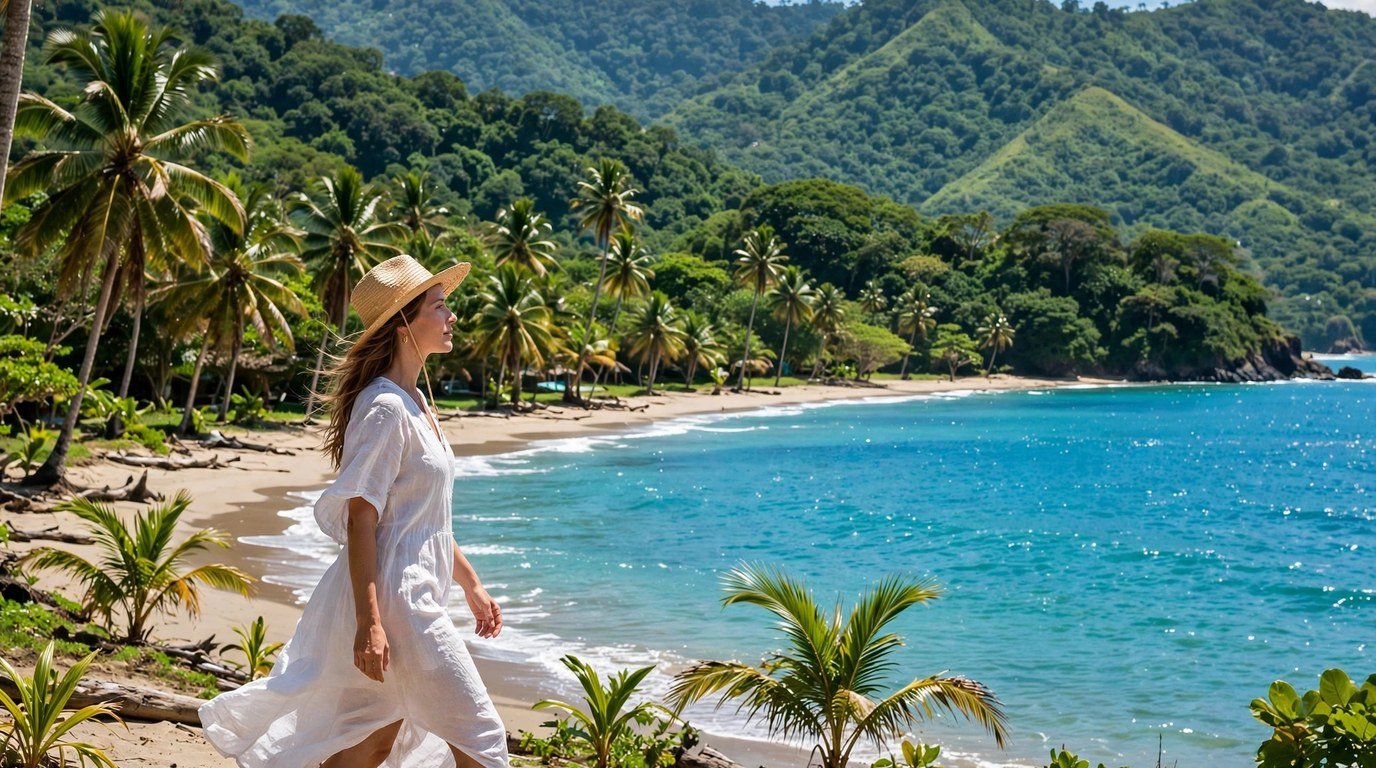
Pack light, breathable clothes for hot Pacific beaches, a warm layer and a rain jacket for cool, misty Monteverde, and sturdy shoes for rainforest trails. January is Costa Rica’s dry season — sunshine on the Pacific side, 16°C in the cloud forest to 35°C in Guanacaste — and one bag covers it all if you layer smartly.
Key Takeaways
- January is peak dry season on the Pacific side and in the Central Valley — sunny, almost rain-free, and windy.
- Guanacaste beaches hit 32–35°C, while Monteverde sits at 20–22°C — pack for two climates, not one.
- Quick-dry fabrics beat cotton in the humidity; linen, rayon, and moisture-wicking activewear work best.
- A packable rain jacket is still essential — Monteverde’s cloud forest can drizzle any day.
- Sturdy sandals or trail shoes with grip are essential for rainforest hikes; flip-flops stay at the beach.
What Is the Weather Like in Costa Rica in January?
January is one of the best months to visit Costa Rica. It sits in the middle of the dry season, which runs from December to April on the Pacific side and in the Central Valley, so most of the country enjoys blue skies and very little rain. But Costa Rica is not one climate — the beach can be 35°C while the cloud forest, hours away, is a misty 20°C.
How Hot Is Guanacaste and the Pacific Coast in January?
Guanacaste and the Nicoya Peninsula are the hottest, driest parts of Costa Rica in January. Daytime highs run 32–35°C (90–95°F), nights stay warm at around 26°C (78°F), and rain is almost nonexistent. Strong Papagayo winds keep the heat bearable — but will steal an unsecured hat. The Central Pacific around Manuel Antonio and Jacó is a touch milder at 24–31°C, with warm evenings and very little rain.
How Cool Is Monteverde in January?
Monteverde is a different world. This cloud forest town sits high in the Tilarán mountains, where January days reach only 20–22°C (68–72°F) and nights drop to about 16°C (60°F). It is famously windy and misty, with light drizzle possible on any day despite the dry season. Trails can be muddy and ziplines sometimes pause in strong gusts.
What Is the Weather Like in San José and the Central Valley?
San José and the Central Valley enjoy some of their best weather of the year in January. Expect sunny days of 24–27°C (75–79°F), fresh breezes, and cool nights around 18°C (65°F). The capital sits at roughly 1,170 metres above sea level, which keeps temperatures spring-like all year.
Does It Rain on Costa Rica’s Caribbean Coast in January?
Yes, sometimes. The Caribbean coast — Puerto Viejo, Limón, and Tortuguero — does not follow the Pacific dry season. January can still bring heavy rain showers there, with daytime temperatures around 32°C (90°F) and nights near 21°C (70°F). If your trip includes the Caribbean side, keep a rain jacket in your bag and choose quick-dry clothes.
What Should You Wear in Costa Rica in January?
The smartest formula is three layers: a light base, a warm layer, and a rain layer. Your base is breathable tops and shorts or a sundress for the beach and lowlands. Your warm layer is a light fleece for Monteverde evenings and air-conditioned buses. Your rain layer is a packable waterproof jacket that fits in your daypack. With those three, you can cover a Guanacaste beach and a Monteverde trail in one day.
Choose tropical fabrics. Linen breathes beautifully and looks polished at a beachfront lunch. Rayon and Tencel drape well and dry faster than cotton. Avoid heavy denim and thick cotton — in this humidity, cotton can take a full day to dry. The same quick-dry logic from our Thailand packing guide applies here: light, loose, and fast-drying wins.
What to Wear at the Beach in Costa Rica in January?
Beach days are gloriously simple, but the January sun is strong and the wind is real. A swimsuit with a good cover-up is the base — a linen shirt dress, a sarong, or a breezy midi dress you can wear straight from the sand to a restaurant. Add a wide-brim hat with a chin strap and sunglasses.
A rash guard is the most practical piece you can pack — it protects your shoulders during surf lessons and snorkelling, and means less sunscreen to reapply. Choose reef-safe sunscreen and pack two swimsuits so one is always dry, and keep a dry bag for your phone.
What to Wear in the Rainforest and Cloud Forest?
Rainforest dressing is about coverage, grip, and staying dry enough to enjoy the walk. Long, lightweight trousers protect your legs from insects, thorny plants, and muddy splashes far better than shorts, and a long-sleeve top keeps mosquitoes off your arms at dawn and dusk.
Your rain jacket earns its place here. Monteverde’s mist can soak a cotton hoodie in minutes, while a packable shell keeps you comfortable and weighs almost nothing. A small daypack holds your water bottle, binoculars, and camera. Choose neutral, earthy colours for wildlife watching — bright white can catch the eye of the animals you came to see.
What to Wear for Hiking, Ziplining and Adventure Activities?
Adventure days need clothes that move, grip, and dry fast. For waterfall hikes or the Arenal Volcano trails, wear moisture-wicking leggings or lightweight hiking trousers, a breathable top, and closed-toe shoes with real tread. January trails are drier than in the green season, but shaded paths stay muddy and slippery, so grip matters most.
For ziplining, wear fitted activewear and closed shoes — loose skirts and flip-flops are not allowed on most courses, and long hair should be tied back. A light long-sleeve top protects against harness rub and sun at once. For rafting, a swimsuit under quick-dry shorts and a secure water shoe is standard. For dawn birdwatching, add your warm layer — the Resplendent Quetzal is most active in the cool morning.
What to Wear in the Evening in Costa Rica?
Evenings are relaxed, but the dress code shifts with the setting. At a beach town like Tamarindo, a sundress or linen trousers with a nice top is perfectly dressed for dinner — most restaurants are open-air and casual. In San José, evenings are cooler and smarter, so a midi dress with a light cardigan works well.
Two essentials are easy to forget: insect repellent and a light layer. Mosquitoes are most active at dusk, so apply repellent before dinner outdoors. And if your evening involves a night walk or hot springs at Arenal, bring your fleece — temperatures drop quickly after sunset in the highlands.
What Shoes Should You Pack for Costa Rica in January?
Three pairs cover almost every Costa Rica itinerary. First, sturdy walking sandals with ankle straps and good grip — ideal for beach towns, light trails, and waterfall pools. Second, closed-toe trail shoes for rainforest walks and muddy paths. Third, flat sandals smart enough for dinner. Flip-flops are fine at the beach, but not for walking Costa Rica’s uneven pavements and trails.
Break your shoes in before you travel — blisters from new hiking shoes can ruin a rainforest day. Pack moisture-wicking socks — cotton socks stay damp and cause blisters faster than anything else. If your trip is beach-only, you can drop the hiking shoes, but keep the walking sandals with real grip.
Costa Rica January Packing List: The Complete Checklist
Use this checklist as your final pack for a one to two week trip across beach, rainforest, and city. It fits in a carry-on if you follow the capsule approach in our carry-on winter packing guide — the same logic works in the tropics, just with lighter pieces.
- 4–5 lightweight tops in linen, rayon, or moisture-wicking fabric
- 2–3 bottoms: linen shorts, a midi skirt, lightweight long trousers
- 2 sundresses or jumpsuits
- 2 swimsuits and 1 cover-up or sarong
- 1 rash guard or UPF long-sleeve top
- 1 light fleece for Monteverde and cool evenings
- 1 packable rain jacket with a hood
- Walking sandals with grip, closed trail shoes, smart flat sandals
- 5–7 pairs of moisture-wicking underwear and 2–3 pairs of hiking socks
- Wide-brim hat, sunglasses, reef-safe sunscreen, insect repellent, and after-sun lotion
- Small daypack with a rain cover and a dry bag for electronics
- Binoculars and a camera with a waterproof pouch
Costa Rica in January: What to Wear by Region
| Region | Daytime temperature | What to wear | Extra layer to pack |
|---|---|---|---|
| Guanacaste & Nicoya beaches | 32–35°C (90–95°F) | Swimsuit, linen dress or shorts, sandals | Rash guard, hat |
| Central Pacific (Manuel Antonio, Jacó) | 24–31°C (75–88°F) | Breathable top, shorts, walking sandals | Rain jacket |
| San José & Central Valley | 24–27°C (75–79°F) | Sundress or linen trousers, light top | Cardigan |
| Monteverde cloud forest | 20–22°C (68–72°F) | Long trousers, long-sleeve top, trail shoes | Fleece, rain jacket |
| Arenal & La Fortuna | 25–30°C (77–86°F) | Quick-dry top, shorts, trail shoes | Rain jacket, warm layer |
| Caribbean coast (Puerto Viejo) | 30–32°C (86–90°F) | Quick-dry clothes, sandals, swimsuit | Rain jacket — showers likely |
What NOT to Pack for Costa Rica in January?
Leave the heavy winter coat at home — even Monteverde never needs more than a fleece and a rain shell. Skip high heels; Costa Rica’s streets, beaches, and lodge paths are uneven, sandy, or muddy, and heels are impractical everywhere outside a San José hotel. Avoid heavy denim jeans, which stay damp and heavy in the humidity, and leave bulky cotton sweatshirts behind for the same reason. Skip heavy makeup too — heat and humidity will melt it by midday, so a tinted sunscreen and waterproof mascara do the job better. Finally, prefer a soft bag you can carry yourself if you are moving between regions — domestic flights and shuttles have tight luggage limits.
Common Mistakes Women Make Packing for Costa Rica
The most common mistake is packing for one climate and forgetting the other — travellers arrive with only beach clothes and shiver through a misty Monteverde morning, or overpack warm layers they never touch on the coast. The second is trusting cotton: a sweat-soaked cotton T-shirt stays wet for hours, while a quick-dry top is ready by morning. The third is footwear — only flip-flops for a muddy trail, or heavy boots that are overkill for January’s dry paths. The fourth is forgetting sun protection: the trade winds make the heat feel mild, so burning is easy to miss. Finally, do not skip insect repellent in the daytime — mosquitoes are worst at dawn and dusk, but in the rainforest they bite all day.
Best Practices for Dressing in Costa Rica in January
Think in outfits, not items. Build three or four complete outfits from pieces that mix and match, and you will pack less and look better: one beach outfit, one rainforest outfit, one dinner outfit, and one travel-day outfit, with every top working with at least two bottoms. Choose a simple palette — white, sand, olive, one accent — so everything coordinates against green forest and blue sea.
Pack your layers where you can reach them. Keep the rain jacket and fleece in your daypack or at the top of your bag, because the weather can change between beach and mountains in a single drive. Wash quick-dry clothes in the sink overnight — in January’s dry air they will be ready by morning. And dress for the wildlife: muted colours, covered shoulders on forest walks, and clothes you do not mind getting muddy.
Frequently Asked Questions
Is January a good time to visit Costa Rica?
Yes, January is one of the best months to visit Costa Rica. It is peak dry season on the Pacific side and in the Central Valley, with sunny days, very little rain, and clear views of the Arenal Volcano. Expect more visitors and higher prices, so book hotels and tours early.
What should I wear in Costa Rica in January as a woman?
Pack light, breathable clothes — linen dresses, shorts, and quick-dry tops — plus a fleece and a packable rain jacket for cool, misty Monteverde. Add sturdy sandals, closed trail shoes, a wide-brim hat, and reef-safe sunscreen, and you are covered for beach, rainforest, and city.
Do I need a jacket in Costa Rica in January?
Yes. Monteverde’s cloud forest sits at 20–22°C in the day and drops to about 16°C at night, and San José evenings are cool too. A packable fleece and a waterproof rain shell weigh very little and cover every cool or wet moment.
Is Costa Rica humid in January?
Costa Rica is humid year-round, but January is one of the drier months on the Pacific side, so it feels more comfortable than the rainy season. The Caribbean coast stays more humid and can still see rain. Quick-dry fabrics like linen and moisture-wicking activewear handle the humidity far better than cotton.
What shoes are best for Costa Rica in January?
Bring three pairs: walking sandals with good grip for beach towns and light trails, closed-toe trail shoes for rainforest hikes, and smart flat sandals for dinners. Flip-flops are fine at the beach but not for walking. Break in your trail shoes before the trip to avoid blisters.
Can I wear shorts in Costa Rica?
Yes, shorts are fine almost everywhere in Costa Rica, including beach towns, national parks, and casual restaurants. For rainforest walks, long lightweight trousers are more practical because they protect against insects and plants. In San José, linen trousers or a dress look more polished than shorts.
Do I need a rain jacket in Costa Rica in January?
Yes, even in the dry season. Monteverde’s cloud forest can drizzle on any day, and the Caribbean coast can see heavy showers in January. A packable waterproof jacket weighs almost nothing and turns a wet walk into a comfortable one.
Conclusion: Pack Light, Layer Smart, and Enjoy Pura Vida
Costa Rica in January rewards the traveller who packs for two climates in one bag. Light, breathable clothes carry you through the hot Pacific beaches, a warm layer and a rain shell carry you through misty Monteverde, and sturdy shoes carry you everywhere in between.
Next, check which regions your itinerary includes, pull those layers to the top of your bag, and break in your trail shoes before you fly. If beach time is the heart of your trip, the resort-ready capsule in our Maldives guide is a good model for the same light linen pieces. Then pack, fly, and enjoy the dry-season sunshine. Pura vida.