
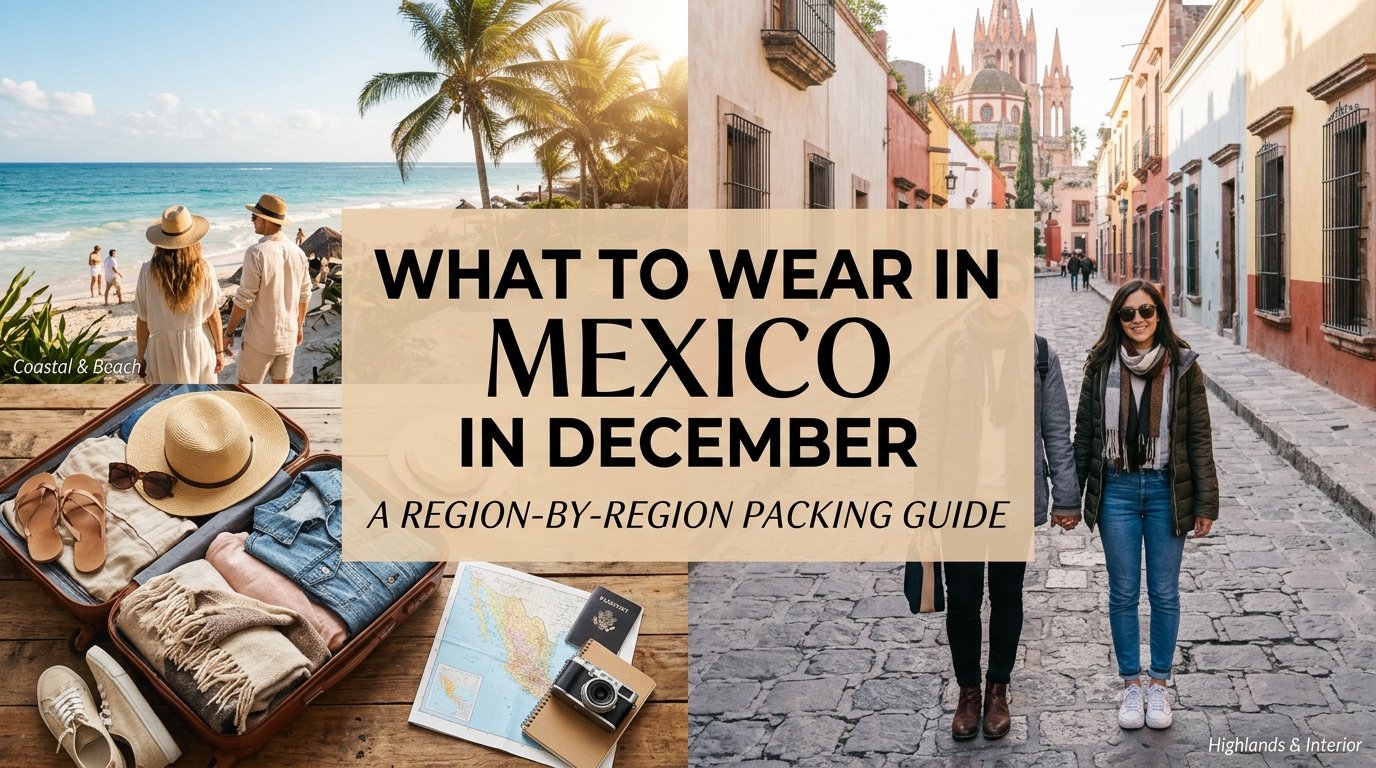
What to wear in Mexico in December depends on where you go. Beach destinations such as Cancún and Puerto Vallarta are generally warm enough for shorts, lightweight dresses, and swimwear. Highland cities such as Mexico City can have mild afternoons and chilly mornings and evenings, so long pants, a sweater, and a jacket are useful. Pack breathable clothing, comfortable walking shoes, sun protection, and layers that work across different climates.
Key Takeaways
- Mexico does not have one uniform December climate. Coastal destinations are generally warm, highland cities cool down at night, and northern or mountainous areas can experience much colder conditions.
- Lightweight layers are more versatile than packing one bulky jacket for every destination.
- Plan your wardrobe around the coldest stop on your itinerary, then add warm-weather clothes for beach days.
- Long pants and a light cover-up are practical options for visiting churches, cultural attractions, and traditional communities.
- December is generally drier in many popular destinations than the summer rainy season, but rainfall varies by region. Check the Servicio Meteorológico Nacional (SMN) forecast before departure.
- Sun protection remains important even when the air feels cool.
- Comfortable, broken-in shoes are essential for cobblestone streets, archaeological sites, and long sightseeing days.
Why Does Mexico in December Need a Flexible Wardrobe?
Mexico is a large country with substantial differences in elevation, geography, and local weather. That is why a December packing list for a beach resort looks very different from one for Mexico City or a mountain destination.
On the Caribbean coast, you may spend the morning swimming and the afternoon walking around town in shorts and a lightweight shirt. In Mexico City, however, the same day might begin with a chilly morning, warm up in the afternoon, and become cool again after sunset.
Elevation makes a noticeable difference. Mexico City sits at approximately 2,240 meters above sea level, and its winter nights can feel surprisingly cold compared with coastal destinations. Oaxaca City and Puebla also have cooler evenings than many lowland resort areas, while higher mountain communities may require substantially warmer clothing.
December is also a busy travel month because of Christmas, New Year’s Eve, and the December 12 celebration of the Virgin of Guadalupe. These events can mean crowded public spaces, long walks, outdoor gatherings, and evenings spent away from your hotel.
For that reason, packing for Mexico in December is less about choosing a single vacation style and more about building a wardrobe that adapts to your itinerary. If you are planning outfits for other destinations too, explore these vacation outfit ideas for women for more travel wardrobe inspiration.
Who this guide is for: First-time and repeat visitors planning anything from a week at a beach resort to a multi-city trip combining coastal destinations, historic towns, and highland cities.
How Does December Weather in Mexico Work?
December weather in Mexico can be understood through three broad climate zones: warm coasts and lowlands, cooler highlands, and colder northern or mountainous regions. These are useful planning categories rather than strict climate boundaries.
Zone 1: Warm Coasts and Lowlands
The Caribbean coast, including Cancún, Playa del Carmen, and Tulum, is generally warm in December. Pacific destinations such as Puerto Vallarta, Huatulco, and many resort areas of the Mexican Pacific also tend to offer comfortable daytime conditions for outdoor activities.
For these destinations, lightweight clothing is usually the foundation of your wardrobe. Think cotton or linen shirts, shorts, breathable dresses, swimwear, and sandals. A light cardigan or windbreaker is still useful for breezy evenings, air-conditioned restaurants, or a passing cold front.
Historical climate information published through the World Meteorological Organization’s World Weather Information Service gives Cancún a December mean daily minimum of approximately 21.2°C and a mean daily maximum of approximately 28.2°C. These are historical averages, not a forecast for your particular travel dates. You can check the Cancún climate information before finalizing your packing list.
One winter weather feature worth knowing about is the norte. These cold fronts can bring stronger winds, rougher seas, falling temperatures, and occasional rain to parts of the Gulf of Mexico and the Yucatán Peninsula. A beach destination can therefore feel cooler than expected for a day or two.
What to pack: Shorts, breathable tops, swimwear, sandals, a sun hat, sunglasses, and one light outer layer.
Zone 2: Cool Highlands
Mexico City, Puebla, Oaxaca City, San Miguel de Allende, Guanajuato, and San Cristóbal de las Casas require a different approach.
Days can be pleasant enough for a T-shirt or light shirt in the sunshine, but early mornings and evenings may be cold. This is especially noticeable when walking through historic centers, visiting outdoor attractions, or returning to accommodation without central heating.
The World Meteorological Organization’s historical climate table for Mexico City reports a December mean daily minimum of approximately 6.6°C and a mean daily maximum of approximately 20.8°C. The reference period is older, so use these figures to understand the seasonal contrast rather than as a prediction of current conditions.
Check the Mexico City climate information alongside the latest local forecast. For city-specific planning, the official Mexico City weather information page is another useful resource.
For these destinations, pack long pants, long-sleeved tops, a sweater or fleece, and a light jacket. Closed walking shoes are particularly useful on cobblestone streets and during extended sightseeing days.
What to pack: Jeans or travel pants, breathable tops, a warm mid-layer, a jacket, comfortable closed shoes, and a scarf for chilly evenings.
Zone 3: Cold North and Mountain Regions
Northern Mexico, high-elevation communities, and mountain destinations such as Copper Canyon can experience much colder conditions than the country’s popular coastal resorts. Temperatures vary with altitude, location, and weather systems, so do not assume every northern destination will have the same winter conditions.
If your itinerary includes remote mountain areas, high-elevation trails, or overnight stays in colder communities, prepare for the possibility of near-freezing nights. Some high mountain areas can experience frost or snow under suitable weather conditions.
A thin cardigan alone may not be enough for these destinations. Consider thermal base layers, warm trousers, an insulated jacket, and closed shoes or hiking boots suited to your activities.
Before leaving, review the SMN’s official weather forecasts and consult local forecasts for individual stops.
What to pack: Long-sleeved base layers, warm trousers, a fleece or sweater, insulated outerwear when needed, warm socks, and appropriate walking or hiking footwear.
Rule of thumb: Build your packing list around the coldest expected conditions on your route. Then add the lighter items needed for warmer destinations. This approach is more reliable than packing according to Mexico’s reputation as a warm-weather country.
What Should You Wear in Each Region of Mexico in December?
The following table provides a practical starting point. Conditions can vary from day to day, so check the forecast for your exact destination before traveling.
| Region | Typical December conditions | Core clothing | Useful extras |
| Caribbean coast: Cancún, Tulum, Playa del Carmen | Warm, sometimes breezy | Shorts, light dresses, T-shirts, swimwear, sandals | Light cardigan, windbreaker, hat, sunscreen |
| Pacific resorts: Puerto Vallarta, Cabo, Huatulco | Generally mild to warm, with local variations | Linen shirts, shorts, lightweight trousers, swimwear | Light evening layer, sunglasses, sun hat |
| Mexico City | Mild afternoons, chilly mornings and nights | Jeans, long pants, long-sleeved tops, closed shoes | Sweater, jacket or coat, scarf |
| Oaxaca and Puebla | Mild to warm days, cooler evenings | Light trousers, breathable tops, comfortable walking shoes | Sweater or fleece, light jacket |
| San Cristóbal and Chiapas highlands | Cooler conditions, especially after dark | Long pants, layered tops, closed shoes | Warm jacket, hat, extra socks |
| Northern Mexico and mountain areas | Highly variable; cold nights are possible | Long trousers, layers, weather-appropriate tops | Insulated jacket, thermal layers, suitable boots |
The key is to treat this table as a starting point rather than a guarantee. For example, a beach stay may require little more than a light layer, while a trip combining Mexico City, Oaxaca, and the coast needs a more balanced wardrobe.
How Do You Build Your Mexico December Packing List Step by Step?
The easiest way to avoid overpacking is to start with your itinerary and then choose clothes that can be worn in more than one setting. For more outfit combinations and versatile travel styling ideas, see our guide to vacation outfits for women.
Step 1: List Your Destinations and Nights
Write down every destination and the number of nights you will spend there. Include early departures, evening activities, excursions, and any mountain or high-elevation stops.
A seven-day beach holiday has different clothing needs from a ten-day trip through Mexico City, Oaxaca, and the Yucatán Peninsula.
Step 2: Choose Your Base Layers
Pack four to five breathable tops for a typical week-long trip. Cotton, linen, and suitable moisture-wicking fabrics are useful, depending on the climate and activity.
Choose colors that work together so you can create several outfits without packing a separate look for every day.
Step 3: Add the Right Bottoms
For a trip that includes highland cities, two pairs of long trousers are a useful starting point. Add one or two pairs of shorts or a skirt if you will visit the coast.
If your itinerary includes hiking, choose trousers appropriate for the terrain instead of relying entirely on jeans.
Step 4: Add a Warm Mid-Layer
A sweater, fleece, or cardigan is useful for cool evenings and early departures. Choose one that works over your usual tops without taking up too much space.
For a coastal-only trip, a lighter layer may be sufficient. For highland or mountain travel, you may need a warmer option.
Step 5: Choose Your Outer Layer
A lightweight, packable jacket is useful for windy evenings, changing temperatures, and cold fronts.
If you will visit northern Mexico or mountain destinations, check the expected lows before deciding whether you need a heavier insulated coat. Do not assume a thin windbreaker will be sufficient in near-freezing weather.
Step 6: Choose Your Shoes Carefully
Bring comfortable, broken-in walking shoes for cities, ruins, and historic centers. Add sandals for the beach and water shoes if your specific cenote, rocky shoreline, or water activity calls for them.
Hiking boots are worthwhile when your itinerary includes trails or rugged terrain, but they are unnecessary for most ordinary resort holidays. For more advice on choosing versatile footwear and coordinating outfits for different activities, read our ultimate guide to vacation outfits.
Step 7: Pack Sun Protection
Include sunglasses, a sun hat, and sunscreen. These items remain useful on cool days, particularly when you spend several hours outdoors.
If you plan to swim in a cenote or visit a protected natural area, check the operator’s rules before choosing sunscreen or other personal-care products.
Step 8: Add One Dressier Outfit
One smart-casual outfit is usually enough for a typical leisure trip. A simple dress, a neat shirt with trousers, or a coordinated resort outfit can work for dinners and many New Year’s Eve plans.
Check the dress code if you have booked a specific event or restaurant rather than packing several formal outfits without a clear need.
What Should You Wear for Specific Situations?
Your planned activities matter just as much as your destination. The following recommendations cover common situations travelers encounter in Mexico in December.
What Should You Wear to Churches, Ruins, and Villages?
For churches and religious sites, clothing that covers your shoulders and knees is a respectful and practical choice. Expectations vary between venues, so check specific visitor guidelines where available. Carrying a lightweight scarf or overshirt makes it easy to adjust your outfit.
For archaeological sites, prioritize comfortable footwear, a hat, water, and sun protection. You may spend several hours walking on exposed paths and uneven surfaces, so shoes that look good but have stiff soles can become uncomfortable quickly.
The official Teotihuacán visitor guide from Mexico’s National Institute of Anthropology and History (INAH) recommends comfortable shoes, sun protection, and hydration. Its advice is useful for planning a site visit, although individual archaeological attractions may have different facilities and restrictions.
A practical packing tip is to wear your most supportive walking shoes on sightseeing days and save delicate footwear for dinners or relaxed evenings. This also reduces the need to carry extra pairs.
What Should You Wear for Christmas, Posadas, and Guadalupe Day?
December brings religious and cultural celebrations across Mexico, and your clothing should suit the setting and time of day.
Las Posadas are traditional celebrations commonly held from December 16 through December 24. If you attend an outdoor gathering, wear comfortable clothes and bring a sweater or jacket for the evening. The weather can feel different after sunset, particularly in highland cities.
December 12 is the Feast of Our Lady of Guadalupe, an important religious celebration associated with pilgrimages and events at the Basilica of Our Lady of Guadalupe in Mexico City. The official Visit Mexico December event calendar highlights this celebration and its associated pilgrimages.
If you plan to visit the Basilica around this date, expect that crowds and walking distances may affect your day. Comfortable closed shoes, layers, and a small bag are sensible choices. Check current visitor information before traveling because access arrangements and crowd conditions can change from year to year.
What Should You Wear on New Year’s Eve?
New Year’s Eve clothing depends on where you celebrate.
At a beach resort, a lightweight dress, linen shirt, tailored shorts, or a smart resort outfit may work well. A wrap or light jacket is useful if the evening becomes breezy.
In Mexico City, Oaxaca, or another highland destination, smart-casual clothing with a sweater or coat is often more practical. You may be comfortable indoors but chilly when walking between restaurants, hotels, and celebrations.
Some people wear particular colors on New Year’s Eve as a symbolic tradition associated with hopes for the coming year. You can join in if you wish, but there is no need to buy a separate outfit solely for this custom.
Check your venue’s dress code and planned activities before choosing shoes or formalwear.
What Should You Wear in Cenotes and the Water?
For cenote visits and swimming excursions, pack a swimsuit, quick-drying clothing, and a towel if your tour does not provide one. Water shoes may be useful where the entry is rocky or the operator recommends them.
Some cenotes and protected natural areas have specific rules concerning sunscreen, personal-care products, swimming equipment, or other items. These rules are not identical everywhere, so do not assume that a product permitted at one location will be accepted at another.
Check the official guidance for the individual cenote, park, or tour operator before your visit. If sunscreen is restricted, follow the site’s instructions rather than relying on a general claim that one particular product is always allowed.
A simple cover-up is also useful for traveling between the water, changing facilities, restaurants, and transport.
Is It Okay to Wear Swimwear Away From the Beach?
Swimwear is normal at many resorts, pools, and beach clubs. In town centers, markets, shops, and restaurants, adding a cover-up, shorts, or a lightweight shirt is generally more practical.
This is partly about comfort and partly about fitting the setting. A swimsuit that works beside the pool may feel less suitable for a long walk through a town or a visit to a religious attraction.
A loose shirt, simple dress, or pair of lightweight trousers can turn beachwear into an outfit suitable for casual activities without adding much weight to your luggage.
What Are the Most Common Mistakes When Packing for Mexico in December?
- Packing only beach clothes for a multi-city trip. Coastal destinations may be warm, but highland evenings can be cold. A sweater and long trousers are useful when your itinerary includes cities at elevation.
- Assuming all of Mexico is hot. Mexico’s climate varies substantially by region and elevation. Check the expected temperatures for each stop instead of relying on a national average.
- Wearing brand-new shoes for sightseeing. Cobblestones, archaeological paths, and long walking days can make unfamiliar footwear uncomfortable. Break in your shoes before departure.
- Skipping sun protection because the weather feels cool. You can spend hours outdoors in mild temperatures and still need protection from the sun. Pack a hat, sunglasses, and sunscreen.
- Packing too many formal outfits. Most ordinary sightseeing and casual dining do not require formalwear. One versatile dressier outfit is often sufficient unless your bookings call for something specific.
- Forgetting an extra layer for air-conditioned spaces. Restaurants, buses, airports, and other indoor environments may feel cooler than the outdoor weather. A light cardigan or overshirt is easy to carry.
- Treating a light jacket as sufficient for every destination. If you are heading into the mountains or a colder northern area, check nighttime temperatures and pack appropriate insulation.
- Ignoring local forecasts. Seasonal averages are helpful for planning, but they cannot tell you exactly what conditions will be like during your trip.
What Are the Best Practices for Dressing in Mexico in December?
- Dress in thin layers that can be added or removed throughout the day.
- Choose breathable, lightweight fabrics for warm and humid coastal destinations.
- Pack versatile colors and clothing that can be combined into several outfits.
- Carry a lightweight scarf or overshirt for extra warmth, sun cover, or a more modest outfit when appropriate.
- Use a small day bag with a secure closure for sightseeing essentials.
- Wear comfortable, broken-in shoes on walking days.
- Keep a separate outfit or dry layer available if your itinerary includes swimming or water excursions.
- Check the weather three to five days before departure and again before moving to another region.
- Confirm event dress codes and attraction rules when you have specific activities booked.
- Leave a little room in your luggage for clothing changes caused by unexpected weather.
The most effective packing strategy is to prioritize versatility. A pair of trousers that works for city sightseeing and dinner, or a shirt that can be worn on its own or over a swimsuit, can reduce the number of items you need to carry.
What Tools and Resources Help You Plan?
Use reliable, destination-specific information to finalize your packing list.
- Servicio Meteorológico Nacional (SMN): Mexico’s national weather service provides forecasts and weather information. It is useful for checking conditions and monitoring cold fronts.
- SMN weather forecasts by municipality: Check conditions for individual destinations instead of relying on a general forecast for Mexico.
- World Weather Information Service: Provides city-level weather and historical climate information that can help you understand typical seasonal conditions.
- Visit Mexico: A useful source for December events and cultural activities, including celebrations associated with the Virgin of Guadalupe.
- INAH visitor information: Helps you prepare for visits to archaeological sites and understand practical visitor recommendations.
- Your government’s travel advisory website: Check current safety and travel guidance for your nationality and intended destinations. Official advice may include regional information that affects your plans.
- Packing cubes: These are optional, but they can help separate beachwear, everyday clothes, and warmer layers when traveling between multiple destinations.
Weather data and historical averages should guide your preparation, not replace a current forecast. The closer you get to departure, the more useful destination-specific information becomes.
What Do Real-World Packing Examples Look Like?
The following are illustrative packing plans based on typical trip requirements. They are not reports of personal trips or claims about what a particular traveler actually wore.
Example 1: One Week in Cancún and Tulum
For a seven-day coastal holiday, start with:
- Five lightweight tops
- Two or three pairs of shorts
- Two swimsuits
- One light dress or coordinated linen outfit
- One pair of comfortable walking shoes
- One pair of sandals
- A sun hat and sunglasses
- A light cardigan or windbreaker
- A small day bag
This wardrobe works for beach days, casual restaurants, and sightseeing. You can reduce the number of items if you expect to do laundry during the trip.
The extra layer is worth keeping even if the forecast looks warm. A breezy evening or passing cold front can make it useful, and it also works in heavily air-conditioned spaces.
Example 2: Ten Days Across Mexico City, Oaxaca, and the Yucatán
A multi-region trip needs a more balanced wardrobe because the temperatures can vary considerably.
Consider packing:
- Four to five versatile tops
- Two pairs of long trousers
- One or two pairs of shorts
- One sweater or fleece
- One packable jacket
- Comfortable closed walking shoes
- Sandals
- One swimsuit
- One dressier outfit
- A hat, sunglasses, and sunscreen
- A lightweight scarf or overshirt
Use the trousers, layered tops, and jacket as your core wardrobe for Mexico City and Oaxaca. For the Yucatán portion, add shorts, swimwear, and lightweight tops.
If you fly between destinations, wearing your bulkiest comfortable layer during transit can free up luggage space. Keep a lighter top accessible so you can adjust to the temperature when you arrive.
The advantage of this approach is that you do not need a separate wardrobe for every city. You need a small collection of items that work together and can be adjusted to suit the weather.
Pre-Departure Checklist
Before leaving for Mexico in December, review this checklist:
- [ ] Itinerary mapped, including high-elevation and mountain stops
- [ ] Weather forecasts checked for each destination
- [ ] Four to five breathable tops packed
- [ ] Two pairs of long trousers packed for a multi-region trip
- [ ] Shorts, a skirt, or lightweight dresses packed for warm destinations
- [ ] Sweater or fleece packed
- [ ] Appropriate outer layer selected for the expected temperatures
- [ ] Swimsuit and cover-up packed for coastal stops
- [ ] Broken-in walking shoes packed
- [ ] Sandals packed for beaches and resort settings
- [ ] Water shoes added if required for planned excursions
- [ ] Hat, sunglasses, and sunscreen packed
- [ ] Light scarf or overshirt packed
- [ ] One smart-casual outfit ready
- [ ] Attraction and event requirements checked
- [ ] A small, secure day bag packed
- [ ] Government travel guidance reviewed where relevant
If your trip includes only one warm coastal destination, you may not need every item on this list. Adjust the checklist to match your activities, accommodation, and forecast.
Frequently Asked Questions
Is It Warm Enough to Swim in Mexico in December?
On much of the Caribbean coast and at many Pacific resort destinations, December is generally suitable for swimming, although water temperatures, wind, and personal comfort vary by location. A cold front can make a beach day breezier or cooler than expected.
The Pacific side of Baja California can have cooler water than the warmer resort areas farther south and east. Check local conditions before planning a swimming or snorkeling excursion.
Do I Need a Jacket in Mexico City in December?
Yes. A sweater and jacket are useful because mornings and evenings can be chilly even when afternoons are sunny and mild.
A light jacket may be enough for some travelers, but the appropriate warmth depends on the forecast, how much time you spend outdoors, and how sensitive you are to cold. If you plan early-morning excursions or late-night walks, consider bringing an additional warm layer.
Can I Wear Shorts in Mexico in December?
Yes. Shorts are practical in warm coastal destinations and lowland areas. In highland cities, long trousers may be more comfortable during chilly mornings and evenings.
For churches and some religious or cultural venues, clothing that covers your knees and shoulders is a respectful choice. Check individual visitor guidelines when available.
What Should Women Wear in Mexico to Avoid Unwanted Attention?
There is no single clothing rule for women traveling in Mexico, and clothing never makes someone responsible for harassment.
Choose outfits that suit the weather, activities, and settings you plan to visit. Some travelers prefer a cover-up or more substantial everyday clothing when moving between beaches, markets, and town centers. Comfortable footwear and keeping valuables discreet can also make sightseeing more practical.
Clothing choices are personal. Follow venue requirements where applicable and make decisions based on your own comfort and circumstances.
What Shoes Should I Pack for Mexico in December?
Pack comfortable, broken-in walking shoes for city sightseeing, cobblestones, and archaeological sites. Sandals are useful for beaches and resorts, while water shoes may help at rocky entry points or during specific excursions.
If you plan hiking or mountain activities, select footwear appropriate for the terrain. Heavy hiking boots are not necessary for every Mexico trip.
Do I Need a Rain Jacket in December?
Not necessarily, but it depends on your destinations and the forecast. December is generally drier than the summer rainy season in many popular areas, yet rainfall can still occur, and regional conditions vary.
A lightweight, water-resistant jacket may be useful for changing weather. In colder regions, choose outerwear that provides enough warmth as well as protection from wind or rain.
For the best decision, check the official SMN forecast shortly before departure and before traveling between regions.
What Should I Wear to a Mexican Christmas or New Year’s Eve Party?
Smart-casual clothing is a practical starting point for many celebrations. At beach resorts, lightweight resort wear and a wrap may be appropriate, while city celebrations may call for a nicer dress, trousers, or a smart shirt with a jacket.
For family gatherings and outdoor posadas, prioritize comfort and bring a warm layer if you will be outside after dark. Check the dress code for a particular restaurant, hotel, or ticketed event before deciding what to pack.
Conclusion: Pack Layers, Not Just for Your Destination
What to wear in Mexico in December comes down to one practical principle: prepare for the weather you are likely to encounter at each stop, especially the coldest one.
Beach destinations generally call for lightweight clothes, swimwear, sandals, and sun protection. Highland cities need long trousers and layers for chilly mornings and evenings. Northern and mountainous destinations may require thermal clothing and warmer outerwear.
Start with versatile basics, add a sweater and a suitable jacket, and choose shoes based on your planned activities. Then check the forecast for each destination before you travel.
With a little planning, you can build a practical vacation wardrobe without packing a completely different outfit for every stop. If Mexico is one of several destinations on your travel list, you can also explore our guides to Europe vacation outfits and Greece vacation outfits for more destination-specific packing inspiration.
Disclaimer: This guide provides general travel and clothing information, not medical, legal, or personal safety advice. Weather conditions, visitor rules, and local requirements can change. Check official forecasts, attraction guidance, and relevant travel advisories before departure.