
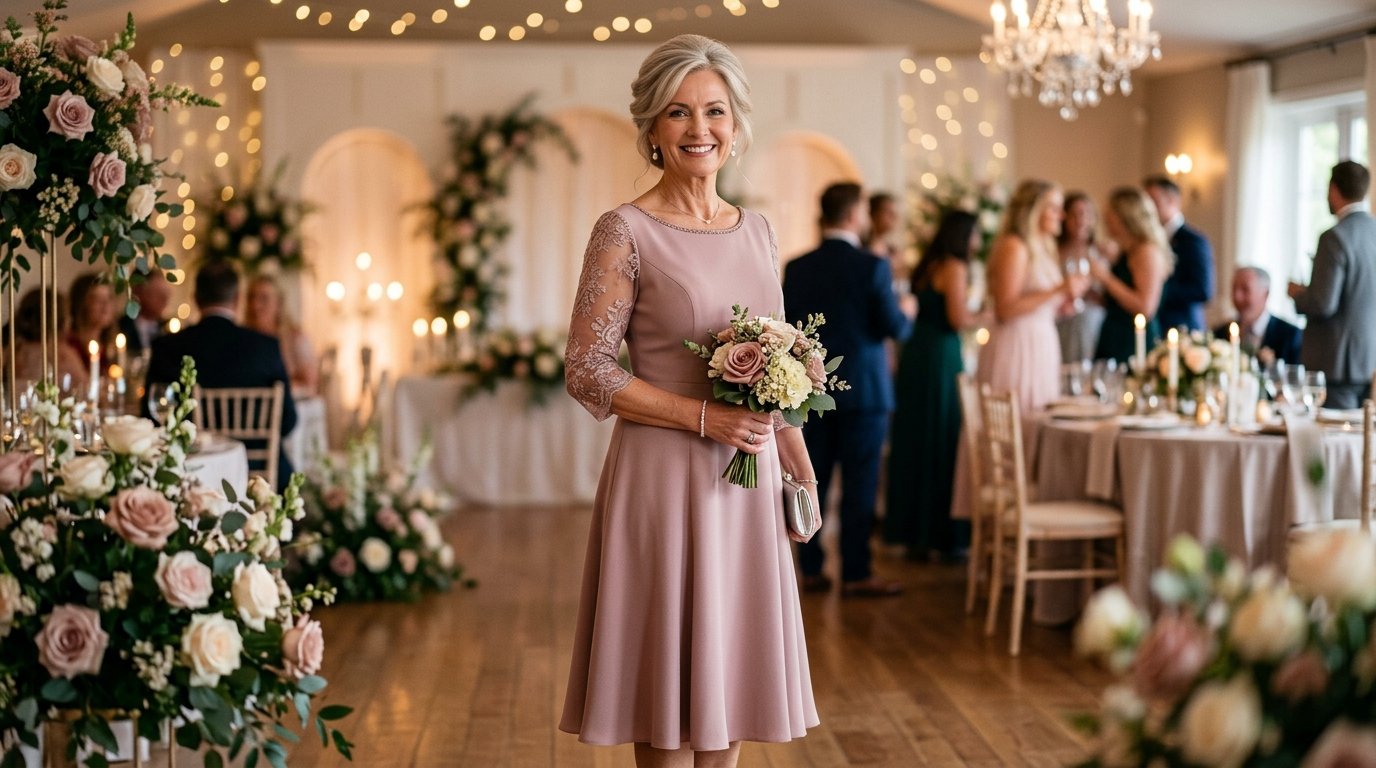
This guide covers outfit planning for mothers of the bride attending Western-style, semi-formal to black-tie weddings. It does not address cultural or religious dress codes, which vary widely and deserve their own dedicated resources.
What Does “Mother of the Bride Outfit” Actually Mean in 2026?
An outfit for the mother of the bride is a formal or semi-formal ensemble — typically a gown, dress, jumpsuit, or coordinated two-piece set — chosen to honor the wedding’s dress code, complement the bridal party’s palette, and reflect the wearer’s personal style without competing with the bride.
That last part? It trips up nearly everyone.
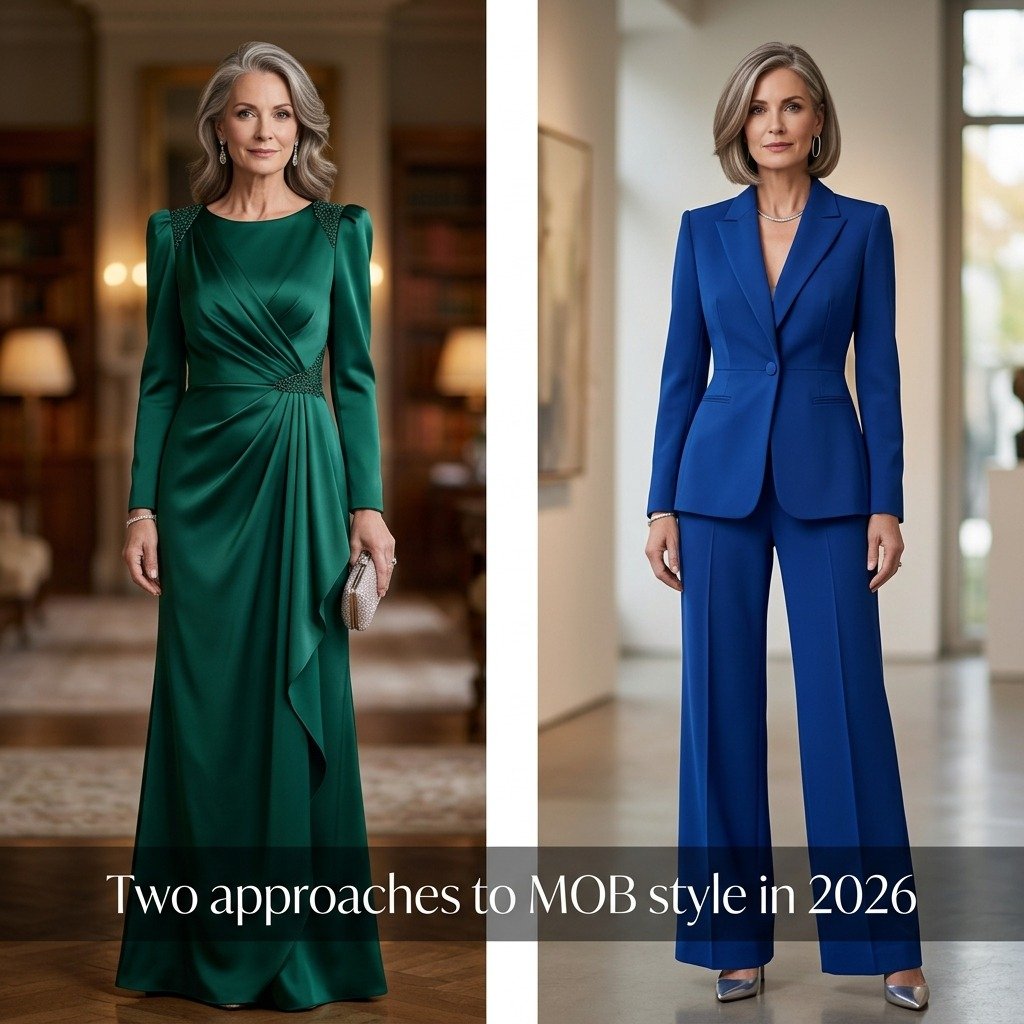
The role carries an unspoken pressure: you’re a VIP, you’ll be in every major photograph, and you need to look intentional — not like you grabbed something from the back of your wardrobe. But “intentional” doesn’t mean “matchy” or “safe.” In 2025–2026, mothers of the bride are increasingly stepping into their own style rather than defaulting to muted mother-of-pearl beige and hoping for the best.
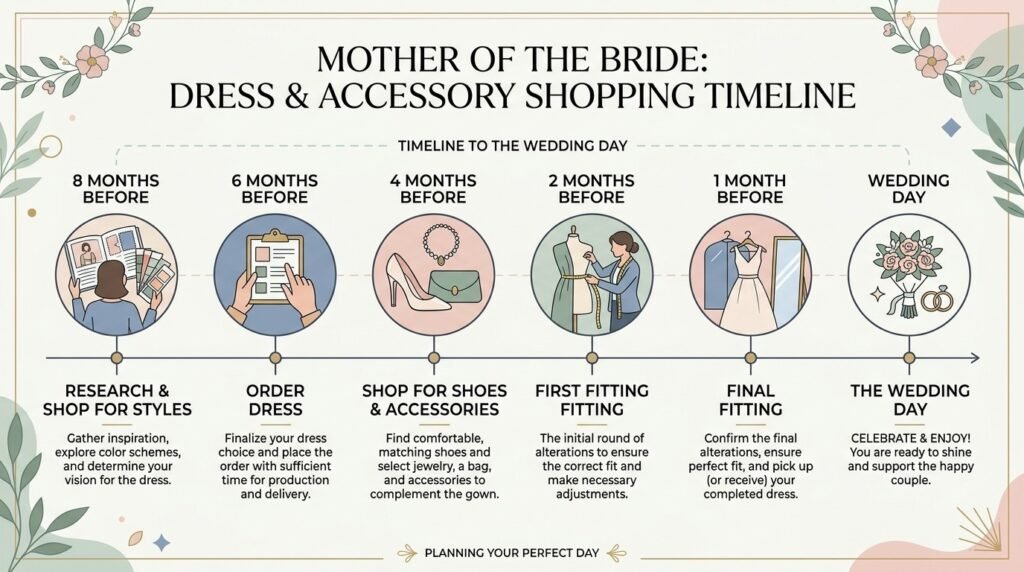
According to The Knot (2024), mothers should begin shopping 6–8 months before the wedding date — yet most start only 6–8 weeks out, which is exactly when alterations backlogs are worst and the best sizes in popular styles are already gone. Start early. Seriously.
How to Choose Your Silhouette (Based on Body Type, Not Age)
Here’s the thing: most MOB guides lead with age as the primary filter. That’s the wrong starting point. Silhouette — the shape of the dress relative to your body — is what actually determines whether you look polished or uncomfortable in photos.
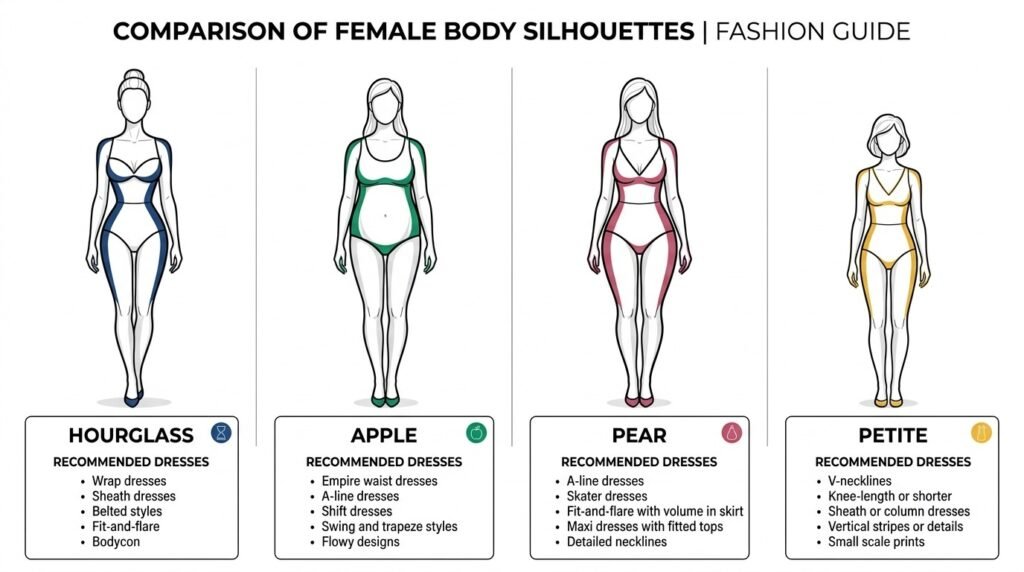
For hourglass figures: Fit-and-flare and mermaid silhouettes work beautifully, showcasing proportion without forcing it. A tailored sheath with ruching at the waist is a quieter option that photographs just as well.
For apple shapes: Look for dresses with a V-neckline and empire waist — these draw the eye upward and create length through the torso. Cape-effect overlays are having a genuine moment in 2026 and do the same job more elegantly.
For pear shapes: A-line silhouettes are the reliable workhorse here. A defined waist with a gently flared skirt balances shoulders and hips in every photo. Avoid volume that starts at the hip — it amplifies, not conceals.
For petite frames: Column dresses add height without bulk. Tea-length hemlines (mid-calf) are particularly flattering and practical for outdoor or garden ceremonies. Hobbs UK offers petite-friendly occasion dresses in sizes up to 22 — worth knowing if you’re 5’3″ or under.
Or maybe I should say it this way — the goal isn’t to hide anything. It’s about structural proportion: where the seams sit, how the fabric drapes, whether the hemline grounds or shortens your frame. Two fittings are standard; plan for them.
Quick Comparison: Which Silhouette for Which Occasion?
| Silhouette | Best For | Key Benefit | Limitation |
| A-line | Garden, outdoor, semi-formal | Flatters nearly all body types | Less dramatic for black-tie events |
| Fit-and-Flare | Formal, ballroom, church | Showcases curves confidently | Needs precise fit — alterations essential |
| Column/Sheath | Modern, minimalist, city venues | Clean lines, easy to accessorise | Less forgiving without shapewear |
| Two-Piece Set | Contemporary, daytime, reception-heavy | Versatile ceremony-to-reception | Can look casual if fabric isn’t luxe |
| Tea-Length | Garden, outdoor, brunch wedding | Practical, vintage-feel, shoe-forward | Not suited for formal black-tie dress codes |
Color Rules That Actually Make Sense
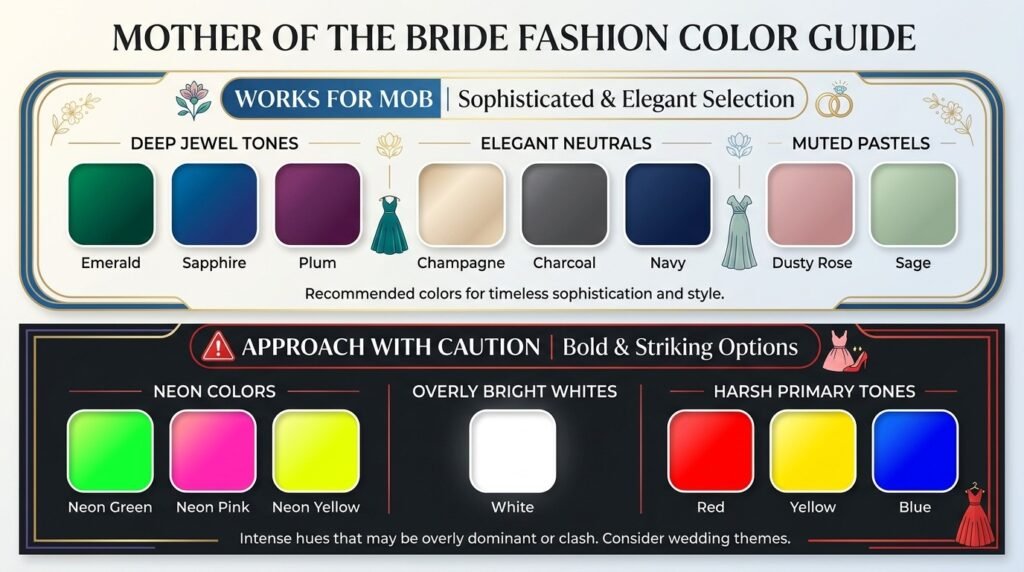
Avoid white, ivory, and champagne — full stop, unless the bride explicitly clears it. That’s the one hard rule.
Everything else is negotiation.
The common advice is to coordinate with the bridal party, not match them. If bridesmaids are in dusty rose, you might wear champagne, blush, or even a muted burgundy that sits in the same warm family without duplicating their exact shade. The photo cohesion test: when you stand together, do the colors harmonize or do they compete? That’s your answer.
Look — if you’re genuinely unsure what works against your skin tone, pastels are the trickiest category. Blush and dusty roses are photographed beautifully in theory but can wash out certain complexions entirely. Try on in natural light, not a boutique fitting room. The difference is significant.
In 2025–2026, jewel tones (emerald, sapphire, rich plum) are performing strongly at formal weddings, while sage green and soft periwinkle dominate spring and garden ceremonies. Metallics — particularly silver and gold — have moved out of the “mother of the groom only” zone and into mainstream MOB fashion.
What Most Guides Miss: They tell you what colors to wear. They almost never tell you how to avoid the MOB and MOG accidentally wearing the same color to the wedding — which happens more than anyone admits. A simple phone call between the two mothers, sharing general color family and formality level before either buys, avoids the awkward “we matched” photo moment entirely. Traditional etiquette says the mother of the bride chooses first and shares the details. Modern weddings handle it collaboratively. Either works; just make the call.
The Brands Worth Knowing (And What They’re Actually Good For)
Adrianna Papell is the mid-range benchmark. Their MOB-specific lines consistently offer beading detail, chiffon overlays, and flattering silhouettes across a wide size range. Available at Nordstrom, Dillard’s, and directly — widely stocked, which matters for in-person fittings.
Azazie operates online-first with made-to-order sizing and a try-at-home program. Size-inclusive through 30W, trend-forward, and significantly more affordable than boutique alternatives. Good fit for mothers who know their measurements and want current styles without a $800+ price tag.
Cameron Blake by Mon Cheri sits at the boutique end — the kind of label you find at independent bridal shops rather than department stores. Elegant without being flashy, and structured in a way that photographs beautifully even across a long day. Worth seeking out if the wedding is black-tie or the venue is formal.
I’ve seen conflicting data on this — some sources suggest MOB dresses average $200–$400, while others (particularly from full-service bridal boutiques) put the typical spend closer to $500–$900 once alterations are factored in. My read: budget $400–$700 total, including two rounds of alterations, and you’ll be in realistic territory for a quality look without overspending.
2025–2026 Trends That Are Actually Worth Adopting
Not every runway trend belongs at your daughter’s wedding. Some do.
Statement sleeves — bishop, bell, flutter — are genuinely flattering for mothers who want coverage without looking dated. They add structure and photograph well, especially in chiffon or crepe.
Two-piece sets and jumpsuits are no longer niche. For modern, relaxed, or outdoor weddings, a tailored wide-leg jumpsuit in satin or crepe reads as sophisticated, not casual — provided the fabric has weight and the fit is precise.
Bows as a design detail (not costume bows — architectural, fabric bows at the waist or shoulder) are prominent in 2026 collections and add personality without overwhelming.
What’s fading: heavy beading head-to-toe, asymmetrical hemlines that make walking difficult, and anything so trend-forward it photographs as “dated” in three years. Weddings live in albums for decades. Classic silhouette, current color, quality fabric — that combination ages better than chasing micro-trends.
Most people assume the mother of the bride should “blend in.” The current data says otherwise — designers and real wedding photographers consistently report that MOBs who wear something authentic to their personal style look more confident, move better throughout the day, and photograph more naturally than those who played it “safe” in something beige and forgettable.
When to Shop, When to Stop, and What to Do Before You Buy
To dress as the mother of the bride, follow these steps:
- Confirm the wedding dress code and bridal party color palette from the couple.
- Contact the mother of the groom and agree on general color families before either shop.
- Begin browsing silhouettes 6–8 months before the wedding date.
- Schedule your first fitting 10–12 weeks out, wearing final shoes and undergarments.
- Final alterations fitting 3–4 weeks before the wedding — no major changes after this point.
Quick note: many mothers underestimate alteration time. Most quality gowns need at least two rounds. Build that into your timeline from day one.
Voice Search Q&A
What’s the best color for a mother of the bride outfit?
Jewel tones, soft neutrals, and muted pastels all work well. Avoid white, ivory, or champagne unless the bride specifically approves. Coordinate (don’t match) with the bridal party’s palette.
How do I choose a mother of the bride dress for my body type?
Focus on silhouette, not age. A-line flatters most figures; fit-and-flare suits hourglass shapes; empire waists work well for apple shapes. Schedule two fittings for a polished result.
Should I match the bridesmaids as the mother of the bride?
No — complement, don’t copy. Choose a color in the same tonal family rather than the identical shade. You want cohesion in photos, not an accidental uniform.
When should I start shopping for a mother of the bride outfit?
Start 6–8 months before the wedding. According to The Knot (2024), this allows time for ordering, at least two rounds of alterations, and coordination with the mother of the groom.
What brands are good for mother of the bride dresses?
Adrianna Papell (mid-range, widely available), Azazie (online, size-inclusive, affordable), and Cameron Blake by Mon Cheri (boutique-level, formal occasions) are consistently recommended by bridal stylists.