
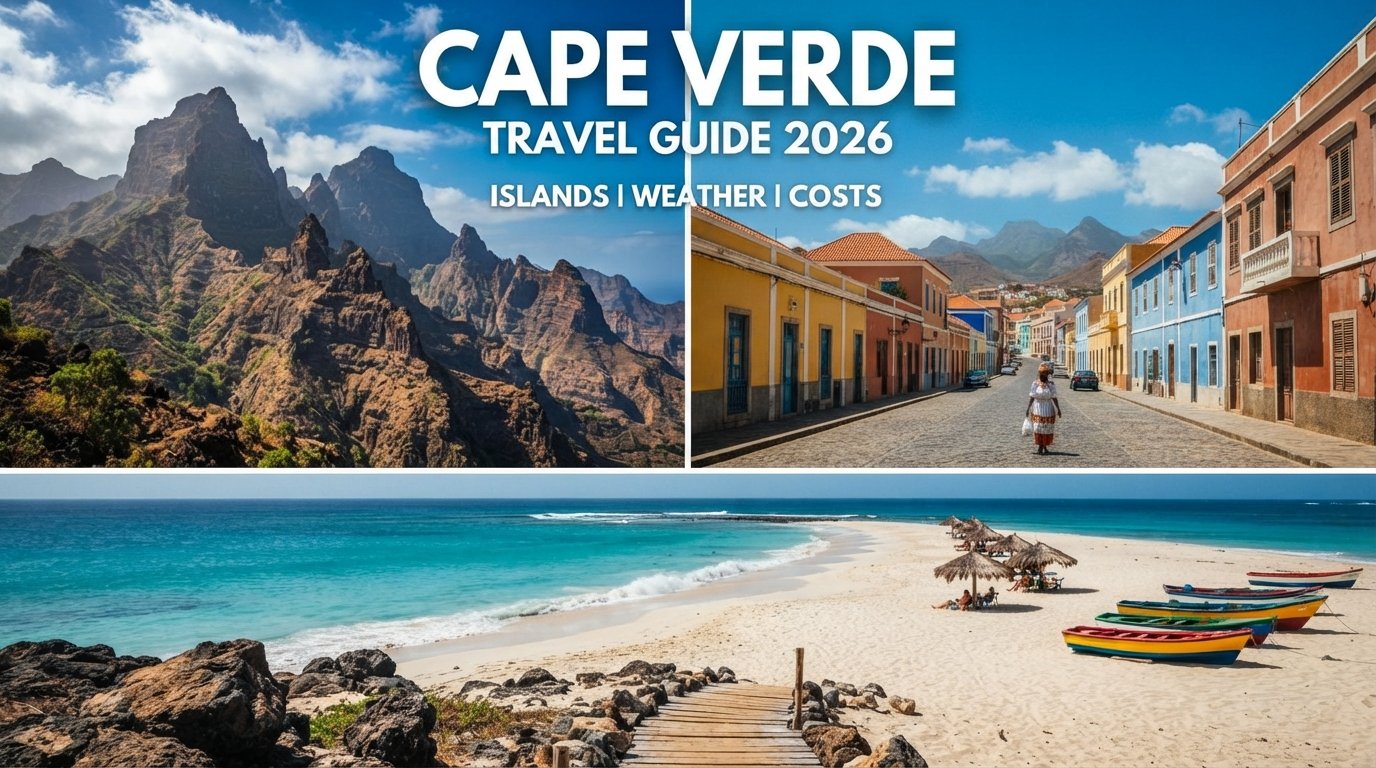
Cape Verde is an archipelago of ten volcanic islands sitting about 385 miles off the coast of West Africa, independent since 1975 and officially known as Cabo Verde. It’s not part of Portugal, and it’s not the place in California with a similar name. Most visitors land on one of just two islands — Sal or Boa Vista — for the beaches, though the other eight offer everything from hiking volcanoes to colonial old towns.
Here’s the thing: most articles either bury you in colonial history or read like a hotel brochure. This one doesn’t. We’re going to walk through which island fits your trip, what it actually costs, when to go, and what nobody tells you about getting there.
What Is Cape Verde, Exactly?
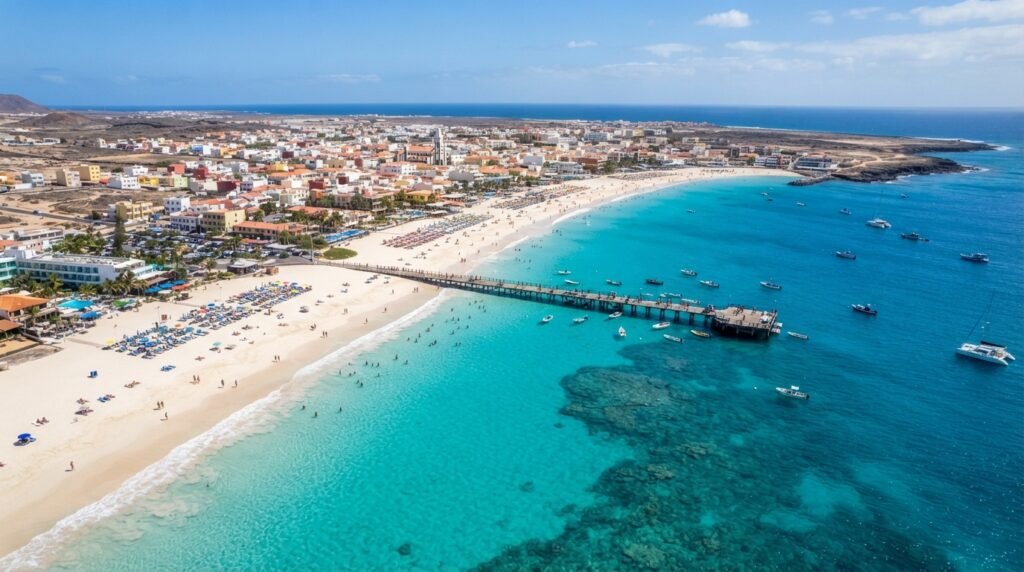
Cape Verde is an island nation in the central Atlantic Ocean, made up of ten islands split into the Barlavento (windward) and Sotavento (leeward) groups. The country gained independence from Portugal in 1975 and now runs a tourism economy centered on Sal and Boa Vista.
Portuguese is the official language, but Cape Verdean Creole is what you’ll actually hear on the street. The currency is the Cape Verdean escudo, pegged to the euro, and euros are widely accepted on the tourist islands.
According to Cape Verde’s National Statistics Institute (INE), the country welcomed over 1.2 million visitors in 2025, a 6% rise on the previous year, with total overnight stays climbing 8.3% to more than 6.1 million. I’ve seen some older blog posts still quoting 2018 arrival figures of around 765,000 visitors as if they’re current. They’re not — the market has grown by more than 60% since then, and the profile of who’s visiting has shifted too.
Which Cape Verde Island Should You Visit?
This is the question that actually matters, and it’s the one Britannica-style pages skip entirely.
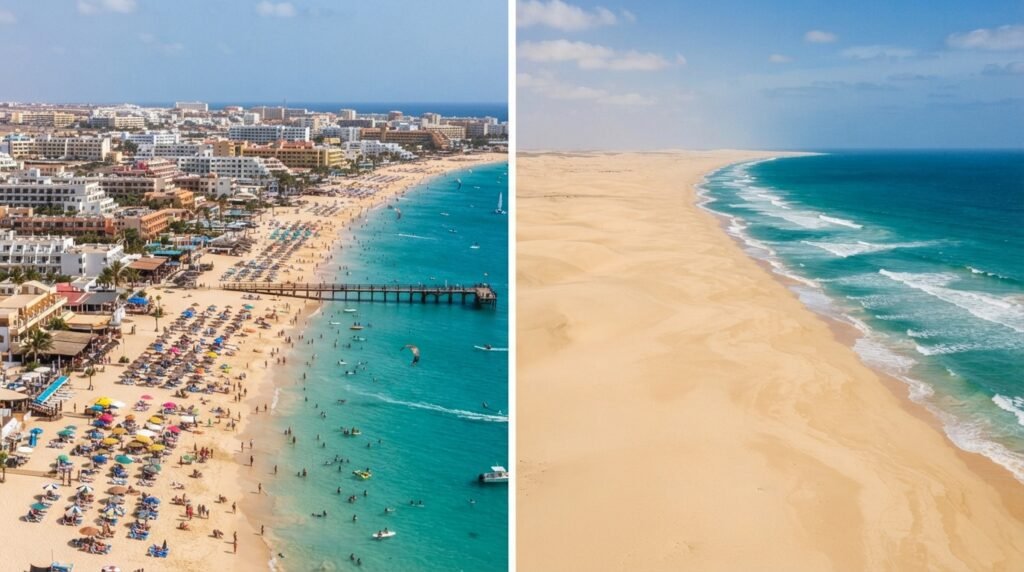
Sal vs Boa Vista: Sal is better suited for first-time visitors and short breaks because it has the most direct UK flights and the most built-up resort strip around Santa Maria. Boa Vista works better when you want quieter, longer beaches and don’t mind a slightly less developed feel. The key difference is infrastructure density, not beach quality — both have genuinely excellent sand.
Quick Comparison
| Option | Best For | Key Benefit | Limitation |
| Sal | First-timers, short trips | Direct flights, developed resort strip | Can feel touristy near Santa Maria |
| Boa Vista | Long, quiet beaches | Vast unspoiled coastline | Fewer restaurants outside hotels |
| Santiago | Culture, history | Cidade Velha UNESCO old town | Less beach-resort infrastructure |
| São Vicente | Nightlife, music, arts | Mindelo’s carnival and live-music scene | Rockier beaches, more wind |
| Fogo | Hiking, volcano trips | Active volcano crater you can walk into | Long transfer, basic accommodation |
Most people assume the “best” island is whichever one their tour operator sells hardest. The data on repeat visitors says otherwise — Sal gets more first-timers, but Boa Vista and São Vicente have noticeably higher return-visit rates according to traveler forums and TripAdvisor review patterns, because people who want quiet or culture tend to come back once they know what they’re after.
When Is the Best Time to Visit Cape Verde?
Short answer: November through June, when rainfall is minimal and temperatures stay in the mid-70s to mid-80s Fahrenheit (24–29°C) most days.
To pick your travel window, follow these steps:
- Avoid August–October — this is the short rainy season, mostly on Santiago and Fogo.
- Book December–February if you want peak sun with lower humidity.
- Choose April–June for good weather with cheaper flights than winter peak.
Cape Verde barely has a true “cold” season. Even the coolest months rarely dip below 68°F (20°C) overnight. What most guides skip is that the windward islands (Sal, Boa Vista, São Vicente) stay drier almost year-round, while Santiago and Fogo, further south and more mountainous, get real rain in late summer.
Some travel forums argue December is overrated because prices spike. That’s fair if you’re budget-conscious. But if you want the most reliable sun with family around Christmas, it’s still the safer bet than gambling on a shoulder month.
How Much Does a Cape Verde Holiday Actually Cost?
A week-long all-inclusive package for two from the UK typically runs £1,200–£2,200 depending on hotel rating, season, and how far out you book. Flights alone, if bought separately, average £350–£600 return.
Budget breakdown for a typical 7-night trip:
- Flights (return, UK to Sal/Boa Vista): £350–£600 per person
- All-inclusive 4-star resort: £70–£140 per person, per night
- All-inclusive 5-star resort: £150–£250 per person, per night
- Excursions (island tours, boat trips): £30–£80 per activity
- Local meals off-resort: £8–£20 per person
TUI and Jet2holidays run the majority of direct UK charter flights to Sal and Boa Vista, and both bundle transfers into their package prices — worth checking against a self-booked flight-plus-hotel combo, since the savings aren’t always as big as they look. TACV (Cabo Verde Airlines) connects the inter-island routes if you want to combine, say, Sal with Santiago.
Quick note: island-hopping domestic flights book up fast and aren’t cheap — budget £60–£100 one-way between islands, and reserve them weeks ahead in peak season.
Getting There, Visas, and Is It Safe?
UK, EU, US, and Canadian citizens don’t need a visa for stays under 30 days as of the current entry policy — just a passport valid for six months beyond your travel dates. Some nationalities still need to arrange an eVisa in advance, so it’s worth checking your specific country’s requirements before booking.
Safety-wise, Sal and Boa Vista’s resort areas are low-crime and heavily geared toward tourism. Petty theft on beaches happens occasionally, same as anywhere. Tap water isn’t recommended for drinking — stick to bottled or the water provided at your resort, which is standard practice across the islands.
This guide covers the tourist-facing islands and standard package-holiday logistics. It does not cover long-term residency, business visas, or independent backpacking across all ten islands, which each carry their own separate set of rules and costs.
Cape Verde: Quick Answers
What’s the best island in Cape Verde for a first trip?
Sal, because of direct flights and the most developed resort infrastructure for beginners.
How do I get to Cape Verde from the UK?
Direct charter flights run via TUI and Jet2holidays, mostly to Sal and Boa Vista, taking around 6 hours.
Should I book all-inclusive or self-catered in Cape Verde?
All-inclusive, since food options outside major resorts are limited on Sal and Boa Vista specifically.
Why is Cape Verde windier than other beach destinations?
Trade winds hit the Barlavento islands year-round, which is also why Sal is popular for windsurfing and kitesurfing.
When should I book flights for the cheapest Cape Verde holiday?
Target April–June or September, avoiding the December–February peak-price window.